The EU is preparing a new policy for the Arctic, focusing on security, infrastructure, and critical raw materials.



Always see our news on Google
The European Union is preparing to update its Arctic policy at a time when the accelerated warming of the region overlaps with concerns about security, infrastructure, and Europe's access to critical raw materials. The European Commissioner for International Partnerships, Jozef Síkela, announced at the opening of the EU Arctic Forum in Brussels that he and the High Representative of the EU have been tasked with preparing the new approach, which will be based on three directions: the role of Arctic communities in their own decisions, the link between security and prosperity, and the development of European partnerships in the region. In short
Commissioner Jozef Síkela and the High Representative of the EU have been tasked with preparing the update of the Union's policy for the Arctic.
The Commission wants European investments to respond to the priorities of the communities in the region and to create jobs, income, and local skills.
The EU has invested up to now 372 million euros in Arctic research through Horizon and 273 million euros through Interreg programs.
Current projects include a nearly 1,000-kilometer submarine fiber optic cable in Greenland and the Aurora power line between Finland and Sweden.
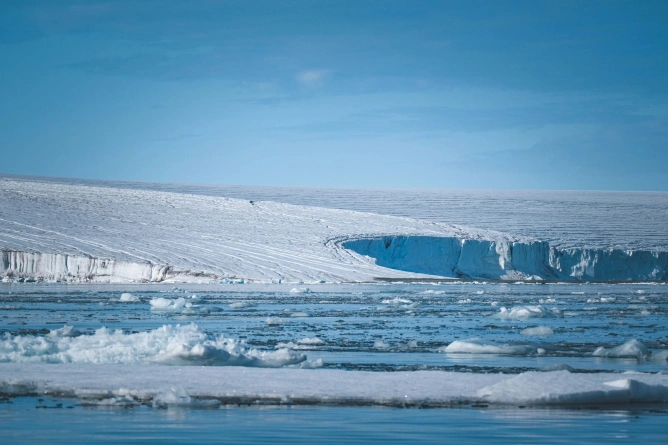
The Commission also sees the Arctic as a potential source of graphite for batteries and molybdenum for defense, but emphasizes that the exploitation of these resources must be sustainable and create value in the region. The update of the European policy for the Arctic is being prepared in a context where the region is becoming increasingly important for Europe for several reasons simultaneously. Climate change is rapidly altering the Arctic environment, and the retreat of ice affects climate mechanisms that directly influence the European continent. At the same time, the area is gaining greater importance for security, trade, infrastructure, and competition among great powers. Síkela explicitly linked the changes in the Arctic to the warming felt in Europe. After a summer marked by fires and drought on the continent, the commissioner pointed out that the Arctic is warming at an even faster rate, and the disappearance of ice leaves a larger area of dark ocean that absorbs heat and accelerates regional warming. The first direction announced for the policy update is to give a central role to the Arctic population in setting development priorities. Síkela articulated this approach by stating that "the future of the Arctic belongs to the people of the Arctic, not to those who want to buy it" and emphasized that European investments must strengthen the capacity of local communities to make their own decisions. "The future of the Arctic belongs to the people of the Arctic. Not to those who want to buy it," Síkela said, insisting that the EU must invest not only in infrastructure but also in the communities living in the region. The commissioner visited Nuuk in May and is set to return to Greenland this week. According to him, discussions with political leaders, representatives of indigenous populations, local communities, youth, and companies highlighted a common demand for investments that bring direct benefits to residents, not just for building infrastructure. The second component is the link between security and prosperity. The EU has been funding projects for education, fishing, sustainable tourism, and research in Northern Europe for several decades, and the Commission estimates that European investments in Arctic research through Horizon programs have reached 372 million euros. Another 273 million euros have been invested through Interreg cross-border cooperation programs. The new approach, however, aims to expand investments towards infrastructure, jobs, and projects that can increase economic and strategic resilience. One example is the submarine fiber optic cable developed in partnership with Greenland, which will be nearly 1,000 kilometers long and will connect the southern coast with the western coast, improving access to the internet and public services. In the energy sector, the Commission points to the Aurora power line, funded with European support and intended to connect the electricity networks of Finland and Sweden in the north. The infrastructure allows for the transfer of clean energy between the two systems and is presented as an example of how investments can combine regional development with European energy resilience. Critical raw materials form another component of European interest in the region. Síkela explicitly mentioned graphite needed for batteries and molybdenum used in the defense industry and stated that Europe currently purchases most of such materials from a single supplier, which creates vulnerabilities. The Arctic also has resources, but the Commission insists that their development must meet two conditions: exploitation must be sustainable, and the economic benefits must remain significantly in the region. For the EU, these projects could diversify supply sources, while for Arctic communities, they should generate jobs, income, and local skills. This approach introduces raw materials into a broader policy where economic security and local development must be addressed together. The Commission has not presented in the speech new mining projects or volumes of raw materials that the EU intends to obtain from the Arctic, so these elements will be defined in the policy update process. The third direction is strengthening partnerships. The Commission argues that no state or institution can manage the transformations in the Arctic alone and that cooperation must contribute to maintaining the region as a space of peace and economic opportunities, instead of an increasingly intense competition among powers. Síkela presented the involvement of local communities as a condition for this approach and stated that discussions within the EU Arctic Forum will be used to gather recommendations and concerns from regional actors before finalizing the new policy. The EU policy for the Arctic covers a territory where climate, economic, and security interests increasingly overlap. Accelerated warming alters ecosystems and living conditions, while mineral resources, energy infrastructure, and connectivity enhance the economic and strategic importance of the region. The update announced by the Commission is not yet an adopted policy and does not include at this stage a new budget or a definitive list of projects. The process led by Jozef Síkela together with the High Representative will establish how the EU adapts its presence in the region, starting from existing investments and consultations with communities and Arctic partners.

Latest News
22:57
22:46
22:39
22:25
21:55
See more news
NEWS ON THE SAME TOPICS