Victor Negrescu says that the process of expansion and artificial intelligence will reshape the European Parliament by 2040



Always see our news on Google
The foresight exercise coordinated by the Vice-President of the European Parliament aims to transform the risks related to enlargement, digitalization, and political balance into scenarios and recommendations for the future of the institution.
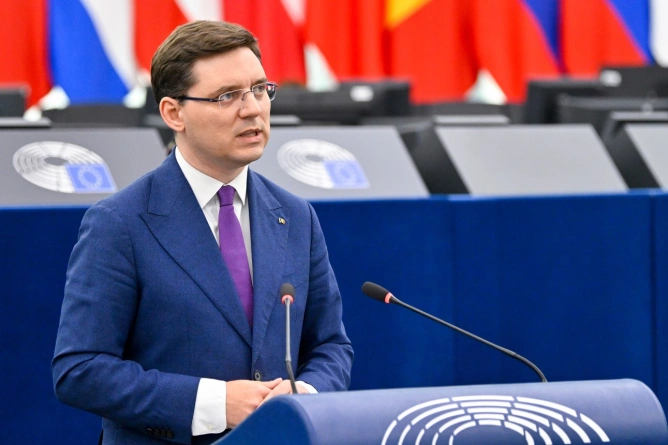
Vice-President of the European Parliament Victor Negrescu states that the enlargement of the European Union and the integration of artificial intelligence are among the factors that could profoundly change the functioning of the European Parliament in the coming years, within a foresight exercise targeting the horizon of 2040. The reflection group coordinated by the Romanian MEP is preparing a first document with analyses and scenarios for the Bureau of the European Parliament, followed later by recommendations that could be adopted in the current or the next legislature.
In short
Victor Negrescu coordinates a reflection group approved by the Bureau of the European Parliament, which analyzes what the institution might look like in 2040.
The exercise covers themes such as EU enlargement, the role of the European Parliament in initiating policies, simplifying the legislative process, democratic control, digitalization, and the impact of artificial intelligence.
According to Negrescu, the analysis is structured around six major dimensions and includes about a hundred questions that the group seeks to answer through signals and scenarios.
The first report is expected to present the context analysis and scenarios, while the next stage will include considerations and recommendations for policymakers.
The Vice-President of the European Parliament stated that enlargement can change the balance of power in Parliament, and the use of artificial intelligence raises questions of security, transparency, and data protection.
Negrescu stated in an interview regarding this exercise that the group has entered a new stage of discussions and has identified a series of themes that will impact the evolution of the European Parliament. He mentioned that among the subjects under analysis, enlargement occupies a central place, as it raises questions about the integration of new members, the representation of states, and how the European Parliament will function in an expanded Union.
On this file, Negrescu emphasized that enlargement can produce both institutional and political changes. He stated that the participation of other states in the Union can modify the balance of power in the European Parliament and can put pressure on how the interests of different states and budgetary priorities are accommodated.
A second major front of the analysis concerns artificial intelligence. In the interview, Negrescu said that there are risks if this technology is integrated too strongly into the European legislative process, especially in the area of security and data protection. He linked this discussion to how artificial intelligence can change communication with citizens, can be used for propaganda, and can even influence democratic representation in the European Parliament.
Negrescu also stated that the European Parliament has already taken some measures regarding artificial intelligence and that the institution's specialists have identified vulnerabilities related to data protection in certain systems. He said that maintaining trust is a major stake, adding that the European Parliament is the institution that enjoys the highest level of trust at the level of the European Union and that adaptation must become a primary objective.
Methodologically, the exercise is constructed as a foresight process, based on scenarios. In the material published in February, Negrescu stated that the group is moving towards a "neutral, academic" approach, which will present multiple evolution scenarios. In the current interview, he explained that the first stage consists of scanning the ecosystem, risks, and challenges, while the second stage will include scenarios and considerations regarding the measures that the European Parliament can take to anticipate these developments.
According to his explanations, the analysis is structured around six major themes: societal, technological, economic, environmental, political, and geopolitical, and seeks to answer approximately a hundred questions. In the end, these themes are expected to be synthesized into large blocks of analysis, which will provide the European Parliament with a reference for the strategic orientation of the institution. In the interview, Negrescu also mentioned other sensitive topics, from energy and its economic impact on the decision-making process to a Europe with multiple speeds, digital voting, and the functioning of the institution in crisis contexts.
The public calendar presented so far indicates that a first document is expected to be presented to the Bureau of the European Parliament in September 2026. This should contain the context analysis and the scenarios built on the themes resulting from the dialogue with political groups. After this stage, the group intends to develop the actual recommendations, and the complete document is expected to be finalized by the end of the legislative term. In the interview, Negrescu said that the reports will be discussed with representatives of the political groups and that the goal is for some of the conclusions to be subsequently adopted both at the level of the European Parliament and, possibly, in the functioning of some national parliaments.
He presented the exercise as an institutional anticipation tool, not as a package of already established solutions. "Now we are in the analysis stage. We are scanning the ecosystem, with the risks and challenges and those signals, those themes that will have an impact on Europe," said Negrescu. He added that in the next stage, "we can show what the future evolution of the European Parliament might be and we also come with a series of considerations regarding the measures that the European Parliament can take to anticipate those possible situations."
In the logic presented by the Vice-President of the European Parliament, the stakes of the report go beyond the simple internal organization of the institution. Negrescu said that the European Parliament should remain a reference for other parliaments and that such analyses can help the institution avoid errors, better adapt its tools, and maintain its credibility in a rapidly changing European environment.
The exercise coordinated by Victor Negrescu is part of a broader debate on the institutional reform of the European Union, accelerated by the prospect of enlargement towards Ukraine, the Republic of Moldova, and the Western Balkan states. In the material published by 2EU.brussels in February, the reflection group was presented as an ad hoc body, partially inspired by the model of the Future Committee in the Finnish Parliament, but without the formal status and powers of a permanent parliamentary committee. The initiative was launched about a year ago and was formalized through decisions of the Bureau of the European Parliament, which entrusted Victor Negrescu with the coordination of the reflection group. According to previously published information, the group includes high-level representatives from all political groups, including three Vice-Presidents of the European Parliament, a Vice-President of a political group, and a key delegation leader.
Victor Negrescu was elected Vice-President of the European Parliament in July 2024 and, in this capacity, coordinates the foresight activities of the institution and the relationship with structures such as STOA and ESPAS. According to the public framework presented by 2EU.brussels, the final document of the group will not be voted in plenary but approved by the Bureau of the European Parliament, with the hope that some of the recommendations will be subsequently adopted politically and institutionally.
Latest News
21:08
20:53
20:39
20:21
20:05
See more news
NEWS ON THE SAME TOPICS

.webp)