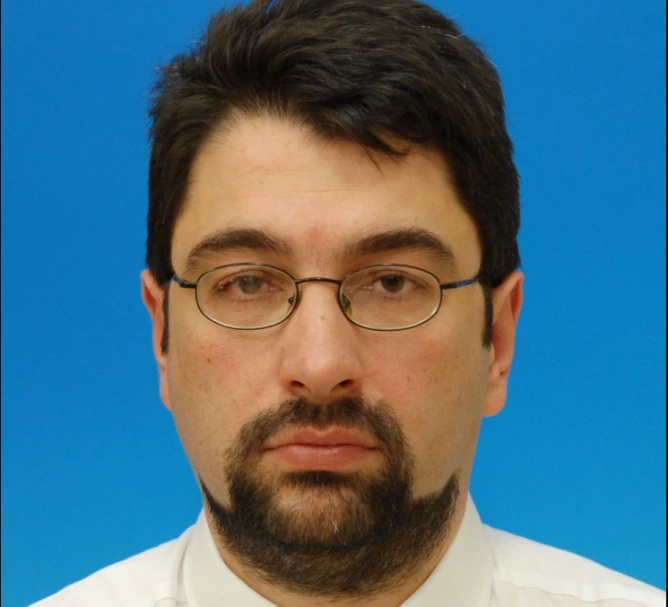
A researcher in AI and media warns at the European Parliament that newsrooms must verify and artificial intelligence.



Always see our news on Google
Bahareh Haravi, a researcher in AI and media, said at a STOA event organized in the European Parliament that the democratic role of journalists remains to hold people, organizations, and governments accountable, but that artificial intelligence is becoming, in turn, an object of journalistic verification. She warned that AI produces and consumes content at a pace that can affect the entire informational ecosystem if there is no human verification, context, and editorial responsibility.
Journalism is entering a stage where it must not only verify people, organizations, and governments, but also the artificial intelligence systems that produce, reformulate, and distribute content, said Bahareh Haravi, a researcher in AI and media, at a STOA event organized in the European Parliament. She warned that without human verification and journalistic context, the informational ecosystem can be affected by volumes of automatically generated content that are difficult to control and correct.
In short
Bahareh Haravi said at the European Parliament that the democratic role of journalists has not fundamentally changed, but has expanded to include the verification of artificial intelligence.
She stated that journalists have always been the ones to hold people, organizations, and governments accountable, and now they must also hold AI accountable.
The researcher warned that AI produces so much content that, without verification, the informational ecosystem can reach a state that is difficult to repair.
The STOA debate focused on the future of science journalism, AI, public trust, and democracy.
The panel also discussed the use of AI in newsrooms, transparency, ethical limits, changes in news consumption, and the risk that the public may receive AI-generated summaries without ever reaching the original sources.
Statements were made during the panel "The Future of Science, Journalism, AI, Trust, and Democracy," organized by STOA, the European Parliament structure that works on assessing scientific and technological options. The event brought together researchers and science journalists for a discussion about how AI is changing news production, information consumption, and public trust.
Bahareh Haravi, Associate Professor in AI and Media at the Surrey Institute for People-Centered AI, said that the democratic function of journalism does not disappear with AI. From her perspective, the core task remains the same: fact-checking, contextualizing information, and holding those in power accountable.
"The democratic role of journalists has not changed very much or significantly," Haravi said. "Journalists have been the agents who hold people, organizations, and governments accountable."
The novelty is that AI is becoming part of the space that needs to be verified. Artificial intelligence tools can generate texts, synthesize information, reformulate content, create summaries, and feed distribution systems. In this environment, the journalist no longer only verifies political statements or official documents, but also content produced by automated systems, sometimes without a transparent or easily traceable source.
"Now they do the same thing, but at the same time, I believe that journalists need to hold artificial intelligence accountable," the researcher said.
Haravi explained that the risk is not just the emergence of isolated errors. The problem is the volume. AI can produce and consume content on a large scale, and automatically generated information can enter news feeds, search engines, social platforms, newsletters, summaries, and applications without the public always knowing how it was produced.
"AI produces so much content that if journalists do not verify it, if it is not checked by someone who knows how to verify the content and who understands the context, then the entire informational ecosystem can explode," Haravi said.
She warned that the degradation of trust can become difficult to repair if automated information circulates permanently without editorial responsibility. In her formulation, AI can end up producing and consuming content in a continuous cycle, and the public may lose the necessary markers to distinguish between verified information, opinion, automated synthesis, and unreliable content.
"It can reach a point where it can no longer be put back together," Haravi said about the informational ecosystem. She added that journalists need to be attentive to how this ecosystem is changing, especially as AI begins to replace some tasks and activities.
The debate went beyond the question of whether newsrooms should or should not use AI. The panel showed that AI is already present in journalism: in transcription, translation, documentation, organizing information, reformulating content, monitoring messages, identifying sources, or generating summaries.
Haravi said that the use of AI varies greatly between newsrooms. Large organizations have resources for paid tools and internal policies, but they may have stricter rules. Smaller newsrooms or individual journalists sometimes experiment more freely, but with less institutional protection.
She also pointed out an internal problem of newsrooms: unequal access to tools. If AI is not clearly integrated into workflows, some journalists feel encouraged to experiment, while others fear that using the tool will be interpreted as a lack of competence or a violation of rules. Haravi said that these differences can particularly affect women or teams outside of central desks.
The discussion also included interventions from science journalists. Pampa García Molina, director of the Science Media Center Spain, said that her institution has started asking experts to declare whether they use generative AI in comments sent to the press, after some reactions from researchers began to arrive "suspiciously quickly" and seemed more like summaries than critical opinions.
Teresa Firmino, science editor at Público, said that AI can help newsrooms with transcription, translation, captions, and organizing large volumes of information, but it should not write journalistic articles. She made the distinction directly: a text written by AI can be information, but it is not journalism if it lacks verification, responsibility, questions, and human editorial decision-making.
The panel also raised the issue of news distribution. Antonis Kalogeropoulos, a researcher in political communication, warned that AI-based summary search engines can create a "zero-click" environment, where the public receives direct answers without ever visiting the publications' websites. For newsrooms, this can mean loss of audience, traffic, and revenue, especially for small and medium publications.
Overall, the STOA debate showed that AI is not only changing the tools of journalism but also the relationship between sources, newsrooms, the public, and platforms. For science journalism, the stakes are even higher, as scientific information needs context, uncertainty, verification, and careful explanation, not just quick summaries.
The central message of Bahareh Haravi's intervention is that journalism does not lose its democratic role in the face of AI, but must exercise it in a more complicated informational space. If newsrooms cannot verify and explain how AI produces, selects, or reformulates information, the public risks receiving more and more answers without knowing who created them, what sources they are based on, and who takes responsibility for them.
The STOA event "The Future of Science, Journalism, AI, Trust, and Democracy" took place in the European Parliament and discussed the role of science journalists and researchers in an era where artificial intelligence is changing newsrooms, distribution platforms, news consumption, and public trust. STOA is the European Parliament structure dedicated to assessing scientific and technological options.
Latest News
00:32
22:56
22:37
22:23
22:09
See more news
NEWS ON THE SAME TOPICS



.webp)