The European Commission is preparing recommendations regarding the use of artificial intelligence in elections



Always see our news on Google
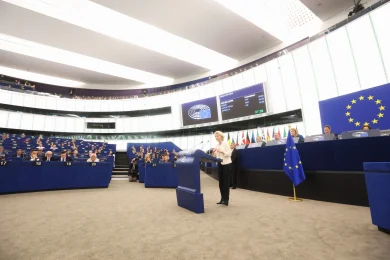
The European Commission is working on recommendations regarding the responsible use of artificial intelligence in elections, as part of the European Democracy Shield. Daniel Fleischer-Ambrus, a representative of DG JUST, said at a STOA workshop in the European Parliament that the European executive is analyzing both the risks of AI for the integrity of information, including deepfakes and manipulation, as well as possible positive uses, from supporting the administration of electoral processes to informing voters.
The European Commission is preparing recommendations regarding the responsible use of artificial intelligence in elections, as part of the European Democracy Shield, the package through which the European executive aims to strengthen democracy in the face of information manipulation, digital risks, and pressures on electoral processes. Daniel Fleischer-Ambrus, a representative of DG JUST, said at a STOA workshop in the European Parliament that AI can create threats to the integrity of information, but it can also have positive uses in the administration and explanation of elections.
The recommendations prepared by the Commission are to be developed through the European network of electoral cooperation, which brings together the authorities of the member states involved in organizing elections. Fleischer-Ambrus said that the novelty brought by the European Democracy Shield is the creation of dedicated working groups, including one on the responsible use of AI in elections. In short The European Commission is working on recommendations regarding the responsible use of artificial intelligence in elections. The initiative is part of the European Democracy Shield, the communication of the Commission and the High Representative regarding the strengthening of democracy. The European network of electoral cooperation, existing since 2019, will be used for discussions with national authorities. The Commission is analyzing both the risks of AI for the integrity of information and possible positive uses in electoral processes. Among the risks mentioned in the debate are deepfakes, information manipulation, and the use of AI against candidates or elected representatives.
The European Democracy Shield has three main directions, according to explanations given in the European Parliament by Fleischer-Ambrus. The first concerns protecting the integrity of the information space, the second targets democratic institutions, free and fair elections, and independent media, while the third aims at the democratic resilience of society, including through citizen participation.
In the electoral area, the Commission uses the European network of electoral cooperation, created in 2019, for dialogue with national authorities. Fleischer-Ambrus explained that, at the level of member states, the authorities involved in organizing elections form national networks, and some representatives are brought to the European level for cooperation and exchange of practices.
The recommendations regarding AI in elections will be a soft law instrument, not a new European law. Fleischer-Ambrus said that in some areas the European Union has hard legislative tools, while in others it can use more flexible instruments, complementing the existing framework, including the AI Act.
The Commission has launched, according to its intervention, a survey between April and May and has organized focus groups to feed into the work on this recommendation. Fleischer-Ambrus said that the discussion must be held not only with member states but also with a broader circle of actors involved in electoral processes and digital technologies.
The stakes are not just about limiting risks. Fleischer-Ambrus said that AI is often discussed as a threat to the integrity of information, but that in the electoral field there can also be positive uses, including for strengthening the processes of counting votes or for informing voters.
This part is sensitive, as informing voters through AI can also create new risks. Fleischer-Ambrus explicitly mentioned the scenario in which AI-based bots could provide electoral information, an area in which the Commission is working together with colleagues from the AI Office.
The European Democracy Shield also includes a working group on the safety of political candidates and elected representatives. Fleischer-Ambrus said that AI and deepfakes are increasingly part of this challenge, under conditions where digital tools can be used for intimidation, manipulation, or compromising political actors.
The STOA debate placed this discussion in a broader framework about digital democracy. Brando Benifei, STOA MEP and host of the workshop, said that the European Union needs to discuss not only the democratization of digital technologies but also about "the digitalization of democracy," meaning how AI and digital tools can help institutions listen better to citizens, explain public processes, and create channels for participation without replacing representative democracy.
Christian Ehler, president of STOA, warned that the issue is not a hypothetical one. He said that some online consultations of the Commission have already been flooded by bots, and institutions cannot always determine whether interventions come from real European citizens or from foreign bots, motivated by commercial or political interests.
Gerasimos Mylonas, representative of the EU AI Office, explained in the second panel that the AI Act does not directly mention civic participation, but it shapes the digital public space through prohibitions, risk classifications, and the article on AI literacy. He emphasized that AI literacy is already applicable and that the European Union has chosen to include it in law, not just in a strategy or in a funding line.
For elections, the combination of the European Democracy Shield and the AI Act creates a framework in which the Commission tries to respond simultaneously to two realities. AI can amplify manipulation, deepfakes, and attacks on public trust, but it can also be used for more efficient administrative processes and better access to electoral information, provided there are guarantees, transparency, and human control.
https://2eu.brussels/ro/stiri/comisia-europeana-pregateste-recomandari-privind-folosirea-inteligentei-artificiale-in-alegeri
Latest News
19:20
19:17
19:09
19:09
19:00
See more news
NEWS ON THE SAME TOPICS