EU Regions Call for More Affordable Electric Cars and Support for Automotive Suppliers in the Transition to 2035



Always see our news on Google
The European Committee of the Regions (CoR) calls for the automotive sector’s transition to low-emission mobility to be accompanied by investment in charging infrastructure, measures to reduce the cost of electric vehicles, and economic support for regions where the automotive industry and its suppliers represent an important part of the local economy. CoR members adopted an opinion on 14 October concerning the European automotive sector package, prepared by María Victoria Chivite Navascués, president of the Navarre region, at a time when the EU is seeking to combine emissions reductions with protecting the competitiveness of European industry.
In brief
CoR considers electrification one of the main pathways to decarbonising road transport, but calls for electric vehicles to become affordable for a larger number of households.
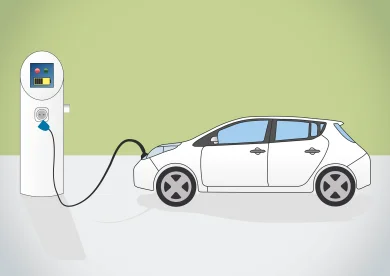
Regions are calling for sufficient charging infrastructure across all territories, including where private investment is less attractive.
Areas dependent on automotive production should be supported through funding for skills, retraining, investment and new industrial capacity.
CoR supports strengthening European production and supply chains through the “Made in the EU” approach, but calls for disproportionate burdens on SMEs and suppliers to be avoided.
The CoR opinion is a consultative position and does not itself modify European CO2 standards or the legislative timetable for the automotive sector.
Affordability is one of the differences between an industrial transition defined by emissions targets and one that can actually be implemented by consumers. Regions argue that the availability of a larger number of electric models is not enough if the purchase price remains too high for low- and middle-income households. The cost of the car, financing options, the development of the second-hand electric vehicle market and buyers’ confidence in battery life can influence the pace at which the European vehicle fleet changes.
The debate in the CoR also linked this issue to the used-vehicle market. A significant share of Europe’s population does not buy new cars, and the shift to electric mobility will, over time, depend on the existence of a sufficiently large and transparent second-hand market. Information on battery condition, real-world range and warranties may thus become just as important for buyers of used electric vehicles as mileage and service history are for conventional cars. Regions believe that a transition based exclusively on the new-car market risks reaching lower-income households more slowly.
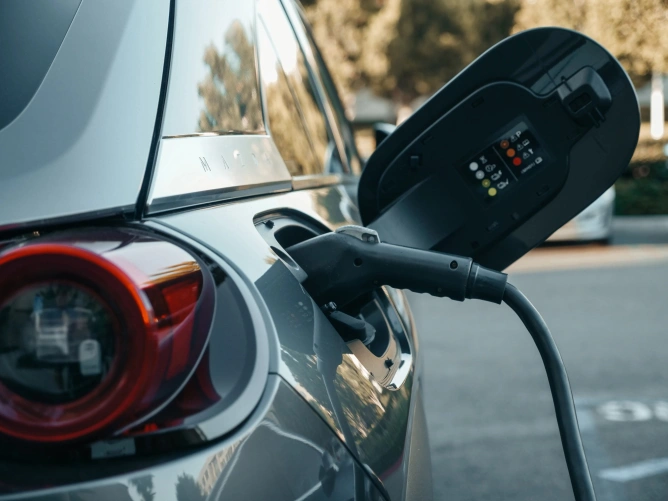
Infrastructure is the second condition. The number of charging stations has increased in Europe, but their distribution is uneven between major cities, main transport corridors and rural or peripheral regions. CoR calls for network expansion not to be left exclusively to areas where intensive use makes the investment immediately commercially profitable. Local and regional authorities are calling for a combination of European, national and regional funding to prevent the emergence of territories where buying an electric car is theoretically possible, but using it daily is difficult because of insufficient infrastructure.
The industrial stakes go beyond the final production of cars. Vehicle factories are connected to regional networks of companies producing mechanical components, electronics, cables, seats, braking systems and numerous other products. Electrification changes the types of components required and may reduce demand for some products linked to internal combustion engines, while creating markets for batteries, power electronics, software and other technologies. For this reason, CoR calls for European industrial policies also to address the ability of small and medium-sized suppliers to change the products and technologies they offer.
This transformation has a strong territorial dimension because automotive production is concentrated in a relatively small number of regions. According to data presented by CoR, the automotive industry accounted for approximately 7% of EU GDP in 2024, generated around 170 billion euros in exports and supported approximately 13.8 million jobs. Approximately 3.5 million of these are direct and indirect jobs in manufacturing. The 41 regions brought together in the Automotive Regions Alliance collectively represent more than 40% of the Union’s GDP, showing that restructuring the sector can produce regional economic effects far broader than the number of jobs in major final-assembly plants.
For these territories, CoR calls for place-based support, including the use of cohesion policy for investment, worker retraining and the development of new skills. The shift from the internal combustion engine to electric propulsion changes both production processes and the qualifications required. Regions want funding to help workers and businesses adapt before the loss of orders or the closure of certain facilities produces effects on the local labour market that are difficult to reverse.
The opinion also supports strengthening European production. CoR welcomes the “Made in the EU” approach proposed for the automotive sector as an instrument through which demand and public support can help maintain production and supply chains in Europe. However, regions call for the rules used to determine European origin to be predictable and proportionate and not to create administrative costs that smaller suppliers cannot bear. In a sector built on complex chains, a requirement designed for major manufacturers can have different effects on a company supplying a single component.
The regional position relates to the automotive industry package presented by the European Commission in December 2025. The Commission proposed amending CO2 standards for cars and vans so that, from 2035, manufacturers would achieve a 90% reduction in tailpipe emissions, with the remainder able to be offset through mechanisms linked to low-emission European steel, e-fuels and biofuels. The package also includes targets for corporate fleets, support for the battery industry and incentives for small and affordable electric cars produced in the EU.
This change means that the European debate is no longer built exclusively around an opposition between electric cars and conventional engines. The Commission has introduced greater technological flexibility in its proposal, while CoR insists on the territorial and social conditions without which electrification cannot reach critical mass. For regions, the question is not only which technology will be permitted after 2035, but whether people will be able to afford new vehicles, whether they will be able to charge them and whether local industries will be able to participate in the new value chains.
The CoR position does not determine the final form of the legislation. CO2 standards and the other proposals in the automotive package are negotiated within the European legislative process, where the European Parliament and the Council decide on the texts proposed by the Commission. However, the opinion adopted on 14 October brings into this process the perspective of the regions that will directly bear the industrial effects of the change: competitiveness, decarbonisation and affordability must be addressed together if the automotive transition is to work beyond the most prosperous markets and urban centres.

Latest News
12:18
12:18
12:15
12:07
12:03
See more news
NEWS ON THE SAME TOPICS