EU-China Understanding Opens Compromises on Hybrids and Raw Materials, but Does Not Yet Rebalance Trade Relations



Always see our news on Google
The European Union and China have put on paper a list of trade compromises that may reduce some of the immediate obstacles for companies, without resolving the disputes that have strained the economic relationship in recent years. The joint statement adopted after the October 8–9 consultations in Beijing covers hybrid vehicles, rare earths and permanent magnets, controls on dual-use products, medical devices, and investment, but leaves negotiations on tariffs and several market-access barriers open.
In brief The EU and China say they have reached an understanding on trade in hybrid vehicles, but the joint statement does not publish the mechanism, volumes, or implementation timetable. China undertakes to continue facilitating licenses for exports of rare earths and permanent magnets to the EU through the fast-track mechanism. The EU will work with the Member States to facilitate priority licenses to China in sectors involving dual-use products. Reducing or eliminating certain tariffs remains only a possibility that the two sides have agreed to explore. The EU’s duties on Chinese battery electric vehicles have not been eliminated. Two Bruegel analyses published after the agreement describe the outcome differently: Ignacio García Bercero sees it as a respite that could help the EU prepare more effective trade instruments, while Alicia García-Herrero considers that the effect on the trade imbalance remains very limited.
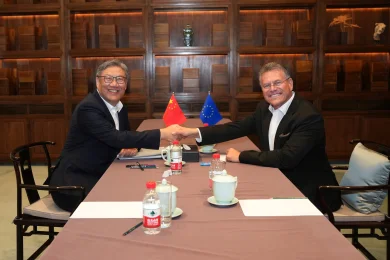
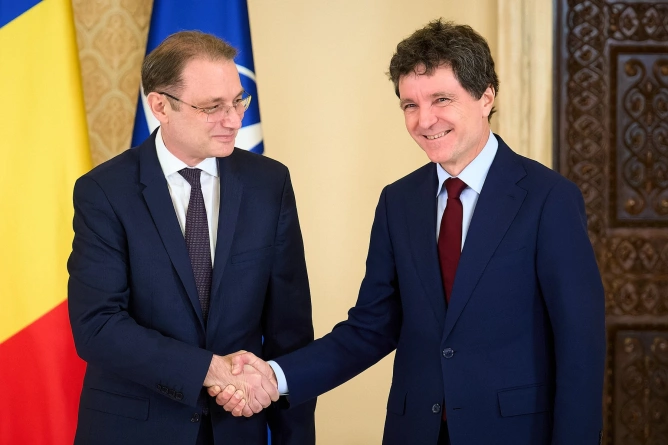
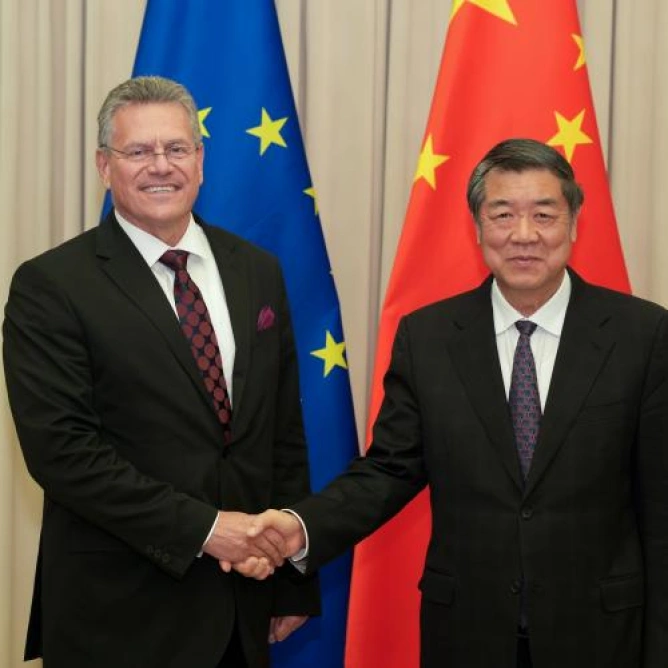
The consultations were led by European Commissioner Maroš Šefčovič and Chinese Minister of Commerce Wang Wentao (pictured). The next ministerial meeting is scheduled for March 2027, with a videoconference planned for January, placing the October agreement within a negotiation process that will continue in the coming months.
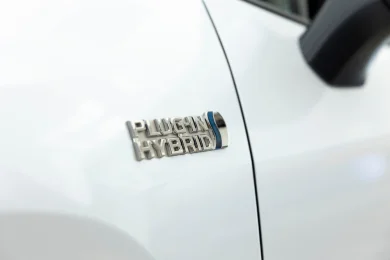
On automobiles, the official document is narrower than some of the interpretations that emerged after the meeting. It says that the EU and China, following intensive consultations, have reached an understanding on trade in hybrid vehicles and that this is compatible with World Trade Organization rules. However, no quota, numerical export reduction, or timetable is published.
Bruegel discusses information according to which Chinese exports of hybrid vehicles to the EU could be temporarily limited, but these details do not appear in the joint statement. They cannot be treated as public legal obligations until the mechanism and its conditions are presented in a verifiable document.
The case of battery electric vehicles remains separate. The EU is maintaining the countervailing duties introduced after the investigation into Chinese subsidies, and the two sides will continue the procedures under which certain companies may propose price undertakings. The understanding on hybrids does not cancel these measures or conclude the investigation that led to the European duties.
Nor are general tariffs reduced by the October 9 statement. The two sides have agreed to explore, within the limits of WTO rules, the possibility of reducing or eliminating duties on certain products. The list of products, the level of any reductions, and the conditions have not yet been made public.
For European industry, one of the most concrete provisions concerns critical raw materials. China says it will continue to facilitate, through the fast-track mechanism, licenses for rare earths and permanent magnets destined for the Union. These materials are used in the automotive, energy, electronics, and defense industries and have become a pressure point in the trade relationship following the expansion of Chinese export controls.
The fast-track mechanism does not eliminate the licensing system. European companies remain dependent on the approval of Chinese authorities for exports subject to controls, and the statement does not guarantee that every application will be accepted or accepted within a specified timeframe. Beijing is offering a way to facilitate the process without relinquishing control over exports.
There is also a component in the opposite direction. The EU has undertaken to work with national authorities to facilitate priority licenses to China in sectors involving dual-use products. The document does not abolish European controls, nor does it establish automatic access for Chinese companies.
The two sides will continue examining structural measures that could simplify compliant exports and have agreed to provide advance notice and greater transparency when they amend lists of entities subject to controls. The statement also mentions support for removing entities from the lists when applicable legislation permits this.
In other sectors, the results are more a beginning of negotiations. The EU and China will continue discussions on access for medical devices to the Chinese market, while Beijing says it will seek to increase European imports, including through a business matchmaking event at the China International Import Expo.
China has also promised to accelerate recognition of the principle of regionalization for eligible EU Member States in the area of animal products. In practice, this may allow a health issue in a particular region not to automatically lead to restrictions on exports from the entire country. The discussion concerns in particular restrictions associated with bluetongue disease.
The European Foreign Subsidies Regulation is also entering the bilateral agenda. The two sides will open a technical dialogue on the Foreign Subsidies Regulation, an instrument through which the Commission can investigate subsidies granted by third countries to companies active in the European market. The statement does not announce any amendment to the regulation and does not limit the Commission’s investigative powers.
Beijing separately raised the issue of European rules for clean-energy projects that use certain inverters. In the joint statement, the EU responded that its guidelines are neutral regarding the country of origin and that discussions will continue. There is no European commitment to withdraw or amend these rules.
The two analyses published by Bruegel on October 12 start from the same agreement but reach different assessments. Ignacio García Bercero considers that the outcome provides time to reduce tensions and build better-adapted trade responses, including the possibility of using, in certain sectors, temporary safeguard measures and quotas that could be gradually relaxed.
In his reading, the agreement does not replace the European policy of reducing dependencies. Faster access to rare earths may solve some of companies’ immediate problems, while European investment in supplier diversification, recycling, and domestic capacity must continue.
Alicia García-Herrero is more reserved about the economic effect. She starts from a European trade deficit with China of approximately EUR 360 billion in 2025 and estimates that some of the tariff concessions discussed are small in relation to the overall imbalance. Her calculation of approximately EUR 225 million in tariff savings is an analytical estimate, not a value provided for in the official agreement.
The two texts agree that the agreement does not resolve the structural problems in the relationship. Chinese industrial capacity, subsidies, market access, critical raw materials, controls on dual-use products, and the European trade deficit remain on the negotiation agenda.
The EU and China will try by March to turn the political commitments made in Beijing into procedures that companies can actually use. For European producers, the outcome will be seen in the time required for export licenses, access to raw materials, the removal of certain barriers, and the trading conditions for automobiles and other products—not in the general wording of the statement.

Latest News
23:08
22:57
22:55
22:54
22:45
See more news
NEWS ON THE SAME TOPICS