EU and China announce first results on rebalancing trade in hybrids, tariffs and rare earths



Always see our news on Google
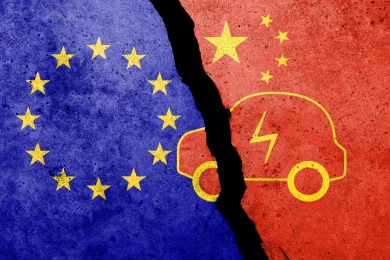
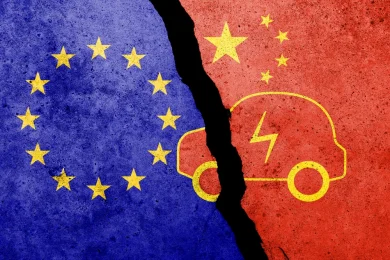
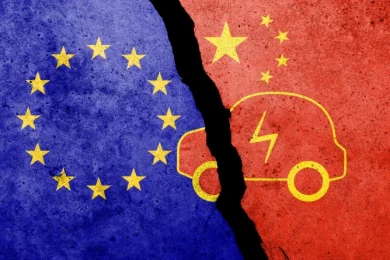
The European Union and China have concluded the second round of their trade consultation mechanism with agreements on limiting the growth of Chinese exports of hybrid vehicles to the European market, reducing certain tariffs on European products, and facilitating licenses for rare earths and permanent magnets. Commissioner Maroš Šefčovič estimates that the agreement on hybrids could reduce projected exports over the next four years by more than half compared with the scenario without a policy change. However, some measures still need to be politically approved and transposed into legal procedures before producing commercial effects.
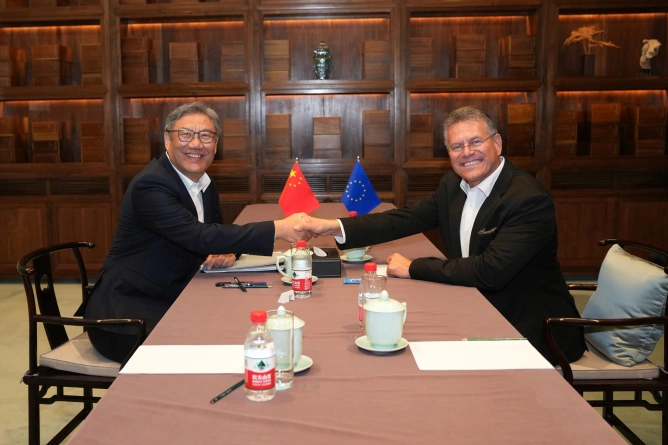
The European Union and China have announced the first concrete results of the trade consultation mechanism launched in the summer, after two days of negotiations in Beijing between Maroš Šefčovič, the European Commissioner for Trade and Economic Security, and Wang Wentao, the Chinese Minister of Commerce. The two sides reached agreements on Chinese hybrid vehicle exports to the EU, possible tariff reductions for European products, and the facilitation of Chinese licenses for exports of rare earths and permanent magnets.
In brief1. The Commission estimates that the agreement on hybrids and plug-in hybrids could reduce projected Chinese exports to the EU over the next four years by more than 50%, compared with a scenario in which trade policy did not change.more than 50% of projected Chinese exports to the EU over the next four years, compared with a scenario in which trade policy did not change.
2. The EU and China discussed reducing tariffs for seven tariff lines, covering nearly EUR 4 billion in European exports and potentially generating savings of at least EUR 225 million in customs duties.seven tariff lines, covering nearly EUR 4 billion in European exports and potentially generating savings of at least EUR 225 million in customs duties.
3. China committed to continuing to facilitate licenses for exports of rare earths and permanent magnets to European companies. Export controls are not being eliminated.rare earths and permanent magnets to European companies. Export controls are not being eliminated.
4. The agreement does not annul EU duties on battery electric vehicles produced in China. Procedures concerning possible price commitments continue separately.
5. The next EU–China ministerial meeting is scheduled for March 2027, following a ministerial videoconference in January.March 2027, following a ministerial videoconference in January.
The consultations on October 8 and 9 are the second meeting of the Trade and Investment Consultations, a mechanism created in June to address four of the most difficult components of the economic relationship between the two sides: rebalancing trade and investment, export controls, intellectual property rights, and reform of the World Trade Organization. The outcome in Beijing is the first attempt to turn this format into a set of applicable measures, after months in which Brussels had demanded measurable results from China.
Hybrid vehicles are among the most sensitive outcomes. Šefčovič announced a joint agreement to moderate Chinese exports of hybrid and plug-in hybrid vehicles to the European Union. According to the estimate presented by the Commission, the effect could mean a reduction of more than half in the exports that would have taken place over the next four years if current trends and policies had continued unchanged.
This wording is essential to interpreting the figure. The Commission is not saying that the number of Chinese vehicles sold in Europe will be reduced by 50% compared with the current level or compared with 2025. The comparison is with a projection for the next four years in a scenario without a change in trade policy. Šefčovič said the difference could amount to several million vehicles, but details of the mechanism through which export moderation would be achieved have not yet been made public.
The agreement must also be separated from the dispute over battery electric vehicles. The European Union already applies countervailing duties to certain imports of electric vehicles produced in China following the subsidy investigation, and these were not annulled as a result of the Beijing consultations. The joint statement mentions the existing mechanism for possible price commitments by manufacturers and provides for procedures to continue within this framework.
The second outcome concerns European exporters’ access to the Chinese market. Šefčovič said the negotiations produced an agreement on reducing most-favoured-nation tariffs for seven tariff lines, including products such as automotive components, olive oil, and footwear. The European exports concerned are currently worth nearly EUR 4 billion, and the Commission estimates savings of at least EUR 225 million in customs duties if the negotiated reductions are implemented.
However, the joint EU–China statement is more cautious than the quantifications presented by the Commissioner. The document says that the two sides will continue to explore, within World Trade Organization rules, the possibility of reducing or eliminating tariffs on certain goods. The specific timetable, tariff lines, and legal procedures must therefore be confirmed before the savings estimated by the Commission can be treated as effects already produced for exporters.
Rare earths constitute the third major outcome. China stated that it was willing to continue facilitating licenses for exports to the EU of rare earths and permanent magnets through the existing expedited mechanism. For European industry, these materials are important for vehicles, wind turbines, electronics, the aerospace industry, and defense, while licensing restrictions and delays have in recent years become one of the Union’s main industrial vulnerabilities.
However, facilitating licenses does not mean eliminating China’s export control system. The two sides will continue dialogue on controls and have agreed to work toward greater predictability and transparency in procedures. In parallel, the European side committed to cooperating with the authorities of the Member States to facilitate priority licenses to China in sectors involving dual-use products, within the limits of applicable legislation.
The negotiations also produced a broader list of market-access topics. The EU and China will continue discussions on medical devices, agri-food products affected by sanitary restrictions, computer reservation systems, cosmetics and pharmaceutical products, and the implementation of the European Foreign Subsidies Regulation. These points represent working channels or commitments to continue dialogue, not the immediate removal of trade barriers.
The stakes of the negotiations are heightened by the trade imbalance between the two economies. Eurostat data show that, in the second quarter of 2026, the European Union imported goods from China worth approximately EUR 154 billion and exported approximately EUR 50 billion, resulting in a trade deficit of around EUR 103 billion. This was the EU’s largest quarterly deficit in trade in goods with China since 2022.
Brussels has been trying for some time to reduce this imbalance without decoupling the two economies. European policy combines negotiations for better access to the Chinese market with defensive trade instruments, investment and export controls, and a strategy to reduce dependencies on raw materials and sensitive technologies. The Beijing consultations are testing whether some of the issues can be resolved through negotiation before the EU resorts to more restrictive instruments.
Šefčovič presented the results as a first step and stated that some components must be discussed with European leaders before being implemented. The mechanisms for hybrid vehicles, tariff reductions, and other elements of the package must be converted into procedures compatible with World Trade Organization rules and European legislation.
The Chinese side confirmed the existence of the list of outcomes and the continuation of the four working streams established in June. The Ministry of Commerce in Beijing presented the discussions as aimed at stabilizing and balancing the trade relationship and confirmed that the two sides would continue negotiations on market access and export controls.
The process thus remains open. Šefčovič and Wang Wentao agreed to hold a ministerial videoconference in January, followed by the third meeting of the Trade and Investment Consultations in March 2027. For the EU, the immediate test will be whether the political agreements announced in Beijing become rules, licenses, and tariff reductions that effectively alter trade flows and European companies’ access to the Chinese market.
Latest News
21:10
21:00
20:54
20:44
20:40
See more news
NEWS ON THE SAME TOPICS















.webp)