EU origin requirements for batteries could add €2,100 to the price of an electric vehicle, Bruegel warns



Always see our news on Google
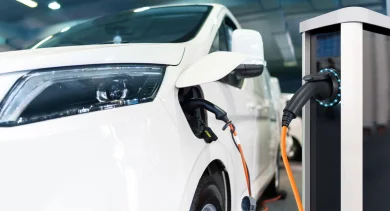
A mandatory requirement that an electric vehicle’s battery cells come from the European Union could increase the cost of the battery from €50 to €85 per kilowatt-hour and add approximately €2,100 to the price of a vehicle with an average 60 kWh battery, according to a policy brief by research centre Bruegel. The authors warn that measures intended to protect European industry from Chinese competition could make affordable electric vehicles more difficult to buy, particularly in entry-level segments.
In brief The €2,100 estimate is a scenario calculated by Bruegel for a mandatory requirement concerning EU-origin battery cells. It is not an official projection by the Commission and does not mean that every electric vehicle will become €2,100 more expensive. Through the Industrial Acceleration Act, the Commission has proposed “Made in EU” and/or low-carbon requirements for certain public procurement and public support schemes in strategic sectors, including the automotive industry. The proposal is currently undergoing the legislative process. Bruegel argues that the EU must preserve competitive pressure, accept foreign investment that brings technology, and link any trade protection to a clear deadline and verifiable efforts by industry to produce more affordable electric vehicles. The authors do not call for abandoning trade defence measures against China. They propose that any measures should be temporary, cover both battery-electric vehicles and plug-in hybrids, and avoid permanently increasing costs for consumers.
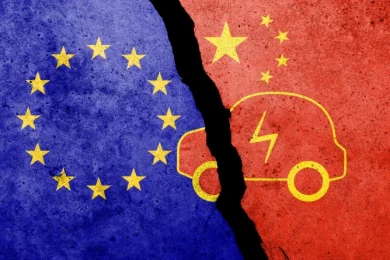
Bruegel starts from a real tension in European policy. The automotive industry is simultaneously undergoing electrification, facing weaker domestic demand and stronger competition from Chinese manufacturers. The Commission presented an action plan for the sector in 2025, followed by an automotive package that includes more flexible CO₂ emissions standards, €1.8 billion for Battery Booster and simplification measures. In March 2026, the Commission proposed the Industrial Acceleration Act, which introduces “Made in EU” and/or low-carbon requirements in certain public support and procurement schemes for strategic sectors.
For the study’s authors, the problem is not that the EU is simultaneously pursuing industrial resilience, emissions reductions and the protection of jobs. The problem is the combined cost of the instruments selected and the lack of a transparent assessment of the trade-offs. They estimate that a requirement for low-carbon steel could add around €200 per vehicle. A mandatory requirement for EU-origin battery cells would have a much greater effect in their example, because the €35-per-kWh difference is multiplied by the battery capacity.
These figures do not represent an adopted measure or a tariff set for a specific model. In Bruegel’s analysis, they illustrate why origin conditions can disproportionately affect cheaper vehicles, where buyers respond more strongly to price changes. The authors compare this pressure with the benefit of the technical simplification proposed by the Commission, estimated by the European executive at approximately €706 million annually for manufacturers. Set against the 11.4 million vehicles produced annually in the EU, Bruegel calculates an equivalent of approximately €61 per vehicle.
The study does not portray an industry in collapse. According to the authors, EU passenger-car production has fallen by 19% compared with 2019, but European manufacturers have remained net exporters of battery-electric vehicles and have continued investing in new production capacity. The risk they identify is the erosion of export markets, technological standing and supplier networks if protection of the domestic market becomes a substitute for innovation, lower energy costs, skills, charging infrastructure and battery recycling.
Regarding China, Bruegel does not recommend abandoning trade instruments. The authors believe that the EU could consider safeguard measures or a negotiated, time-limited sectoral agreement that would give manufacturers a predictable adjustment period. They warn, however, that a negotiated quantitative restriction raises questions about compatibility with World Trade Organization rules and could increase the profits of exporters receiving quotas.
Their proposal is that any potential agreement should not be an unconditional pause. It should be time-limited, provide for reviews and be linked to progress by European industry in producing affordable electric vehicles. Foreign investment in batteries and components should be assessed on a case-by-case basis, the authors say, according to the technology transfer, the added value created in the EU and the actual risks of dependency.
The political stakes are therefore broader than the dispute between European and Chinese vehicles. The Commission aims to increase European production and reduce dependencies in strategic sectors, but its proposals still need to be negotiated and adopted. Bruegel raises the condition attached to this strategy: protection can provide time for adjustment, but it cannot replace the industry’s ability to compete through price, technology and affordable electric models.
,
Latest News
15:56
15:52
15:49
15:48
15:39
See more news
NEWS ON THE SAME TOPICS