Commission closes two proceedings against France after opening at least 40% of hydropower capacity to EDF competitors



Always see our news on Google
The European Commission has closed two proceedings against France concerning the operation of hydropower facilities after Paris changed the legal framework for major installations and provided EDF’s competitors with access to at least 40% of the hydropower capacity installed nationwide. The decision announced on 7 October ends disputes with the French authorities that began more than a decade ago.
In brief, the Commission is closing a competition case concerning EDF’s position and an infringement proceeding concerning the award and extension of hydropower concessions. The new French law replaces the concession regime for installations of more than 4.5 MW with an authorisation system and real rights over the infrastructure. EDF must make products available to third parties representing sufficient capacity for at least 40% of the hydropower capacity installed in France to be accessible to other operators. The mechanism starts with 6 GW of virtual hydropower capacity, sold through auctions, and is planned to operate for 20 years. The targeted dams and installations remain the property of the French state. The reform does not transfer 40% of hydropower infrastructure to EDF’s competitors.
The first dispute concerned EDF’s position on the French electricity market. The Commission considered that directly awarding a large share of hydropower concessions to the incumbent operator, without competitive procedures and for very long periods, could strengthen the company’s dominant position. The case was opened on the basis of Articles 106 and 102 of the Treaty on the Functioning of the European Union.
In its 2025 report on competition policy, the Commission stated that approximately 85% of France’s hydropower capacity had been directly awarded to EDF and that some concessions could last up to 75 years. In July 2025, the European Executive had accepted in principle the solution proposed by France, but kept the case open until the reform was effectively adopted.
The second proceeding, INFR(2018)2378, was opened in 2019 and concerned internal market rules and the award of concessions. The Commission challenged the possibility of renewing or extending certain hydropower concessions without a transparent and competitive procedure, linking the issue both to European rules on concessions and to the freedom of establishment and the freedom to provide services.
The French law promulgated on 29 June 2026 changes the system’s architecture for hydropower installations with a capacity of more than 4.5 MW. The concession contracts concerned are terminated, and operation shifts to an authorisation regime. Under the conditions set out by law, existing operators may be granted real rights over the installations and rights to occupy public land for a period of 70 years.
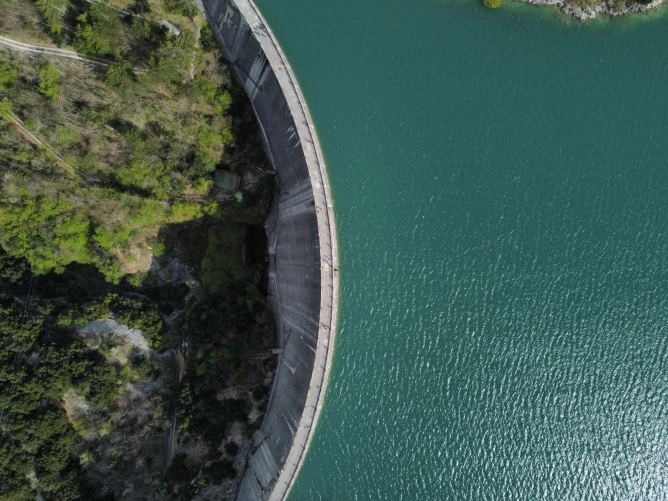
This change does not mean that the dams are being privatised. Ownership of the structures and installations remains with the French state, while the transfer of rights granted to operators is subject to conditions and approval by the authorities.
The competitive compensation mechanism is structured separately. EDF must place on the market products that reproduce the characteristics of hydropower generation so that companies outside the group have access to a sufficient share to open up at least 40% of the hydropower capacity installed in France.
Initially, the law sets virtual hydropower capacity at 6 GW. The level must be reassessed every five years to maintain the threshold of at least 40%, and the mechanism is planned to operate for a total period of 20 years.
The products will be marketed through auctions. The system includes a reserve price that must take production costs and market conditions into account and will operate under the supervision of the French energy regulator.
Access to 40% of capacity does not mean that competing operators will take ownership of or physically operate 40% of France’s dams. The mechanism gives them economic access to wholesale products that reproduce the output and flexibility of hydropower assets, while the infrastructure remains state-owned.
The reform aims to address simultaneously the issue of investment blocked by the expiry of concessions and European objections concerning competition. Hydropower has additional value for the electricity system because generation can be adjusted rapidly and some facilities can provide storage, making it easier to balance variable generation from sources such as solar and wind power.
The closure of the two proceedings means that the Commission considers the new framework to address the problems underlying the cases. It does not, however, conclude that the reform will automatically reduce electricity bills. The effects on competition, investment and prices will depend on the implementation of the mechanism, the auctions held and conditions in the French energy market.
ايستو,
Latest News
19:55
19:45
19:43
19:43
19:37
See more news
NEWS ON THE SAME TOPICS
.webp)
.webp)