The European Parliament sees Montenegro and Albania making progress on the road to the European Union, but calls for faster reforms in the Western Balkans.



Always see our news on Google
The European Parliament has assessed the progress of five countries in the Western Balkans on the path to joining the European Union and has sent a differentiated message: Montenegro and Albania are advancing the clearest, Kosovo and North Macedonia are blocked by political and institutional issues, while Bosnia and Herzegovina is warned that internal obstruction is hindering its European path. MEPs say that enlargement remains a process based on concrete reforms, not on a political calendar.
The European Parliament sent a differentiated message on Wednesday for five countries in the Western Balkans that wish to join the European Union: Montenegro is the most advanced candidate, Albania is progressing rapidly, while Bosnia and Herzegovina, Kosovo, and North Macedonia must overcome political and institutional blockages that slow their European path. MEPs adopted separate reports on Albania, Bosnia and Herzegovina, Kosovo, Montenegro, and North Macedonia, focusing on reforms, the rule of law, the functioning of institutions, and the political capacity to move forward with accession negotiations.
In short
1. The European Parliament has assessed the progress of five countries in the Western Balkans: Albania, Bosnia and Herzegovina, Kosovo, Montenegro, and North Macedonia.
2. Montenegro is presented as the most advanced candidate, aiming to become the 28th member state of the European Union by 2028.
3. Albania wants to conclude accession negotiations by the end of 2027, but MEPs warn that the pace depends on the quality of reforms.
4. Kosovo and North Macedonia are criticized for the lack of progress compared to previous reports.
5. Bosnia and Herzegovina is urged to put an end to political obstruction, politically motivated vetoes, and divisive rhetoric.
For a reader who does not follow the enlargement file daily, the votes in the European Parliament show the difference between countries that have entered a nearly technical negotiation stage and those that still face fundamental political blockages. Accession to the European Union means adopting and applying European legislation, but also stable institutions, functional justice, credible anti-corruption efforts, and administrative capacity to implement the rules in practice.
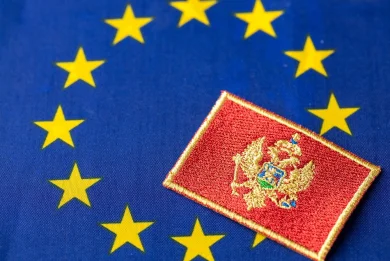
Montenegro remains the country closest to accession. MEPs welcomed the steady progress of reforms and Podgorica's ambition to finalize negotiations by the end of 2026 and to become the 28th member state of the European Union by 2028. The report on Montenegro was adopted with 486 votes in favor, 101 against, and 75 abstentions.
The message for Montenegro is, however, also political, not just technical. The European Parliament states that, alongside meeting the reform criteria, the strategic European orientation and the firm commitment of political representatives to the independent statehood of the country remain essential criteria in the accession process.
Albania also receives a positive signal. The report, adopted with 483 votes in favor, 103 against, and 70 abstentions, praises the rapid progress in recent years but calls on the authorities to ensure that the laws adopted are fully implemented. For Tirana, the stakes are no longer just the adoption of reforms on paper, but the ability to demonstrate that these change the functioning of institutions and administration.
MEPs draw attention to the fact that Albania must overcome internal political polarization, improve political culture, strengthen the rule of law, and consolidate anti-corruption reforms. The Parliament notes Albania's ambition to close accession negotiations by the end of 2027, but emphasizes that the deadline will depend on the quality of reforms, not just on declared political will.
In the case of Bosnia and Herzegovina, the tone is much harsher. The report was adopted with 478 votes in favor, 116 against, and 54 abstentions, and the Parliament reaffirms its support for the country's accession to the European Union based on unity, sovereignty, and territorial integrity. However, support is conditioned on reforms that strengthen democratic institutions, the rule of law, the fight against corruption and organized crime, and guarantee fundamental rights for all citizens.
MEPs call on political leaders in Bosnia and Herzegovina to renew their commitment to EU accession and to implement long-delayed reforms without delay. The Parliament demands an end to obstruction, politically motivated vetoes, and divisive rhetoric, which it considers direct obstacles to the country's European aspirations.
Kosovo is in a different but equally complicated situation. The Parliament appreciates Kosovo's continued commitment to the request for EU membership, but expresses concern over the inability to form a functional legislature and government for over a year. The report on Kosovo was adopted with 412 votes in favor, 174 against, and 58 abstentions.
MEPs call on the government in Pristina to accelerate EU-related reforms, especially in the areas of the rule of law, fundamental freedoms, and the fight against corruption. The report also emphasizes that normalizing relations with Serbia, including implementing the agreements from Brussels and Ohrid, remains essential for Kosovo's European ambitions.
North Macedonia receives one of the most cautious messages. The European Parliament reaffirms its full support for the country's accession to the European Union but regrets the lack of progress since the 2025 report, especially in the areas of the rule of law, judicial reform, and the fight against corruption. The report was adopted with 411 votes in favor, 120 against, and 120 abstentions.
For Skopje, the most visible blockage remains political. MEPs say that there is an urgent need for renewed political commitment and cooperation between parties, including for the adoption of the constitutional amendments necessary to open the first negotiation cluster. Without these changes, the accession process remains blocked even though European support for the country continues.
The five reports show that the EU enlargement in the Western Balkans is not progressing uniformly. The European Parliament supports the accession of candidate countries, but its message is that each state will be evaluated based on the reforms it implements, the stability of its institutions, and its capacity to resolve internal political issues that directly affect its European path.
Latest News
20:17
19:52
19:46
19:15
19:09
See more news
NEWS ON THE SAME TOPICS