Commission says Serbia’s latest political developments must be weighed before Cluster 3 is opened



Always see our news on Google
The European Commission says that the technical assessment carried out in July regarding the opening of Cluster 3 in the accession negotiations with Serbia must now be supplemented by an analysis of the latest political developments. The clarification comes after the funeral held in Belgrade for Ratko Mladić, convicted of genocide, war crimes, and crimes against humanity, an event the Commission considers incompatible with the values that an EU candidate country must uphold.
The European Commission says that the discussion on opening Cluster 3 in the accession negotiations with Serbia can no longer be conducted exclusively on the basis of the technical assessment carried out in July and that the Member States must now also take into account the latest political developments in the country. The clarification came after the Commission condemned the funeral held in Belgrade for Ratko Mladić, which was attended by officials and included elements of military support, and stated that glorifying a war criminal contradicts the values underpinning Serbia’s path toward the European Union.
In brief
1. The Commission completed in July the technical assessment of the reforms and conditions relevant to opening Cluster 3 in the accession negotiations with Serbia.
2. Following the latest political developments, the Commission says that the discussion now before the Member States must also take into account what has happened in Serbia in the meantime.
3. The reaction comes after the funeral held in Belgrade for Ratko Mladić, convicted of genocide, war crimes, and crimes against humanity, who died while serving a life sentence.
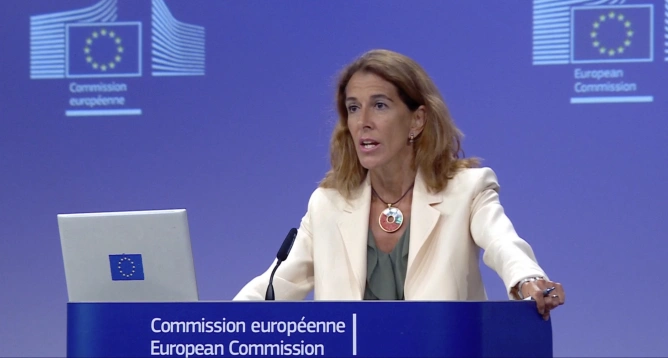
4. The Commission’s chief spokesperson, Paula Pinho, described the images from the funeral as “shocking” and said that the level of official participation contributes to glorifying a war criminal.
5. Asked whether the event would have concrete consequences for relations with Serbia, the Commission replied that it was assessing the next steps, without announcing a specific measure for the time being.
The Commission stated its position on Cluster 3 after being asked whether it still supported opening it under the current circumstances. The spokesperson for enlargement recalled that, in July, the European executive had carried out the technical assessment of the reforms and steps Serbia had to complete for this group of chapters to be opened.
That assessment was conducted on the basis of the situation existing at the time. The file is now with the Member States, however, and the Commission says that the discussion must also reflect the political developments that emerged subsequently.
“In July, we conducted our assessment of Cluster 3. It was a technical assessment of the various reforms and steps that had to be completed for the opening of Cluster 3, based on the relevant elements at that time,” the spokesperson explained. He added that the discussions now taking place at Member State level “will have to take place while also taking into account the latest political developments we have seen.”
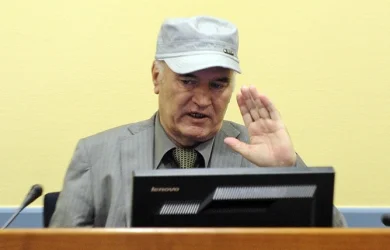
The clarification came in the context of the Commission’s reaction to the funeral of Ratko Mladić, the former military commander of the Bosnian Serbs, who was sentenced to life imprisonment for genocide, war crimes, and crimes against humanity. Mladić was convicted, among other things, of the Srebrenica genocide and other crimes committed during the war in Bosnia.
The funeral held in Belgrade attracted thousands of participants and included state officials and military honors. The event provoked strong reactions in the region and at the European level, including because of the way Mladić was publicly portrayed after his death.
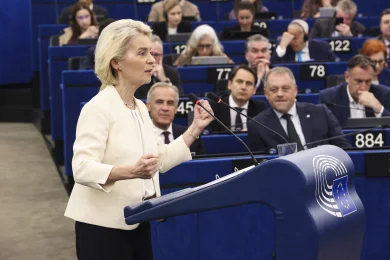
European Commission President Ursula von der Leyen publicly condemned the event, and Paula Pinho reiterated her position at the Commission’s briefing. Pinho said the images were “shocking” and emphasized the level of official support and the participation of ministers and army representatives.
“They demonstrate a failure to confront a dark chapter in Europe’s recent history and contradict the values underpinning Serbia’s path toward the European Union,” Pinho said. She added that such displays contribute to glorifying a war criminal and reaffirmed the Commission’s solidarity with the victims, survivors, and families affected by the crimes committed in the former Yugoslavia.
The Commission had already linked Serbia’s accession prospects to the way the country addresses the crimes of the wars of the 1990s. The day before, the spokespersons’ service had stated that glorifying war criminals, denying genocide, and revisionism have no place either in the European Union or in candidate countries.
At the 8 September briefing, however, the question became more concrete: whether the funeral and official participation would alter the Commission’s support for opening Cluster 3.
The response was not a formal withdrawal of the technical assessment conducted in July. The Commission did not say that the recommendation to open Cluster 3 had been canceled, nor that the negotiations would be suspended. It did clarify, however, that the July analysis reflected the conditions existing at that time and that the Member States must incorporate the new political developments into the current discussion.
This distinction is important for the status of the procedure. The Commission assesses compliance with the conditions and reforms in the accession process, while the political decision on opening a cluster belongs to the Member States.
In Serbia’s case, Cluster 3 covers chapters related to competitiveness and inclusive growth. The discussion on opening it has been prolonged, and a positive or sufficient technical assessment by the Commission does not automatically result in a Council decision.
Asked whether the funeral would have concrete consequences and what steps might follow, Pinho replied that the European executive was assessing the situation.
“Regarding your specific question about the next steps, we are looking into this,” the chief spokesperson said.
The Commission did not announce a suspension of the negotiations, a withdrawal of the recommendation concerning Cluster 3, or other sanctions directly related to the funeral. The message conveyed to the Member States, however, is that the technical assessment carried out before these events must not be viewed separately from the current political context.
The tension arises at a time when relations between Brussels and Belgrade are already being closely monitored through the political criteria of the accession process, which include the functioning of democratic institutions, the rule of law, fundamental rights, and regional reconciliation.
The Commission consistently insists that the enlargement process is merit-based and that technical progress must be accompanied by respect for the Union’s fundamental values. In Serbia’s case, the reaction to Mladić’s funeral now brings these considerations directly into the political discussion on the next step in the negotiations.
Von der Leyen also intends to visit the Western Balkans this year, but the Commission stated that the program has not yet been finalized and that it cannot confirm whether Serbia will be part of the itinerary.
Asked repeatedly whether Belgrade remained a possible destination after the recent events, Pinho said that the program was still being prepared and that she could not confirm or rule out any country at this point.
Therefore, the immediate consequence confirmed by the Commission is not a formal freezing of the accession process, but a change in the framework within which the Member States will continue discussing Cluster 3. The July technical assessment remains part of the file, but Brussels now explicitly says that subsequent political developments must also be weighed before a decision is made.
Serbia has been a candidate country for European Union membership since 2012, and accession negotiations began in 2014. The negotiating chapters are grouped into six thematic clusters, and their opening and closing depend both on the Commission’s assessments of reforms and on the agreement of the Member States.
The accession process is not limited to adopting European legislation. Candidate countries must also demonstrate respect for the Union’s fundamental values, including democracy, the rule of law, human rights, and reconciliation with the past in regions affected by conflict.
In Serbia’s case, the way the authorities address crimes committed during the wars in the former Yugoslavia has long been part of this political assessment. The Commission’s reaction this week shows that the issue is now also entering the immediate discussion concerning the next possible step in the accession negotiations.
Latest News
20:59
20:42
20:22
20:02
19:40
See more news
NEWS ON THE SAME TOPICS