Nearly 41,000 18-year-olds can receive free passes to travel across Europe



Always see our news on Google
The European Commission has opened a new DiscoverEU round for young people born in 2008, with nearly 41,000 travel passes available. Selected candidates will be able to travel for up to 30 days between March 2027 and May 2028 and will receive discounts on accommodation, culture, local transport, education, sport and other services.
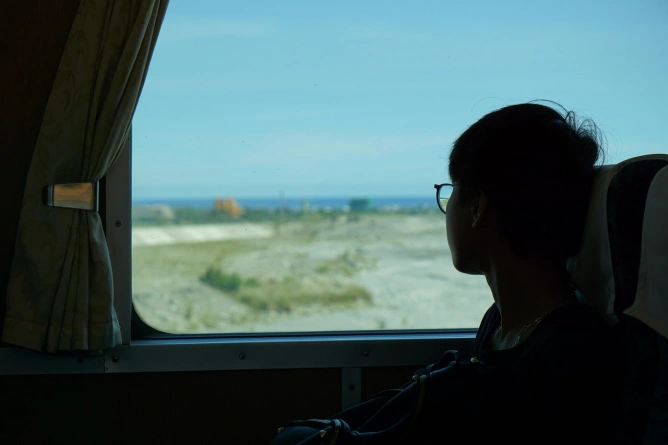
Young people born in 2008 can apply by 15 October for one of the nearly 41,000 travel passes offered through the new DiscoverEU round. Selected candidates will be able to explore Europe mainly by train, on a journey of up to 30 days that can take place between March 2027 and May 2028.
In brief
Nearly 41,000 DiscoverEU passes are available in the new round opened at the beginning of October.
Young people born between 1 January and 31 December 2008 from the EU and the Erasmus+ associated countries participating in the initiative can apply.
Selected candidates will be able to travel for up to 30 days between March 2027 and May 2028, mainly using rail transport.
All selected participants also receive a DiscoverEU card offering discounts on accommodation, culture, education, transport, food, sport and other services.
For the first time, the 250 highest-ranked candidates across all participating countries will also receive one free night in a youth hostel.
The new round is intended for young people turning 18 during 2026. Eligible applicants are people born between 1 January and 31 December 2008 from European Union member states and Erasmus+ associated countries included in DiscoverEU, including Iceland, Liechtenstein, North Macedonia, Norway, Serbia and Türkiye.
Applications opened on 1 October and close on 15 October. Receiving a pass is not automatic upon submitting an application, as the number of places is limited to nearly 41,000 for the current round.
Selected individuals will be able to use the pass for a journey of up to 30 days during a period beginning in March 2027 and ending in May 2028. DiscoverEU is built mainly around rail transport, although the programme allows other means of transport when trains do not provide a practically accessible solution.
The initiative aims to ensure that access is not limited to young people living in areas directly connected to major rail networks. For participants from remote regions, islands or other areas where travelling by train is not possible for the entire route, the mechanism may include other forms of transport under the conditions established for the programme.
The travel pass comes with the DiscoverEU European Youth Card. It offers discounts on services that may account for a significant part of a trip's cost, including accommodation, cultural activities, education, local transport, food and sport.
The current round also introduces a new benefit. The 250 highest-ranked candidates from all participating countries will receive one free night in a youth hostel. This measure is added to the transport pass and discount card and does not automatically apply to all DiscoverEU beneficiaries.
The Commission is also adding a more prominent cultural component in this edition. As part of the actions associated with the Culture Compass for Europe, a new DiscoverEU route built around sites holding the European Heritage Label will be launched.
The label is awarded to places that are significant for the history, values, integration or development of the European Union. The new route does not require participants to follow a predetermined itinerary, but offers them a thematic option for planning their journey.
DiscoverEU allows young people to plan their own route, so the pass does not function as a group trip centrally organised by the Commission. The programme is intended to combine mobility with cultural experiences, meetings with people from other countries and exploration of different European regions.
The programme is part of Erasmus+ and is specifically intended for 18-year-olds. It was designed as a way to provide access to European mobility for people who do not necessarily take part in a university exchange, traineeship or other international educational project.
The Commission also presents DiscoverEU as an informal education tool. Participants are encouraged to discover Europe's cultural heritage and history and to connect with other communities, without the trip being linked to an educational institution or an academic programme as such.
Glenn Micallef, European Commissioner for Intergenerational Equity, Youth, Culture and Sport, described the initiative as an opportunity for young people to travel by train, gain experience and meet people from other countries. He also linked the current round to the opportunity to discover Europe's cultural heritage through routes created by participants or recommended by the programme.
The pass does not automatically cover all the costs of a journey. Accommodation, food and many other expenses remain the participant's responsibility, although the DiscoverEU card provides discounts for a range of services.
The programme includes support measures for young people whose travel is more difficult because of a disability or health problem. The aim is to ensure that the need for additional support does not automatically exclude an applicant from the DiscoverEU experience.
The current round is one of the last organised under the current Erasmus+ period, 2021–2027. DiscoverEU was integrated into the Erasmus+ programme after its initial phases and is administered by the European Commission together with the European Education and Culture Executive Agency.
https://2eu.brussels/ro/news/aproape-41000-de-tineri-de-18-ani-pot-primi-permise-gratuite-pentru-a-calatori-prin-europa
Latest News
16:34
16:27
16:20
16:19
16:17
See more news
NEWS ON THE SAME TOPICS


.webp)