EP rapporteur calls for €47.4 billion for Erasmus+ in 2028–2034 and grants adjusted to the cost of living



Always see our news on Google
Bogdan Andrzej Zdrojewski presented in Strasbourg the CULT committee’s proposal to increase the Erasmus+ budget for 2028–2034 to approximately €47.4 billion, compared with the €40.8 billion proposed by the European Commission. The report seeks grants adapted to the real costs of mobility and a target of at least 20% of participants with fewer opportunities. The plenary vote is scheduled for 22 October; the regulation and final funding require agreement with the Council.
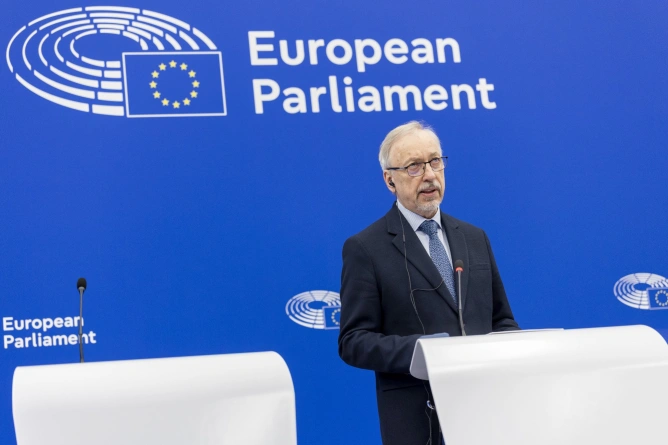
The European Parliament’s rapporteur for the future of Erasmus+, Bogdan Andrzej Zdrojewski, called on Wednesday, 21 October 2026, in Strasbourg, for a budget of approximately €47.4 billion for the 2028–2034 period and financial support that better reflects the cost of living in study and training destinations. The proposal, adopted by the Committee on Culture and Education (CULT), exceeds the amount proposed by the European Commission by approximately €6.6 billion and seeks to ensure that at least 20% of mobility participants are people with fewer opportunities. Zdrojewski presented the report at a press conference ahead of the plenary vote scheduled for 22 October, without the budget or the new rules having yet been definitively approved.
In brief
The CULT committee proposes €47,387,963,000 for Erasmus+ in 2028–2034, compared with €40,827,000,000 in the European Commission’s proposal. The difference is €6,560,963,000; both amounts are expressed in current prices.
The report calls for support mechanisms that take into account the cost of living and housing, inflation and purchasing power in the host countries, regions and cities. It does not establish a universal grant or an immediate increase for current participants.
At least 20% of mobility participants should be people with fewer opportunities. The objective in the legislative text concerns the number of participants, not a 20% share of the budget.
The activities of the European Solidarity Corps would be integrated into Erasmus+, while preserving the visibility and accessibility of volunteering. The report also introduces budgetary shares for education and training, youth and volunteering, sport and the operation of the programme.
CULT approved the report on 29 September by 24 votes in favour, one against and one abstention. The plenary vote on 22 October represents the next stage; the final regulation and budget depend on negotiations with the Council and on the 2028–2034 multiannual financial framework.
The cost of a period of study or training abroad is one of the central issues that the report seeks to address. Differences in rent and daily expenses can limit the options of those who cannot afford to supplement the grant from their own resources. At the press conference, the Polish MEP supported both increased funding and the adaptation of support to the economic conditions in the place where the mobility takes place.
The text adopted by CULT provides for objective and transparent criteria that take into account the cost of living, housing prices, inflation and purchasing power across host countries, regions and cities. These mechanisms are intended to improve access for people with fewer opportunities and ensure fair treatment among participants. However, the report does not set a single grant amount for each destination; the specific amounts will depend on the rules and resources of the final programme.
The budget requested in the report is €47,387,963,000 in current prices, equivalent to €42 billion in 2025 prices. Rounded to one decimal place, the amount is €47.4 billion, the figure also presented by the rapporteur at the conference. The European Commission’s proposal of 16 July 2025 provided for €40,827,000,000 in current prices, approximately €36.2 billion in 2025 prices. Comparing the amounts in current prices shows a requested increase of €6,560,963,000, or approximately €6.6 billion.
Current prices include the estimated evolution of prices in the years when spending will take place, while expressing amounts in 2025 prices allows purchasing power to be compared on the same basis. The Commission’s proposal already represented an increase compared with the combined funding of Erasmus+ and the European Solidarity Corps under the current financial framework. The two programmes must be considered together in this comparison, since the future structure would also include solidarity activities.
Another difference from the European executive’s proposal concerns the distribution of funds. The Commission did not include an indicative distribution among the main areas in the draft regulation, whereas CULT calls for indicative shares and minimum allocations that would provide greater predictability. The report proposes 74.6% for education and training, 15% for youth and volunteering, and 4.1% for sport. The remaining 6.3% comprises 2.3% for the operational costs of national agencies, 1% for programme support and a 3% flexibility margin.
The distribution is supplemented by thresholds for subfields, including higher education, vocational education and training, school education and adult learning. The flexibility margin could support programme activities according to emerging needs and would be allocated in full through annual budgetary procedures by the end of the period. All these shares form part of the parliamentary proposal, and the definitive form will be negotiated with the Member States.
For inclusion, the legislative text sets the objective that at least 20% of mobility participants should be people with fewer opportunities. Obstacles may be economic, social, geographical or related to other circumstances that make access to international education and training more difficult. The report links this target to financial support, pre-financing, accessible information, guidance and adapted services. The percentage measures participation, without automatically reserving one-fifth of the budget for this category.
Integrating the European Solidarity Corps would bring together within a common framework activities in education, training, youth, sport, volunteering and solidarity that currently operate through separate programmes. MEPs are calling for the reorganisation to preserve the visibility and accessibility of volunteering opportunities, so that beneficiaries and organisations can continue to identify and use them. These guarantees accompany the objective of simpler administration.
The future Erasmus+ would continue to support the mobility of students, pupils, vocational education and training learners, teaching staff and other eligible groups. For new grants in strategic educational fields, CULT calls for co-financing from additional resources or other European programmes. The report also limits the monthly contribution from Erasmus+ to the maximum level of mobility grants, in order to protect the funding of existing activities, inclusion and transnational cooperation.
For participants from Romania, the stake is access to mobility opportunities under conditions in which family income and the cost of the destination do not become decisive obstacles. Adapting support can make the difference between being able to choose a university or training centre and giving up the international experience. However, the proposals for 2028–2034 do not automatically modify grants currently in progress and do not yet create an individual right to a larger grant.
The report was approved by CULT on 29 September, with 24 votes in favour, one against and one abstention, while the conference on 21 October preceded the plenary vote scheduled for the following day. After the Parliament’s position is established, adoption of the regulation requires agreement with the Council. Final funding will also depend on negotiations on the 2028–2034 multiannual financial framework, meaning that the €47.4 billion amount remains a negotiating request.
Latest News
10:50
10:39
10:17
10:15
10:09
See more news
NEWS ON THE SAME TOPICS














.webp)