The Commission challenges the €1 billion in cuts requested by the Council in the EU’s 2027 budget, including reductions to research and Erasmus+



Always see our news on Google
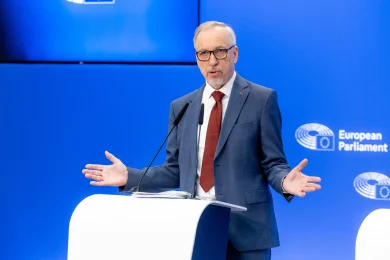
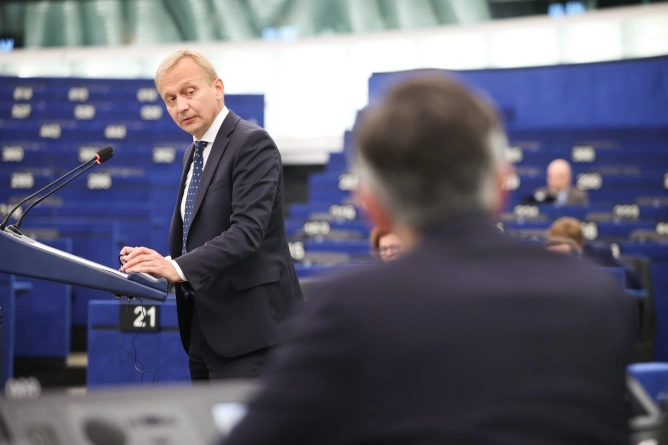
The European Commission is challenging the one-billion-euro cuts that the Council is proposing compared with the draft EU budget for 2027, including reductions in funding for research, Erasmus+, health and digital infrastructure. In the plenary session of the European Parliament in Strasbourg, Budget Commissioner Piotr Serafin described the cuts as unjustified, while the Irish presidency of the Council defended limiting some spending increases because of pressure on national budgets.
In briefThe dispute concerns the differences compared with the Commission's draft for 2027. The Council argues that some increases compared with the 2026 budget should be moderated, while Serafin says that the initial proposal was already prudent and adapted to the resources available.
Rapporteur Nils Ušakovs indicated cuts of 159 million euros for Erasmus+ and more than 230 million for Horizon Europe. The amounts presented in the debate describe the Council's contested position, without representing final adopted allocations.
Simon Harris presented a position of 191.9 billion euros in commitments and 202.1 billion in payments, excluding appropriations for special instruments outside the multiannual ceilings. The two figures measure different categories and cannot be added together to obtain the budget.
The Commission is also challenging the 180-million-euro reduction in the amount earmarked for the financing costs of NextGenerationEU. Estimates are due to be updated before the final negotiations.
The Irish presidency is seeking an agreement in November. Parliament is due to establish its position, and differences with the Council may be negotiated in the conciliation procedure.
Serafin argued that 2027 is the final year of the current multiannual financial framework, with limited scope for reallocating resources or responding to additional needs. In his view, the Commission's draft enables the Union to meet its commitments, while the Council's cuts affect programmes through which it finances precisely the priorities assumed by the Member States.
The Commissioner listed Horizon Europe, the research programme, Digital Europe and the Connecting Europe Facility, alongside Erasmus+, EU4Health and programmes for rights and values. His criticism concerns the reduction in resources compared with the level proposed by the Commission. It does not mean that each of these programmes would automatically receive less money than in 2026.
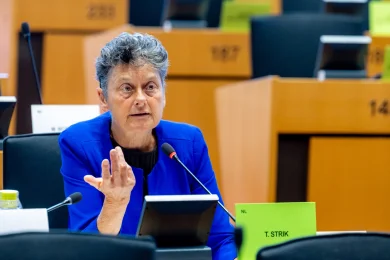
Parliament's rapporteur for the Commission section of the budget, Nils Ušakovs, challenged both the amounts and the method used by the Council. According to his assessment, the adjustments start from the 2026 levels and reduce the increases without sufficient examination of each programme's needs, its capacity to use the funds or the political priorities.
For Erasmus+, Ušakovs indicated a reduction of 159 million euros compared with the Commission's draft. For Horizon Europe, he spoke of a total reduction of more than 230 million, within which the health component would lose 74.5 million. The rapporteur contrasted these amounts with the Irish presidency's commitments to support educational mobility and innovation in health.
In the same intervention, Ušakovs mentioned 41 million euros less for EU4Health, 47 million for the Connecting Europe Facility and 55 million for Digital Europe. He said that the line for digital skills would be reduced by more than one third and called on Parliament to put forward a common counterproposal built around the programmes' priorities.
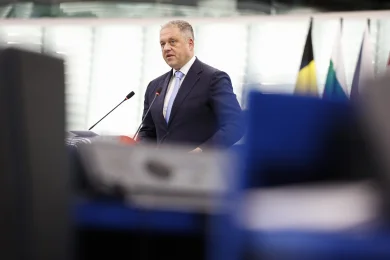
Presenting the Council's position, Irish Finance Minister Simon Harris argued that some of the increases proposed by the Commission must be moderated to take account of the state of national public finances. He said that the Member States had sought to preserve the capacity to respond to crises, limit the use of special instruments and leave resources available for unforeseen needs. Harris specified that humanitarian aid had instead been increased compared with the Commission's proposal.
According to the figures presented by Harris, the Council's position provides for 191.9 billion euros in commitment appropriations and 202.1 billion in payment appropriations, excluding special instruments outside the ceilings of the multiannual framework. Commitments allow legal obligations, such as contracts or grants, to be undertaken and paid over several years. Payments cover the amounts due in the budget year, including for obligations undertaken previously.
Another dispute concerns the financing costs of NextGenerationEU. Serafin criticised a reduction of 180 million euros on this line and argued that, based on the information available, it was not justified. Harris presented the Council's approach as more prudent with regard to advance payments under the recovery instrument.
The Commission will update the requirements for interest, the support loan for Ukraine, administrative expenditure and agriculture through an amending letter, Serafin explained. Following Parliament's position, the Commission will also submit an assessment of the possibility of implementing the changes requested by MEPs, as a document for the conciliation process.
The annual budget is adopted by the European Parliament and the Council, on the basis of the Commission's draft, within the limits of the multiannual financial framework. If the positions of the two legislators differ, a conciliation committee has three weeks to find a compromise, which must then be approved by both sides.
Harris identified November as the target for agreement on the 2027 budget. The negotiations will have to determine to what extent the contested cuts are retained and how the programmes, borrowing costs and reserves for unforeseen circumstances are financed in the final year of the 2021–2027 framework.
Latest News
22:55
22:48
22:22
22:14
21:54
See more news
NEWS ON THE SAME TOPICS