The CULT Committee calls for EUR 47.39 billion for Erasmus+ and rules to open the programme to more participants



Always see our news on Google
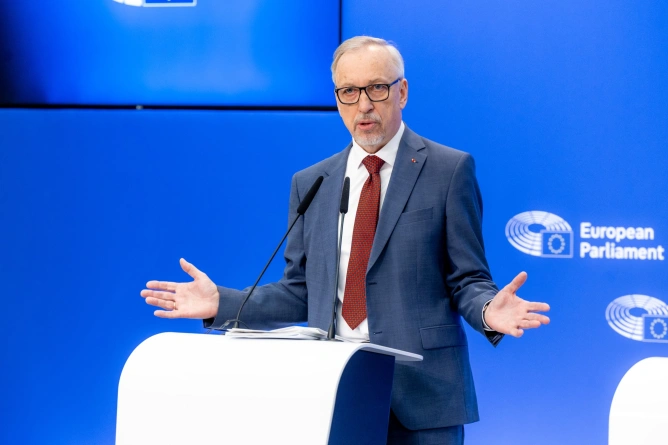
The European Parliament’s Committee on Culture and Education approved, by 24 votes in favour, one against and one abstention, its position on Erasmus+ for 2028–2034. The report led by Bogdan Zdrojewski calls for a budget of EUR 47.39 billion, simpler and more inclusive access, less bureaucracy and the integration of the activities of the current European Solidarity Corps into the new programme.
The European Parliament’s Committee on Culture and Education, CULT, approved its position on the future of Erasmus+ for the 2028–2034 period, calling for a budget of EUR 47.39 billion and changes intended to expand access to mobility, education, training, volunteering and sport. The report coordinated by Polish MEP Bogdan Zdrojewski was adopted by 24 votes in favour, one against and one abstention, and must now go through the plenary stage before Parliament’s position can serve as the basis for negotiations with the Council.
In brief
CULT approved the report on Erasmus+ 2028–2034 by 24 votes in favour, one against and one abstention.
Parliament is calling for a budget of EUR 47.39 billion in current prices for the programme, compared with approximately EUR 40.8 billion in the Commission’s initial proposal.
The report focuses on simpler access, reducing bureaucracy and the participation of people affected by social, geographical, economic or other barriers.
The future Erasmus+ would also integrate the activities of the current European Solidarity Corps, including volunteering and the European Voluntary Humanitarian Aid Corps.
The CULT vote does not constitute final approval of the budget or regulation. The file must continue through Parliament and then into negotiations with the Council.
The CULT report concerns the regulation that will establish the architecture of Erasmus+ for the entire 2028–2034 budget cycle. The Commission’s proposal brings together in a single programme areas currently funded through Erasmus+ and the European Solidarity Corps, so that education and training, youth, volunteering and sport can be managed within a common framework.
Rapporteur Bogdan Zdrojewski, from the EPP, presented the reform as an evolution of the current programme, not a complete reconstruction. His priorities are increasing mobility, simplifying access, reducing administrative requirements and expanding participation to groups that currently face greater difficulties in accessing Erasmus+.
A central element is the budget. Parliament’s position on the multiannual financial framework already calls for EUR 47.39 billion in current prices for Erasmus+, equivalent to EUR 42 billion in constant 2025 prices. The Commission’s proposal for the new programme started at approximately EUR 40.8 billion in current prices.
The difference is approximately EUR 6.6 billion. Parliament argues that a merely nominal increase in the budget compared with the current period is not sufficient if the future Erasmus+ also takes over the activities of the European Solidarity Corps and must at the same time cover more categories of participants and objectives.
The report adopted in CULT also seeks a clearer distribution of funds among the programme’s main areas. These include education and training, youth and volunteering, and sport. At the same time, MEPs want to retain sufficient flexibility for funds to be adapted to changes in demand over the seven-year period.
In the case of sport, the report calls for a minimum allocation of part of the budget. In the documentation presented by the rapporteur, at least 1% of resources should be protected for this component, so that sport does not lose visibility or funding within a larger programme.
Inclusion is another important component. Erasmus+ already has mechanisms for participants with fewer opportunities, but CULT wants the new regulation to make accessibility a stronger criterion in the design and administration of the programme.
This category may include people facing economic, social, geographical, health or accessibility barriers. In practice, the objective is for participation in Erasmus+ to depend less on an individual’s ability to bear additional costs, proximity to major institutions or the administrative experience of the organisation submitting the project.
The rapporteur also insisted on reducing bureaucracy. Erasmus+ operates through national agencies, education and training institutions, youth organisations and numerous beneficiaries of different sizes, while administrative procedures can become a barrier, especially for small organisations and new participants.
CULT’s position therefore calls for simpler procedures and administration that does not reduce control standards but limits disproportionate administrative costs. This approach is also linked to the objective of expanding participation beyond organisations and institutions that already have repeated experience with the programme.
The future Erasmus+ would also include the activities of the European Solidarity Corps. It currently funds volunteering and solidarity projects for young people, while the Commission’s proposal provides for integrating these opportunities into the new Erasmus+ architecture.
However, integration also raises the issue of the visibility of different components. Parliament wants volunteering, youth and sport not to be administratively absorbed into a larger programme without guarantees that they will receive identifiable funding and objectives.
The report also discusses the participation of Ukrainian young people and students. Erasmus+ has been used since the beginning of the Russian invasion to support mobility, university cooperation and educational continuity, and CULT’s position seeks to maintain the programme’s capacity to respond to such situations.
Another element is performance monitoring. The report proposes indicators that would allow assessment not only of the total number of mobilities, but also of access for people with fewer opportunities, the distribution of funds and the results achieved across the programme’s different components.
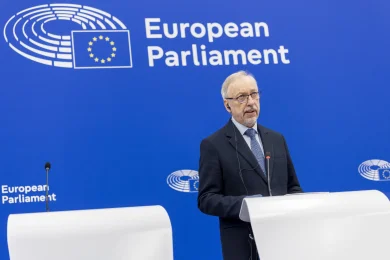
At the conference organised after the vote, Zdrojewski presented the programme as one of the most recognisable European projects and stressed that the reform must enable greater mobility and simpler access. However, the Polish-language passages in the automated transcript are damaged, so his exact wording should not be reproduced as quotations without checking the recording.
Procedurally, the CULT vote does not yet establish the final budget for Erasmus+. The regulation follows the ordinary legislative procedure, under which Parliament and the Council must agree on the same text. In parallel, the available amount depends on the broader agreement on the 2028–2034 multiannual financial framework.
The EUR 47.39 billion therefore represents the amount requested by Parliament for the future programme, not a definitively allocated sum. Negotiations on the European budget may change the final level, and the Erasmus+ regulation must be adopted separately from the general financial architecture.
The next stage is to consolidate Parliament’s position at plenary level. Only then can the file move on to interinstitutional negotiations, which will determine the programme’s final structure, access rules and distribution of funds for the 2028–2034 period.
https://2eu.brussels/ro/news/comisia-cult-cere-4739-miliarde-eur-pentru-erasmus-si-reguli-care-sa-deschida-programul-unui-numar-mai-mare-de-participanti
Latest News
22:52
22:34
22:28
21:56
21:29
See more news
NEWS ON THE SAME TOPICS