Nicolae Ștefănuță calls for Erasmus scholarships of at least €1,000 per month for students




Always see our news on Google
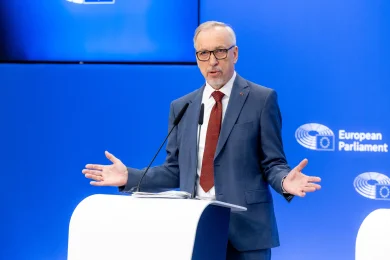
Nicolae Ștefănuță, co-president of the Greens/European Free Alliance group in the European Parliament, is calling for Erasmus grants of at least 1,000 euros per month so that the support keeps pace with students’ expenses abroad. At the press conference on October 20 in Strasbourg, the Romanian MEP argued that 700 euros per month are no longer sufficient in the context of rising living costs and called for this issue to be reflected in the EU’s future budget. The request is political; a binding European threshold of 1,000 euros has not been adopted.
In brief
Nicolae Ștefănuță is calling for Erasmus grants of at least 1,000 euros per month, adapted to the cost of living. The threshold is not an adopted rule.
The 2026 national call provides basic grants of 674 or 606 euros per month for long-term study mobilities, depending on the destination, plus eligible supplements.
A Romanian project worth approximately 82.8 million lei aims to support at least 4,000 students with fewer opportunities in 2026–2029, through universities.
The Commission proposes 40.8 billion euros for the future Erasmus+ programme, while CULT is calling for approximately 47.39 billion. The plenary vote is scheduled for October 22.
The intervention comes ahead of the plenary debate on the future Erasmus+ programme for 2028–2034. The cost of a mobility includes accommodation, living expenses, and transport, while the European grant represents a contribution toward these expenses. The remaining difference to be covered may limit access for students who do not receive additional support from their family or other sources.
Ștefănuță linked the increase in grants to the negotiations on the Union’s multiannual financial framework. His request does not specify whether the amount of 1,000 euros would represent basic support or include supplements awarded to certain participants. Nor are the categories concerned and the funding mechanism established by this statement.
For students from Romania, the practical reference remains the financing agreement concluded with the university. The 2026 national Erasmus+ call sets basic individual support for long-term study mobilities at 674 or 606 euros per month, depending on the destination. Thus, 674 euros are provided for Belgium, France, Germany, Italy, Spain, or Portugal, while 606 euros are provided for destinations such as Bulgaria, Croatia, Poland, or Hungary.
These national amounts fall within the ranges established by the Erasmus+ Guide and do not represent the possible total for each participant. Students with fewer opportunities may receive a supplement of 250 euros per month, while eligible traineeships receive an additional 150 euros. The two supplements are cumulative when the applicable conditions are met. In such a case, a base amount of 674 euros may reach 1,074 euros per month. There are also separate rules for certain mobilities with countries not associated with the programme, including a basic amount of 700 euros.
Therefore, the 700 euros referred to by Ștefănuță do not describe a standard grant received by all Erasmus students. The comparison with the requested threshold of 1,000 euros must take into account the destination, type of mobility, and supplements for which each student is eligible.
The scale of the financial barrier is also described by the National Agency for Community Programmes in the Field of Education and Vocational Training, ANPCDEFP. On its page updated on September 16, 2026, the agency states that more than 10,000 students from Romania participate annually in Erasmus+ mobilities, but represent less than 2% of students enrolled in higher education. Approximately 1,000 of the participants are students with fewer opportunities. The agency identifies financial difficulties as the main barrier for this category and emphasizes that grants are not designed to cover costs in full.
A complementary project carried out by ANPCDEFP in 2026–2029 aims to support at least 4,000 students with fewer opportunities. The total budget is approximately 82.8 million lei, of which around 66.6 million comes from the European Social Fund Plus; the remainder includes the contribution of the national budget and beneficiary co-financing. This is a project budget, not the amount of payments already made to students.
Support is provided through participating universities, under the project’s own conditions. The target group consists of students between 18 and 29 years old, enrolled in eligible university programmes, who fall into at least one of the specified categories of fewer opportunities. The project is separate from Ștefănuță’s request and does not introduce a general grant of 1,000 euros. Interested students should check with their university’s Erasmus office whether the institution is participating, as well as the selection process and available support.
At European level, the Commission has proposed approximately 40.8 billion euros for Erasmus+ in 2028–2034, compared with the 26.2 billion presented for the 2021–2027 period. The comparison concerns nominal budgets and a future programme with a broader scope, which would include the activities of the European Solidarity Corps. It does not automatically indicate a proportional increase in individual grants.
The European Parliament’s Committee on Culture and Education, CULT, adopted a position on September 29 calling for approximately 47.39 billion euros for the future programme. The report is scheduled for plenary debate on October 21 and a vote on October 22. These steps are intended to establish Parliament’s position; they do not mean that the final budget has been agreed with the Member States.
The value of future grants will depend on the negotiated budget, the rules adopted, and the allocation of funds among the programme’s activities. Until then, the request for an increase does not change the amounts in students’ agreements, and access to supplements and complementary funding must be verified through universities.
Latest News
22:59
22:55
22:44
22:40
22:40
See more news
NEWS ON THE SAME TOPICS