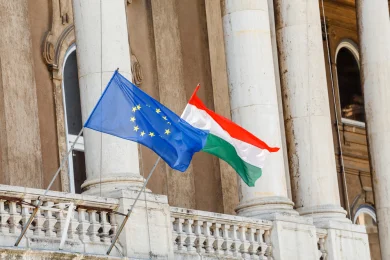
EU Council approves lifting budget restrictions on Hungary



Always see our news on Google
The decision of 13 October concerns the measures imposed in 2022 to protect the European budget. The Commission separately proposes reintroducing approximately 2.2 billion euros in commitments for 2024–2025, while the affected universities may return to European programs under the conditions of the funding calls.
The Council of the European Union approved on 13 October 2026 the lifting of the budgetary measures imposed on Hungary in 2022 because of risks related to corruption, public procurement, and conflicts of interest. The adoption was announced by Hungary’s permanent representation and welcomed on the same day by Commission President Ursula von der Leyen. For cohesion projects and the affected universities, the approval represents an important step, but the recovery of commitments and obtaining funding follow separate procedures.
In brief
1. The Council approved the lifting of the measures on 13 October. The decision concerns cohesion funds and the restrictions applied to public-interest foundations and the institutions managed by them.
2. The Commission proposes reintroducing approximately 2.2 billion euros into the budget for 2024–2025. The amount represents budgetary commitments, without an automatic transfer to Hungary.
3. The commitments suspended for 2022 and 2023 were definitively cancelled and can no longer be recovered through this procedure.
4. For the universities concerned, returning to Erasmus+ and Horizon Europe depends on the rules of each call. Eligibility does not guarantee a grant.
5. The favorable assessment of the reforms concerns the protection of the EU budget. The separate procedure concerning respect for the Union’s values continues.
The change comes after the Commission reassessed the corrective measures notified by Budapest on 9 September and proposed, on 23 September, lifting the restrictions. The European executive considered that the reforms adopted remedy the deficiencies that had justified protecting the budget through the 2022 measures. The Council approved the proposal on 13 October. It is a decision concerning risks to European money, without certifying that all rule-of-law problems in Hungary have been resolved.
The measures had two components. The first suspended 55% of the commitments for three cohesion programs dedicated to the environment and energy efficiency, integrated transport, and the territorial development and development of localities. The second prevented the conclusion of new legal commitments with Hungarian public-interest foundations and the entities managed by them, from funds managed directly or indirectly by the EU. This category also included universities participating in European education and research programs.
For the three cohesion programs, the specific budget document is draft amending budget No. 3 for 2026, presented by the Commission on 9 October. It proposes reintroducing the commitments suspended for 2024 and 2025, worth 2,201,164,772 euros. This is the amount for the two annual installments included in the amendment, not a payment already made to beneficiaries.
A budgetary commitment allows the Union to commit to expenses that will be paid later, as the funding conditions are fulfilled. For the operation to reintroduce the Hungarian commitments, the Commission’s table does not propose additional payment appropriations. The projects must be implemented, and payment claims must comply with the rules of the programs and the applicable conditions.
The adoption of the Council decision and approval of the budget amendment are different stages. The Commission proposal also provides for adjusting the ceilings of the multiannual financial framework to reintroduce the commitments. On 19 October, the European Parliament file concerning the amending budget was in the preparatory phase, with 23 November indicated as an indicative date for examination in plenary. The indicative timetable does not amount to approval of the budget.
For the older installments, the legal deadline has expired. European rules do not allow the reintroduction of commitments relating to year n after year n+2. The Commission’s draft confirms that the commitments suspended for 2022 and 2023 have already been definitively cancelled. For the 2024 installment, the limit is the end of 2026, and for the 2025 installment, the end of 2027. The Commission proposes reintroducing both into the 2026 budget.
In assessing the reforms, the Commission emphasizes strengthening the Integrity Authority, its access to data, the verification of asset declarations, and the transparency of public procurement. The limitation of conflicts of interest in public-interest foundations, the control of beneficial owners, and the possibility of challenging decisions by investigating authorities and prosecutors were also analyzed. Hungary’s participation in the European Public Prosecutor’s Office, confirmed by the Commission’s decision of 10 July, is presented as an additional safeguard for investigating crimes affecting the EU’s financial interests.
For students and researchers, the stake is the possibility for the affected institutions to participate again in Erasmus+ and Horizon Europe funding. The ban did not concern all Hungarian universities, but the foundations and entities included in the 2022 measure. Lifting it does not automatically award scholarships, guarantee the selection of projects, or retroactively reinstate grants. Each institution must meet the rules of the program and of the call in which it participates.
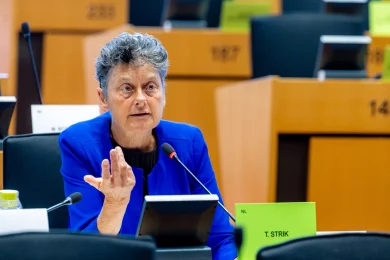
The Commission’s favorable assessment was also met with calls for parliamentary scrutiny. On 23 September, Tineke Strik, the European Parliament’s rapporteur for the procedure concerning Hungary under Article 7 of the Treaty on European Union, called for the unblocking of funds to be based on reforms implemented in practice. Among other things, she cited the fact that the process of dissolving public-interest foundations was still under way. The observation concerns the difference between adopting rules and their effective operation.
The Article 7 procedure has a broader subject than budget protection. At the meeting on 13 October, ministers separately discussed the rule-of-law situation in Hungary within this framework. Approval of the lifting of the budgetary measures does not close that procedure and does not abolish the European regulation on conditionality. For beneficiaries, the concrete effect will depend on completing the budgetary stages and fulfilling the conditions of each funding instrument.
Correction, 19 October 2026. The previous version presented the adoption of the Council decision as a stage still to come. The adoption had been announced on 13 October, before the article was published. We corrected the title and the affected passages and specified that the approximately 2.2 billion euros in the draft budget represents commitments for 2024–2025, without constituting a payment already made.
Latest News
22:52
22:48
22:43
22:38
22:20
See more news
NEWS ON THE SAME TOPICS

.webp)