The European Parliament delegation welcomes reforms in Hungary, but the Article 7 procedure remains open



Always see our news on Google
Following the visit from 26–28 October to Budapest, the European Parliament delegation welcomed the changes concerning justice, the fight against corruption and fundamental rights. The independence of institutions, media pluralism and access to asylum nevertheless remain issues to be resolved. The MEPs will present the LIBE committee’s findings ahead of a debate and a plenary resolution.
The European Parliament delegation that assessed the rule of law situation in Hungary welcomed the scope of the reforms following the change of government, but has not yet drawn a conclusion on the closure of the Article 7 procedure. At the end of the visit from 26–28 October to Budapest, the MEPs welcomed changes in the judiciary and in the protection of fundamental rights, while calling for lasting guarantees for the independence of institutions and the effective application of the new rules.
In brief
1.The European Parliament delegation welcomes the reforms in Hungary, including the end of governance by emergency decrees, the abolition of the Sovereignty Protection Office and participation in the European Public Prosecutor’s Office.
2.Problems remain regarding judicial independence, the fight against high-level corruption, the concentration of media ownership, the rights of LGBTIQ+ people and access to asylum.
3.Changes to electoral legislation, a comprehensive media reform and a new Constitution are announced plans. The delegation calls for broad consultations and guarantees that can withstand changes of government.
4.Lifting the measures protecting the EU budget does not close the Article 7 procedure and does not automatically remove all conditions for accessing European funds.
5.The delegation will report to the LIBE committee. A debate and a resolution on Hungary are scheduled for the Parliament’s upcoming sessions, with no decision yet taken on the future of the procedure.
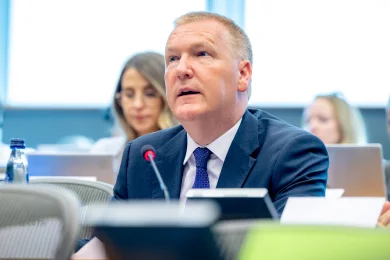
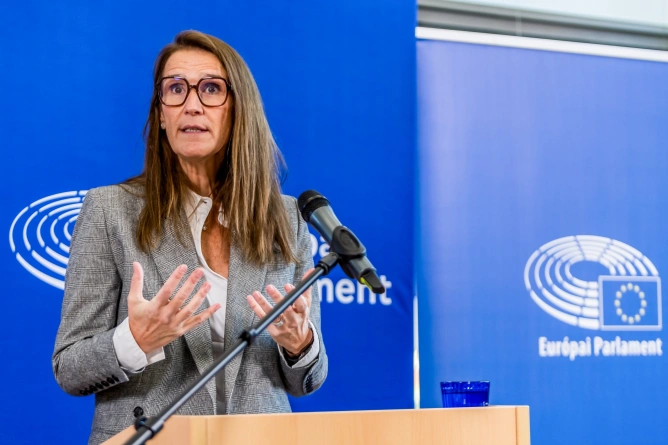
The mission was led by Sophie Wilmès, who chairs the Democracy, Rule of Law and Fundamental Rights Monitoring Group within the Committee on Civil Liberties, Justice and Home Affairs (LIBE). The delegation also included Tineke Strik, the Parliament’s rapporteur for the Article 7 procedure concerning Hungary. Their assessment covers both the amended laws and the way institutions operate following the reforms.
The statement published at the end of the visit lists, among the important advances, the end of governance by emergency decrees, the abolition of the Sovereignty Protection Office and Hungary’s participation in the European Public Prosecutor’s Office. The delegation also notes judicial and anti-corruption reforms, new guarantees for media independence and the removal of discriminatory provisions concerning LGBTIQ+ people from the child protection law.
Some of these changes had also been recorded by the European Commission in its Rule of Law Report published on 17 July. The Commission stated that the new government had not extended the state of danger, which had expired on 13 May, and that the Sovereignty Protection Office had been abolished. Legislation adopted in June strengthened the Integrity Authority and the asset declaration system, while participation in the European Public Prosecutor’s Office had been confirmed by the European executive.
However, the July report also described the limits of the reforms. The procedure for selecting the Prosecutor General, together with the hierarchical organisation of the prosecution services, continued to create a risk of political interference in individual cases. There was still no solid record in the fight against high-level corruption, while the allocation of state advertising had not become sufficiently transparent and fair. These findings belong to the July assessment; issues in the same areas are reiterated in the delegation’s October statement.
For the MEPs, the next stage must deliver results in the investigation and prosecution of high-level corruption, reduce the concentration of media ownership and protect fundamental rights. In the field of asylum, the delegation calls for effective access to procedures and compliance with European legal standards. Regarding LGBTIQ+ people, the amendment to the child protection law has not eliminated all the restrictions identified.
The government has announced additional measures concerning the transparency of media ownership and state advertising, changes to electoral legislation and the drafting of a new Constitution through broad public consultation. These are commitments for the next stages, not reforms already completed. The delegation insists on the participation of experts and Hungarian civil society in the process, as well as on lasting democratic guarantees.
Civil society organisations offer a more cautious assessment of the results. In a document dated 5 October and published the following day, seven Hungarian organisations, including the Helsinki Committee, Amnesty International Hungary and the Hungarian Civil Liberties Union, acknowledge positive developments but consider that the issues examined have not yet been fully resolved at the legislative, institutional and practical levels. Their analysis addresses areas covered by the Article 7 procedure and explicitly excludes corruption, which is covered by other European procedures.
The change in tone from the delegation comes after years of warnings. On 25 November 2025, the European Parliament’s plenary had adopted the second interim report on Hungary, denouncing the deterioration of the rule of law and persistent violations of the Union’s values. The current visit assesses the progress made since then, without itself constituting a new position adopted by the Parliament as a whole.
The Article 7 procedure under the Treaty on European Union was initiated by Parliament in September 2018. It concerns the risk of a serious breach of the Union’s values and has a broader scope than the protection of European funds. At the General Affairs Council on 13 October, ministers received briefings from the Hungarian government and the Commission on reforms and the rule of law situation within the framework of this procedure.
Separately, the Council approved the lifting of the budget conditionality measures imposed in 2022. The delegation’s statement cites this decision as a sign of recognition of the progress made. However, the assessment for protecting the budget does not cover all the democracy and fundamental rights issues examined under the Article 7 procedure. Nor does access to every category of funds automatically become unconditional, as 2EU explained in its articles on the budget decision and the social conditions that have still not been met.
The delegation will bring its findings together in a report for LIBE, while a debate and a plenary resolution are scheduled for the upcoming sessions. Until then, the appreciation of the reforms remains accompanied by a call for further changes and verifiable results in practice. The visit did not set a date for the conclusion of the Article 7 procedure.
Latest News
23:16
22:50
22:21
22:02
21:35
See more news
NEWS ON THE SAME TOPICS

.webp)