The Commission confirms that €800 million for Hungary remains blocked due to unmet social policy conditions



Always see our news on Google
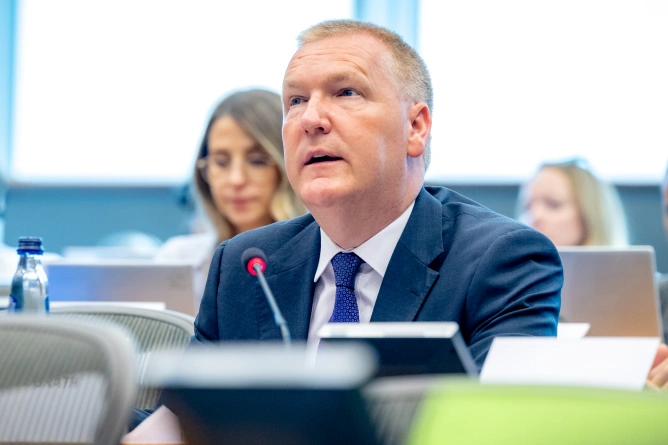
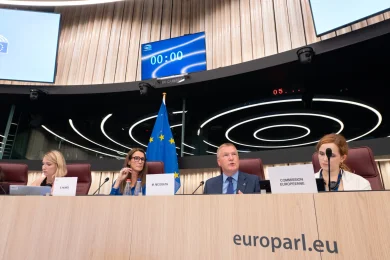
Hungary still has approximately 800 million euros in EU funds blocked due to unmet conditions concerning social inclusion, poverty reduction and Roma integration, Commissioner Michael McGrath said on 19 October in the European Parliament’s LIBE Committee. The restrictions are distinct from the budgetary measures whose lifting was approved by the Council on 13 October.
In brief
McGrath confirmed on 19 October that approximately 800 million euros remain blocked because of conditions concerning social inclusion, poverty reduction and Roma integration.
On 13 October, the Council approved the lifting of other budgetary measures. That decision does not automatically remove the conditions applicable to social funds.
The rules require policies to combat exclusion, measures against segregation, measurable objectives and monitoring of progress.
The restrictions affect the reimbursement of certain expenditure. They do not mean the automatic cancellation of all projects or the definitive loss of the entire allocation.
The Commissioner separately mentioned suspended funds for asylum and migration, without quantifying them in that response.
The explanation comes after the Council’s approval paved the way for lifting the measures imposed on Hungary in 2022 to protect the European budget from risks related to corruption, public procurement and conflicts of interest. The adoption was announced by the Permanent Representation of Hungary and welcomed the same day by Commission President Ursula von der Leyen. For the authorities managing European programmes, the change in that case does not automatically resolve the conditions applicable to other funding.
In his response at the end of the meeting of the Committee on Civil Liberties, Justice and Home Affairs, McGrath indicated that other sums remain blocked despite the decision to unblock part of the funds. The approximately 800 million euros are linked to thematic conditions set out in the Common Provisions Regulation for EU funds. The Commissioner explicitly associated these requirements with social inclusion, poverty reduction and Roma integration.
Through these conditions, the Union requires investments to be supported by public policies that identify problems and establish measures to resolve them. Regulation 2021/1060 calls them enabling conditions. They concern the framework within which European money is spent and must be fulfilled for certain programme expenditure to be reimbursed by the Commission.
For social inclusion and poverty reduction, the regulation’s annex requires a strategic or legislative framework based on a diagnosis of exclusion. This must address, among other things, child poverty, segregation, homelessness and difficult access to services or infrastructure. Measures to combat segregation are required, as are mechanisms through which social partners and civil society organisations participate in the design, implementation and evaluation of policies.
In the case of Roma integration, the requirements include measures against segregation, measurable objectives and a system for monitoring progress. The framework must provide for the involvement of regional and local authorities and cooperation with Roma organisations. The existence of these criteria explains what the European assessment is seeking. McGrath did not detail which criteria remain unmet in each Hungarian programme.
What is at stake is access to reimbursement of expenditure. Article 15 allows expenditure related to the affected objectives to be included in payment claims, but the Commission reimburses it after confirming that the condition has been fulfilled. The regulation provides an exception for operations that themselves contribute to fulfilling the respective requirement. Therefore, the restriction does not amount to the automatic cancellation of every project or the definitive loss of the entire allocation.
This distinction matters for investments in social services, access to employment, education and support for disadvantaged communities. Commission documentation on cohesion policy shows that the European Social Fund Plus and the European Regional Development Fund can finance measures and infrastructure in these areas.
McGrath separately mentioned funding suspended from the Asylum, Migration and Integration Fund, known as AMIF. He linked this situation to the failure to fulfil the horizontal condition concerning the Charter of Fundamental Rights, in the area of human rights and asylum management. In that response, the Commissioner did not indicate a value for the affected AMIF funds.
The sum of 800 million euros had also been presented at the Commission briefing on 23 September. At the time, the spokesperson for cohesion policy, Maciej Berestecki, described a total of approximately 3.5 billion euros restricted under the Common Provisions Regulation. The breakdown comprised around 2.7 billion linked to conditions concerning the Charter and 800 million for social thematic conditions. In his response of 19 October, McGrath repeated the figure of 800 million, without presenting an updated overall balance of the restrictions.
For the budgetary measures approved in 2022, the procedure followed a different timeline. After assessing the reforms notified by Budapest, the Commission proposed lifting them on 23 September, which was subsequently approved by the Council on 13 October. The measures concerned commitments for three cohesion programmes and access to funds managed directly or indirectly by the EU for certain public-interest foundations and entities administered by them, including universities.
2EU reported separately on the Council’s decision and the budgetary steps for recovering the suspended commitments. Approval of the lifting of the measures does not constitute a payment to beneficiaries. Reintroducing the commitments into the budget and reimbursing expenditure follow the applicable procedures, and institutions that become eligible again for European programmes must comply with the conditions of the funding calls.
For the social funds mentioned by McGrath, the decisive step is confirmation by the Commission that the enabling conditions have been fulfilled. The Hungarian authorities must submit justification when they consider that they have met the requirements, and the Commission assesses it in accordance with the regulation. The conditions must be respected throughout the programming period, meaning that the resumption of reimbursements remains linked to their practical application.
Latest News
08:05
07:50
07:35
07:21
22:52
See more news
NEWS ON THE SAME TOPICS

.webp)