EU leaders end summit without agreement on the 2028–2034 budget, while most states reject further cuts



Always see our news on Google
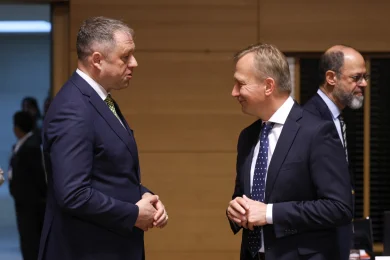
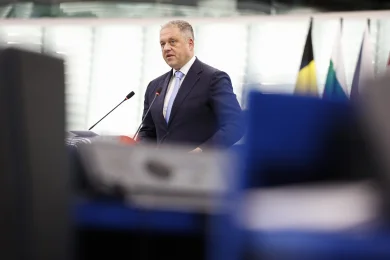
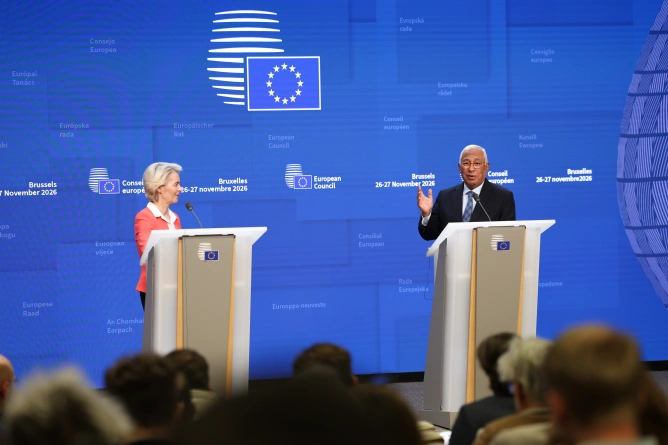
The extraordinary European Council meeting of 26–27 November ended without a compromise on the future multiannual budget. The President of the European Council, António Costa, announced that the majority of member states oppose further cuts, while a broad majority calls for funding for agriculture and cohesion to be protected. Negotiations continue ahead of the December meeting, given that the adoption of the financial framework also requires the approval of the European Parliament. The leaders of the 27 member states of the European Union concluded, on the night from Thursday to Friday, the extraordinary meeting of the European Council in Brussels without reaching an agreement on the multiannual financial framework for the 2028–2034 period. The President of the European Council, António Costa, confirmed that differences persist regarding the size of the budget, the distribution of funding and the Union’s new sources of revenue, despite negotiations held throughout the day in plenary and in smaller groups.
Key points
1. European leaders did not reach a compromise on the budget proposal presented by António Costa on 21 November, which reduces the European Commission’s initial draft by approximately EUR 204 billion, at current prices.
2. The majority of member states oppose further budget cuts, while a broad majority calls for funding for the common agricultural policy and cohesion to be protected.
3. Germany and other net contributing states consider the proposed reduction insufficient and call for further limits on European spending.
4. The European Commission notes progress in negotiations on new own resources, including a contribution based on revenues from digital services, but there is still no agreement on the package.
5. The next ordinary meeting of the European Council is scheduled for 17–18 December. Any political compromise between the leaders must be followed by the legislative procedures necessary for the adoption of the budget.
The extraordinary negotiations in Brussels failed to eliminate the differences between governments calling for a reduction in national contributions and those that believe that further reductions in funding would undermine the Union’s ability to achieve its economic, social and security objectives.
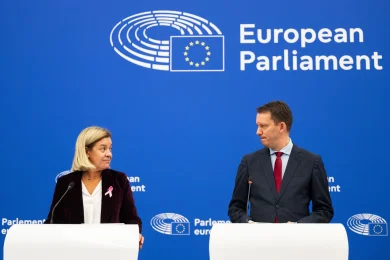
“We did not reach an agreement,” António Costa said at the press conference held after the meeting ended.
According to the President of the European Council, some governments called for further reductions in the overall size of the budget, while the majority of member states opposed them. Some leaders even called for the reversal of cuts already included in the compromise proposal, particularly in the area of cohesion.
Costa said that a broad majority of member states wants funding for agriculture and cohesion to be protected. This position limits the possibilities for reducing the budget without affecting other priorities, such as economic competitiveness, research, security and defence.
The proposal presented by Costa on 21 November already provided for a reduction of approximately 10% in the budget compared with the European Commission’s draft of July 2025, equivalent to EUR 204 billion at current prices. The compromise sought to keep national contributions at a level close to the current one and introduce new European revenues.
However, the reduction was not sufficient to secure the support of all governments. German Chancellor Friedrich Merz said in his briefing in Brussels that Berlin is seeking a further reduction in the budget and the retention of mechanisms for correcting national contributions. Germany is also calling for the avoidance of new common debt and the concentration of resources on strengthening the European economy and security.
On the other hand, Portuguese Prime Minister Luís Montenegro supported protecting cohesion policy and agricultural funding, arguing that European regions must continue to benefit from resources enabling them to reduce development gaps. Portugal’s position reflects the concerns of states that depend on these instruments to finance public investment and regional development.
European Commission President Ursula von der Leyen warned at the end of the summit that successive negotiating documents had already introduced considerable cuts. Although she acknowledged the need for compromises, she insisted on maintaining the resources necessary for the priorities jointly established by the European institutions and the member states.
Von der Leyen identified progress in discussions on new own resources and considered that there were prospects for establishing a package of additional revenues. According to the Commission President, the proposal for a contribution based on revenues from digital services received broad political support.
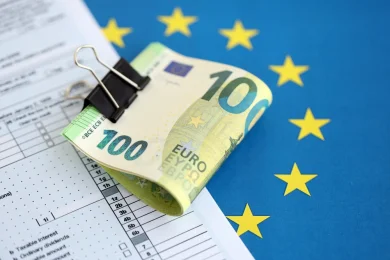
The package presented by Costa before the summit comprises five sources of revenue, associated with the digital services of large companies, the carbon border adjustment mechanism, unrecycled electronic waste, tobacco products and the emissions trading system. The methods of application and the distribution of the financial burden remain under negotiation.
The introduction of new own resources is important also for financing the repayment of the debt contracted through NextGenerationEU, the European economic recovery programme launched after the COVID-19 pandemic. In the absence of sufficient revenues, repayment costs may reduce the budgetary space available for other European programmes or create the need for higher national contributions.
Any agreement between governments must also take account of the position of the European Parliament. The President of the European legislature, Roberta Metsola, told the leaders gathered in Brussels that Parliament wants a budget that supports investment, competitiveness and cohesion, and that the agreement of the member states cannot replace the approval of MEPs.
For Romania, protecting agricultural and cohesion funding is an important stake in the negotiations. The size of future allocations will influence the capacity to finance infrastructure, regional development, public investment and support for farmers. However, the summit did not establish definitive national allocations, nor did it confirm that Romania’s funding would remain at current levels.
The next ordinary meeting of the European Council is scheduled for 17–18 December 2026. Costa is seeking to secure a political compromise before the end of the year, so that the institutions have sufficient time to complete the legislation related to the European programmes in 2027.
The adoption of the multiannual financial framework is governed by Article 312 of the Treaty on the Functioning of the European Union. Under the ordinary procedure provided for in this article, the Council of the European Union adopts the regulation unanimously, after approval by the European Parliament, expressed by a majority of its members. The Treaty allows the European Council to unanimously authorise the use of qualified majority voting, but no such decision was announced following the summit.
New own resources are subject to a separate procedure, which involves unanimity in the Council of the EU, consultation of the European Parliament and approval by the member states in accordance with their own constitutional requirements.
If the new financial framework is not adopted by the expiry of the current one, the Treaty provides for the extension of the ceilings and the other provisions corresponding to the last year of the existing framework. However, this legal protection does not replace the need for the timely adoption of legislation that will govern the new European funding programmes.
The institutions’ objective remains for the future financial framework to enable funding continuity from 1 January 2028. The December meeting thus becomes the next important moment in the negotiations, without any guarantee that the differences between the states will be eliminated by then.
Latest News
10:44
10:34
10:31
10:25
10:22
See more news
NEWS ON THE SAME TOPICS