



António Costa calls for compromise on the size, priorities and revenues of the EU budget for 2028–2034


Always see our news on Google
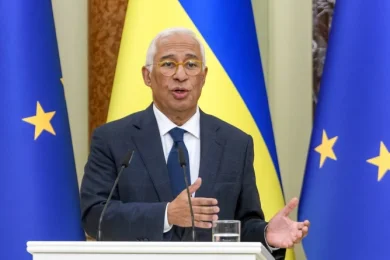
European Council President António Costa called on EU leaders on 26 November to reach a compromise on three components of the future European budget: its overall size, the distribution of funding among priorities, and a package of new own resources to limit the increase in national contributions. The statement preceded the extraordinary meeting in Brussels devoted, among other matters, to the 2028–2034 multiannual financial framework.
In essence, Costa is asking leaders to narrow their differences over the size of the budget, the allocation of funds among priorities and new own resources. He is seeking a political agreement by the end of the year. The proposal provides for commitment appropriations of €1,582.516 billion and payment appropriations of €1,553.665 billion, in 2025 constant prices. These are two distinct ceilings and are not to be added together. The reduction of approximately €204 billion compared with the Commission’s proposal is calculated in current prices. The comparison in constant prices uses different figures. Guarantees for farmers and regions must be reconciled with investment in competitiveness, defence and security. The draft also mentions support for border regions, including those on the Black Sea, without an individual allocation for Romania. The financial framework requires unanimity in the Council of the EU and approval by the Parliament. New own resources follow a separate procedure, including national approval in accordance with constitutional requirements.
Costa included among the needs requiring funding support for farmers, the development of cities and regions, security and defence, and economic competitiveness. He also mentioned concerns directly affecting the population, such as energy costs and access to housing. At the same time, he called for national contributions to remain at a reasonable level and for a constructive approach, recalling that the agreement requires unanimity.
The basis for the discussions is the proposal presented by Costa on 21 November. Document ST 15692/26 provides for commitment appropriations of €1,582.516 billion and payment appropriations of €1,553.665 billion, expressed in 2025 constant prices. Commitments set the limits for the financial obligations that may be undertaken, while payments concern the amounts that may be paid. The two figures describe components of the budgetary framework and are not added together to create a larger budget.
The financial table ST 16196/26 allows for a comparison on the same price basis. The Commission’s proposal provided for commitments of €1,763.056 billion in 2025 constant prices, compared with €1,582.516 billion in the Costa draft. In current prices, the corresponding figures are approximately €1,984.9 billion and €1,780.9 billion. The second comparison produces the reduction of around €204 billion announced by Costa.
The second objective concerns the allocation of resources. The draft comprises four main headings: €898.288 billion for cohesion, agriculture, rural and maritime prosperity, and security; €437.683 billion for competitiveness, prosperity and security; €150.138 billion for external action, Global Europe; and €96.407 billion for administration. These figures are in 2025 constant prices and represent proposed ceilings.
The first heading includes €140.411 billion for the repayment of the principal, interest and related costs of the NextGenerationEU debt. The amount is included in the heading’s ceiling and in the total; it is not additional funding to be added again. The distribution among programmes and debt costs affects the resources available for European policies.
Differences between governments concern both the total and the destination of spending. While some states call for national contributions to be limited and funding to be redirected towards new priorities, others insist on protecting cohesion and agriculture. The compromise therefore requires agreement on the size of the budget and on the policies that will receive the available resources.
To reduce pressure on direct contributions, Costa proposes five revenue streams linked to the digital services of large companies, tobacco products, electrical and electronic equipment not collected as waste, the emissions trading system, and the Carbon Border Adjustment Mechanism. The negotiating document sets parameters and gradual implementation periods for some of these contributions.
When presenting the draft, Costa estimated that the package, together with relevant existing revenue streams, could generate approximately €60 billion annually. In this scenario, he indicated an increase in the average level of national contributions from 0.80% to 0.82% of gross national income. These are estimates conditional on the adoption of the instruments, not revenue already collected or contributions established for each state.
For Romania, the provision concerning regions on the external borders is also relevant. Point 4 of ST 15692/26 explicitly includes regions bordering the Black Sea among the territories for which support is sought for security, resilience, economic development and connectivity. The wording does not establish an individual financial allocation for Romania or for the Black Sea.
Costa is seeking to conclude the political negotiations by the end of 2026. A leaders’ compromise would allow the dossier to advance, but adopting the regulation on the financial framework requires unanimity in the Council of the EU and approval by the European Parliament by a majority of its component members, under Article 312 of the Treaty.
The decision on own resources follows a distinct procedure set out in Article 311: unanimity in the Council, consultation of the Parliament and approval by the Member States in accordance with their constitutional requirements. The objectives presented at the start of the meeting are therefore benchmarks for negotiations, not an announcement of an already adopted budget.
อล
Latest News
17:38
17:32
17:22
17:21
17:16
See more news
NEWS ON THE SAME TOPICS















.webp)


