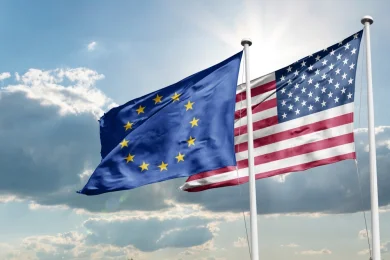
Members of the European Parliament call for a greater role for the EU at the UN and support a permanent seat on the Security Council.



Always see our news on Google
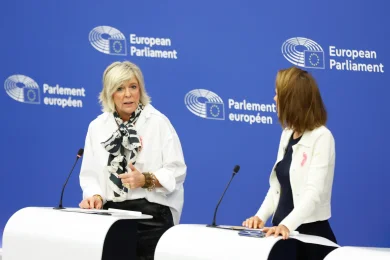
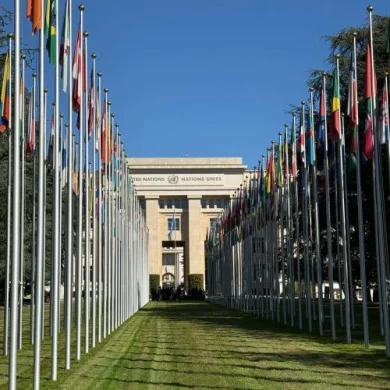
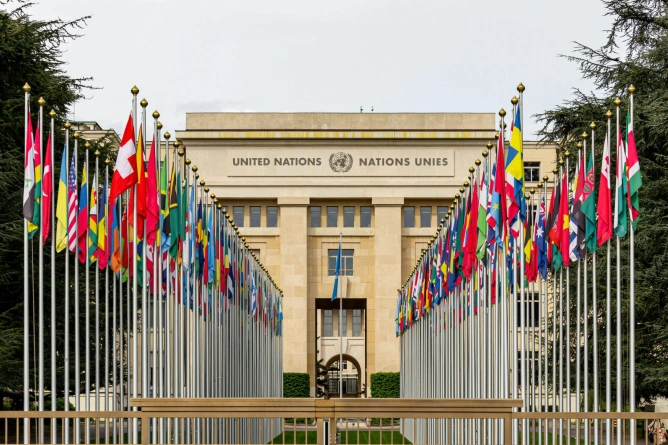
Members of the European Parliament's Committee on Foreign Affairs adopted a set of recommendations ahead of the 81st session of the UN General Assembly, calling on the European Union to take greater responsibility for supporting, funding, and strengthening multilateral organizations, including the United Nations. The text supports an ambitious reform of the UN system, including the Security Council, and calls for the EU to work towards obtaining a permanent seat in this body, alongside the one already held by France, in a future consensual reform.
In short
The AFET Committee adopted recommendations for the EU's position ahead of the September 2026 session of the UN General Assembly.
Members of the European Parliament call on the European Union to take a larger role in supporting and funding the multilateral system, including the UN.
The text supports the reform of the UN Security Council and the limitation of vetoes that block essential actions, especially in cases of war crimes and crimes against humanity.
AFET calls for the EU to pursue obtaining a permanent seat in the Security Council, alongside the one already occupied by France.
Members of the European Parliament call for full support for the International Criminal Court and the International Court of Justice and request strengthening of European instruments to protect the independence of these courts.
The recommendations adopted by AFET reaffirm strong support for effective multilateralism, for a strong global governance, and for the respect and enforcement of universal human rights. The text expresses concern over attempts by some actors to undermine the legitimacy and governance structures of the UN or to politicize the functioning of its bodies. At the same time, members of the European Parliament assert that a stable, reliable, and fair multilateral system, as well as multilateral forums such as the UN, are essential for guaranteeing peace and security in a context of heightened geopolitical tensions and must therefore be part of the European Union's security architecture.
A central element of the document is the call for the European Union to increase its role in supporting the multilateral order. Members of the European Parliament state that, at a time when other global actors, especially traditional allies of the EU, are withdrawing, the Union should take greater responsibility for supporting, funding, and strengthening multilateral organizations, including the UN. Thus, the document does not limit itself to defending multilateral principles but directly links their credibility to a stronger involvement from Brussels.
On UN reform, AFET supports an ambitious change of the system, focusing on the Security Council, which it describes as too often paralyzed by the vetoes of permanent members. In the view of the members of the European Parliament, the reform should aim for a more effective and inclusive Security Council that better reflects current global realities. The document also states that this reform should limit vetoes that block essential actions of the UN, especially in cases of war crimes and crimes against humanity.
In the same chapter, the text formulates one of its strongest political positions, asserting that Russia has lost its moral legitimacy as a permanent member of the Security Council due to its flagrant violation of the UN Charter, including through the war waged against Ukraine. In parallel, members of the European Parliament call on the European Union to work towards obtaining a permanent seat in the Security Council, alongside the one already occupied by France, within a future consensual reform of this body.
The recommendations go further towards a broader reform of the UN system. Members of the European Parliament call for the EU to collaborate with UN member states, with the United Nations system, and with the UN Secretary-General to advance the "UN80" reform agenda and the associated action plan. In this way, the document places the position of the European Parliament not only in the logic of a reaction to current blockages but also in a broader debate about the institutional future of the organization.
Another important chapter is dedicated to international courts. The text calls on the European Union to intensify its efforts and to fully support the independence and impartiality of other international bodies, especially the International Criminal Court and the International Court of Justice. Members of the European Parliament assert that these institutions are essential for upholding the Rome Statute and remind of the binding nature of the orders of the International Court of Justice. At the same time, they lament unprecedented threats to the International Criminal Court, including from the United States, and call for the activation, effective enforcement, and strengthening of the EU's "blocking statute" to protect the independence and functioning of these judicial bodies.
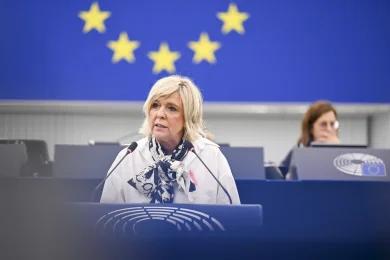
The document was approved in committee with 52 votes in favor, 18 against, and 2 abstentions. Rapporteur Andrey Kovatchev said: "For the first time since 2021, the European Parliament has adopted a recommendation for the upcoming session of the United Nations General Assembly. This recommendation marks an important step in restoring the role of Parliament in shaping the EU's positions within the UN. At a time of increasing geopolitical instability, we emphasize the urgent need for significant reform of the UN and reaffirm our strong commitment to effective multilateralism."
The next procedural step is the vote in the plenary of the European Parliament. According to the document, the 81st session of the UN General Assembly will open on September 8, 2026, in New York.
The AFET recommendations come ahead of the annual session of the UN General Assembly and outline the political position of the European Parliament at a time when the multilateral system is presented as being under pressure. The text links the defense of the multilateral order to greater involvement from the European Union, to the reform of UN institutions, and to the protection of international courts.
At the same time, the document seeks to restore a clearer role for the European Parliament in shaping European positions within the UN. According to the rapporteur, this is the first time since 2021 that Parliament adopts such a recommendation for the upcoming session of the General Assembly, which also gives a distinct institutional dimension to this text.
Latest News
14:15
14:05
13:49
13:31
13:17
See more news
NEWS ON THE SAME TOPICS