


The European Commission will assess refineries’ proposals to increase production and is preparing a joint roadmap



Always see our news on Google
After the first high-level dialogue with the refining industry, the Commission will examine proposals to increase fuel production and continue technical consultations. Dan Jørgensen says he is open to temporary and targeted relaxations of technical requirements if they are effective and do not create other problems. The joint roadmap will address the sector’s transformation over the medium and long term, and another meeting is announced for early 2027.
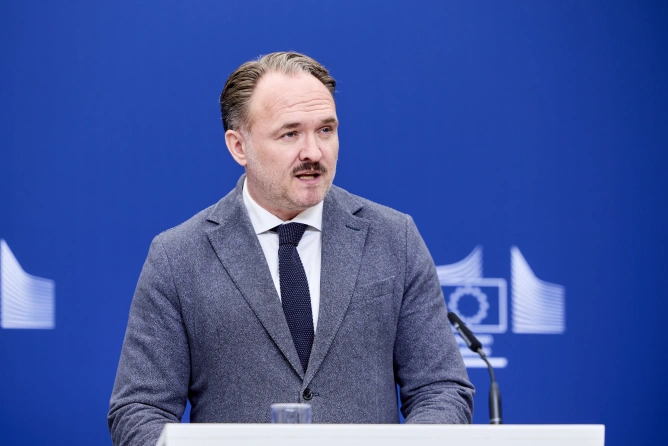
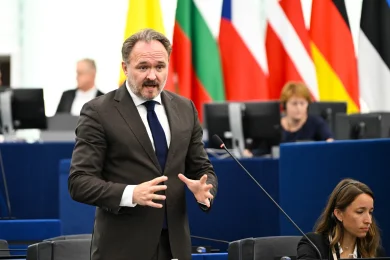
The European Commission will assess proposals from the refining industry to increase fuel production and will work with the sector on a roadmap for its transformation, Dan Jørgensen, Commissioner for Energy and Housing, announced after the 28 October meeting in Brussels. The Commissioner said he was open to examining temporary and targeted relaxations of technical requirements, but did not announce approval of a derogation. Technical discussions will continue, and participants will meet again in early 2027 to assess progress.
In brief
The Commission will examine refineries’ proposals to increase fuel production, in an effort to reduce pressure on prices and strengthen supply.
Dan Jørgensen is open to temporary and targeted technical adjustments, provided they work and do not create other problems. He did not announce modified standards or approved derogations.
The roadmap will be drawn up jointly with industry and will address the transformation of the sector, including alternative fuels, security of supply and climate objectives.
The dialogue follows the Commission’s assessment of 22 October, which found tight supplies of diesel and aviation fuel, but no physical shortage of these products in Europe.
Another meeting is scheduled for early 2027. No deadline for completing the roadmap or guaranteed price reduction this winter has been announced.
The meeting opened the Commission’s first high-level dialogue with the European refining industry. It was led by Dan Jørgensen, Commissioner for Energy and Housing, and Andrius Kubilius, Commissioner for Defence and Space. Refineries, alternative-fuel producers, engineering and technology companies, industry associations and NATO representatives participated. The discussions addressed disruptions caused by the conflict in the Middle East and the industry’s prospects. The meeting thus linked fuel costs and availability to industrial competitiveness and defence needs.
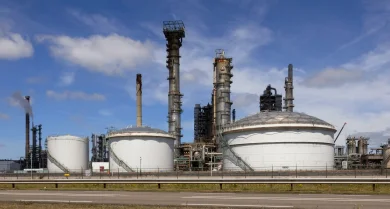
For the Commission, one of the problems is the loss of production capacity in Europe. According to figures presented by Jørgensen, approximately one quarter of EU refineries have closed over the past two decades, while refining capacity has fallen by around 10%. The two proportions measure different things: the number of facilities and the production volume they can provide.
Pressure on prices, however, is not limited to the capacity of European refineries. Jørgensen warned that the global diesel market could remain tight in 2027 as well, citing the assessment of the International Energy Agency. In responses to the press, he stressed that fuel availability does not solve the problem faced by a company or household that cannot afford to buy it.
The Commissioner said that industry had put forward proposals that the European executive must assess. Asked about relaxing fuel specifications, he explained that he did not oppose temporary and targeted adjustments if they effectively help resolve the difficulties and do not cause other problems. The statement expresses openness to an option without establishing a specific change to the rules.
At the end of the meeting, the technical requirements that might be changed, the duration of any measure or an act approving it were not announced. Nor was the effect on prices this winter quantified. The objective of increasing production and reducing costs remains, at this stage, one for which the Commission and industry are seeking solutions.
Alongside its response to the crisis, the Commission wants to clarify the future of refineries in a market that must reduce its dependence on fossil fuels. The joint roadmap will focus primarily on the medium and long term, Jørgensen specified. It must link the maintenance of sufficient fuel production with the transformation of the sector and the EU’s climate objectives.
The discussions included the investments needed for sustainable biofuels and synthetic fuels produced with electricity, known as e-fuels. The Commission seeks to preserve strategic production capacities while the industry adapts to these alternatives. Jørgensen argued that the response to the current emergency must not compromise the viability of refineries after the crisis ends.
On the consumption side, the Commissioner advocated energy efficiency and electrification, including replacing cars with internal-combustion engines with electric vehicles and gas- or liquid-fuel-fired boilers with heat pumps. He presented them as tools to reduce demand and exposure to fossil fuels, without announcing a new obligation to reduce consumption at this conference.
The meeting produced a new result compared with the assessment published by the Commission on 22 October, previously reported by 2EU. At that time, following the meeting of the Oil Coordination Group on 21 October, the institution found tensions in the supply of diesel and aviation fuel, but no physical shortage of these products in Europe. The dialogue with refineries was still being prepared. On 28 October, it began, and its technical continuation and the roadmap were publicly announced.
The initiative also follows the direction set by EU leaders at the meeting of 15–16 October, when they welcomed the Commission’s intention to prepare a short-term framework for optimising the capacity and efficiency of refineries. This political support does not, in itself, constitute approval of technical derogations.
The next stage will be the assessment of the proposals and the continuation of technical discussions. The meeting in early 2027 will take stock of progress; it was not presented as a deadline for adopting the roadmap. Until then, the concrete result of the dialogue is a joint work programme, not a package of new rules or a promise of an immediate reduction in fuel prices.
Latest News
19:14
19:02
18:54
18:44
18:43
See more news
NEWS ON THE SAME TOPICS
.webp)






.webp)


