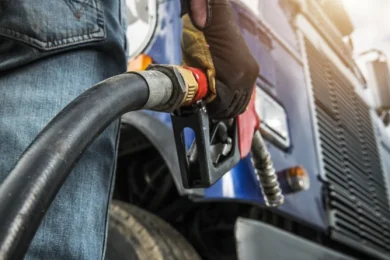
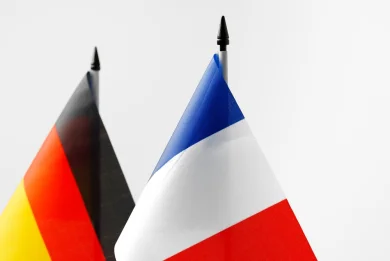
G7 sets in motion the release of 100 million barrels amid pressure on diesel



Always see our news on Google
G7 leaders have agreed on the coordinated release of 100 million barrels through the International Energy Agency over the next four months, in an intervention intended to reduce pressure on energy supplies and markets. A substantial part of the diesel response is to be concentrated in the first 20 days, while G7 countries will simultaneously seek to avoid shutting down refineries at the same time and to increase the use of existing capacity where possible.
In brief
The G7 has agreed on the coordinated release of 100 million barrels through the IEA over four months, starting immediately.
A substantial portion of the diesel releases will be concentrated in the first 20 days, but the statement does not specify the exact volume.
The 100 million barrels are linked to the implementation of commitments made in March 2026, taking into account quantities already released, and must not automatically be presented as 100 million additional barrels.
The G7 will coordinate refinery maintenance schedules and calls for the avoidance of restrictions on energy exports between group members.
The IEA must assess the impact of the intervention and present a report before the initial 20-day period expires.
The decision was taken during a virtual meeting of G7 leaders convened by France, which holds the group’s presidency in 2026. The joint statement describes an oil market characterized by high volatility and gives particular attention to refined products, primarily diesel, where supply problems are more acute than in the case of crude oil. The leaders say the objective of the intervention is to stabilize energy availability and limit the effects of price shocks on households and businesses.
The volume of 100 million barrels must be read in the context of a broader intervention launched in March. The IEA says that its members then agreed on collective action involving 400 million barrels, and that approximately 325 million had already been released by the time of the G7 meeting on October 2. The new statement calls for the immediate and full implementation of the March commitments and specifies that the 100 million barrels will be mobilized taking into account what has already been achieved. The available documents therefore do not justify presenting the entire quantity as a new reserve added to the 400 million barrels previously agreed.
Diesel occupies a distinct place in the intervention. The G7 speaks of a substantial release concentrated at the beginning of the period, in the first 20 days, but does not specify how many of the 100 million barrels will be refined products or what quantity will come from each country. The leaders also leave open the possibility of additional diesel releases, to be discussed within the IEA if market conditions require it.
The IEA considers that the current tensions are being driven mainly by difficulties in the refined-products market. According to the agency, crude oil exports from the Middle East have recovered significantly, but refined-product flows remain constrained, and refinery problems have kept the diesel market under pressure. IEA Executive Director Fatih Birol attended the leaders’ meeting and presented the status of the collective action launched in March.
In the European Union, the Commission discussed the diesel situation on the same day with representatives of the member states within the Energy Union security working group. The assessment conveyed after the meeting was that EU diesel supplies remained stable for the time being, while prices stayed high amid tensions in the global market. The Commission stated that any stock releases are coordinated through IEA mechanisms, while the European group’s primary role is to coordinate the member states’ policy response.
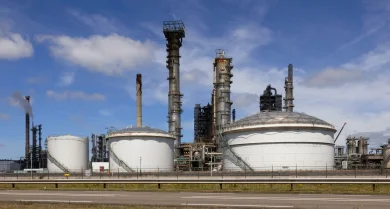
The intervention is not limited to strategic stocks. The G7 wants to coordinate refinery maintenance periods to avoid the simultaneous shutdown of important capacity and calls for a temporary increase in utilization rates where possible. The group intends to discuss the issue with non-G7 countries that have significant refining capacity, in an effort to increase the global supply of refined products.
Another component concerns trade. The leaders reaffirm that G7 countries should not introduce restrictions on energy and energy-product exports between them and call on producers to avoid bans that could exacerbate existing tensions. The measure is intended to prevent further fragmentation of the market at a time when supplies of refined products are already more difficult.
The statement also links the energy tensions to the situation in the Middle East and navigation through the Strait of Hormuz. The G7 calls for the full restoration of freedom of navigation through the strait, one of the main corridors for global energy transport, and says it will continue efforts to maintain trade flows. At the same time, the group states that sanctions against Russia will remain in place, while members will cooperate with the IEA and other partners to limit the effects on fuel, gas, and raw-material markets.
The IEA has been tasked with monitoring both the implementation of the releases and their effect on energy security and market stability. The G7 calls for a report before the end of the initial 20-day period, including recommendations on possible next steps and the replenishment of the stocks used.
The announcement does not demonstrate that fuel prices will fall by a certain amount or within a specific period. The release of reserves may increase available supply and reduce some of the pressure on the market, but final prices also depend on refinery output, transport, global demand, exchange rates, taxation, and geopolitical developments. The G7 presents the intervention as a tool for stabilizing the market, not as a guarantee regarding prices at the pump.
Sources

Latest News
08:21
08:06
08:04
07:54
07:48
See more news
NEWS ON THE SAME TOPICS
.webp)