The European Commission confirms tensions in the diesel and aviation fuel markets but finds no physical shortage in Europe



Always see our news on Google
The European Commission announced on Thursday, 22 October 2026, that supplies of diesel and aviation fuel remain tight, but that there is no physical shortage of these products in Europe. The assessment comes amid the risk of further disruptions in oil markets and international efforts to bring the quantities not yet released from emergency reserves to market more quickly.
In brief
The European Commission says there was no physical shortage of diesel or aviation fuel in Europe in its assessment of 22 October, although supplies remained tight and exposed to further disruptions.
The September context showed high prices and commercial stocks below the five-year average at the Amsterdam–Rotterdam–Antwerp hub, but stable in the preceding weeks. Emergency stocks were high and available.
On 15 October, IEA member states agreed to accelerate the remaining releases from the collective action launched in March. Around 330 million barrels had already been released, while approximately 100 million remained to be released, depending on national circumstances.
The plans include more than 20 million barrels of diesel as soon as possible. The volumes are part of the existing international response, not a new allocation for Europe; the initial commitment in March was 400 million barrels.
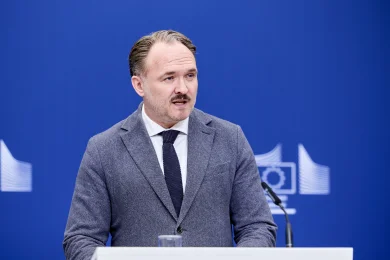
The Commission is preparing a dialogue with refineries, led by Dan Jørgensen and Andrius Kubilius, to reduce costs and secure supplies, including for defence. As of 22 October, the date of the meeting had not been specified.
The Commission will continue monitoring with the EU Member States and the IEA. The Agency calls for increased supply where capacity exists and stresses the importance of free energy trade; EU leaders support a short-term framework for optimising refineries.
The conclusion was formulated following the 21 October meeting of the European Oil Coordination Group. Experts from the Commission, representatives of EU Member States, the International Energy Agency (IEA) and the Energy Community took part in the discussions. The Commission will continue monitoring together with the Member States and the IEA, against the backdrop of geopolitical uncertainty affecting the oil market.
Tensions are also reflected in high prices, even when fuels are available. In its 29 September assessment, the Commission indicated that diesel and aviation fuel prices were high, while commercial stocks at the Amsterdam–Rotterdam–Antwerp hub were below the average of the previous five years, although they had remained stable in the preceding weeks. At the same time, European refineries were operating close to maximum capacity, while emergency stocks were high and available for possible disruptions.
At international level, IEA member states agreed on 15 October to accelerate the release of the quantities remaining under the collective action launched in March 2026 in response to the Strait of Hormuz crisis. According to the agency, approximately 330 million barrels had already been released, while the necessary measures were to be taken for the roughly 100 million remaining to ensure their timely release, taking national circumstances into account.
The plans include more than 20 million barrels of diesel reaching the market as soon as possible. These quantities are part of the acceleration of the remaining releases and do not represent a new allocation reserved for Europe. The initial commitment in March was 400 million barrels; the final total may exceed this figure because some states released more than they had pledged, while others intend to do likewise.
The IEA Governing Board also encouraged states with production and refining capacity to increase supplies of crude oil and refined products, particularly diesel. The Agency stressed the importance of maintaining free energy trade and will monitor progress on the collective action to assess whether additional interventions are needed.
In parallel, Brussels is preparing a strategic dialogue with European refineries. The Commission informed the coordination group about the preparations and announced that discussions would take place shortly, under the coordination of Commissioners Dan Jørgensen, responsible for energy and housing, and Andrius Kubilius, responsible for defence and space. The 22 October statement does not specify a date.
The objective of the dialogue is to reduce costs and ensure the supplies Europe needs, including for defence, as Ursula von der Leyen explained in the European Parliament on 6 October. The involvement of the two portfolios thus links the discussion about refineries both to the costs borne by the economy and to supply security.
At the European Council on 15–16 October, EU leaders welcomed the Commission’s intention to develop a short-term framework for optimising the capacity and efficiency of refineries in the Union. They also supported extending the temporary state aid framework for the most exposed industrial sectors and initiatives for the voluntary aggregation of energy demand.
The short-term response is accompanied by the objective of reducing dependence on volatile fossil fuel markets. The summit conclusions support accelerating electrification, developing renewable and low-carbon sources, grids and storage, as well as increasing energy efficiency, in order to reduce Europe’s vulnerability to external crises.
Latest News
19:10
19:03
18:33
18:16
18:09
See more news
NEWS ON THE SAME TOPICS