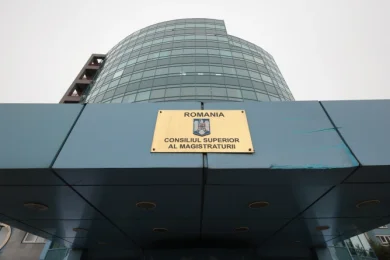
The Commission demands new measures from Romania against corruption in the judiciary, while important cases continue to be closed due to statute of limitations.



Always see our news on Google
Romania has not adopted new measures for the investigation and criminal prosecution of corruption committed within the judiciary, although important cases continue to be closed or convictions are annulled due to the statute of limitations. The European Commission calls on the authorities to correct the remaining deficiencies and to ensure that judges and other persons in the system can be effectively investigated when there are suspicions of crimes.
In short
The Commission finds that Romania has maintained its criminal prosecution activity in cases of petty and high-level corruption, without a general deterioration compared to the previous year.
Lower courts have continued to close cases and annul convictions, including in high-level corruption cases, following the decisions of the High Court of Cassation and Justice regarding the statute of limitations.
The number of pending cases has significantly decreased, but this decrease does not mean that all cases have been resolved by establishing liability. Some have ceased because criminal liability could no longer be engaged after the legal deadline expired.
The Commission states that Romania has not taken additional measures for the investigation and criminal prosecution of crimes committed within the judiciary, including acts of corruption.
The European recommendation targets the practical capacity of institutions to investigate such cases, not just the existence of crimes and procedures in legislation.
The Commission's assessment separates the overall results of the anti-corruption fight from the more specific issue of crimes committed within the judiciary. Romania has maintained its record regarding the criminal prosecution of petty and high-level corruption cases, but has not addressed the deficiencies that may hinder the investigation of judges or other persons working in judicial structures.
The report does not state that the activity of anti-corruption prosecutors has stopped, nor that all important cases are lost. It shows that the overall results remain comparable to those of the previous year, while a distinct problem, already flagged by the Commission, has not received a new response from the authorities.
The recommendation concerns crimes in the judiciary in a broad sense. These may involve judges, prosecutors, auxiliary staff, or other persons who use their position to gain advantages, influence procedures, compromise evidence, or intervene illegally in a case.
Investigating such acts is more sensitive than an ordinary corruption case, as the suspected individuals know judicial procedures, may have access to confidential information, and work in institutions that must cooperate with investigators. For this reason, the independence of prosecutors, the protection of evidence, the avoidance of conflicts of interest, and the existence of clear competencies are essential for the credibility of the investigation.
The Commission states that no measures have been adopted to address the remaining deficiencies and recommends that Romania ensure effective investigation and criminal prosecution of crimes committed within the judiciary, with a specific reference to corruption. The document does not call for the creation of a specific section and does not impose a single institutional structure, leaving the authorities the choice of the model.
The issue overlaps with the effects of decisions regarding the statute of limitations for criminal liability. Lower courts have continued to close cases and annul convictions following the decisions of the High Court of Cassation and Justice that established how the statute of limitations should be applied.
The statute of limitations establishes the period within which the state can hold a person criminally liable. After the deadline expires, the process can no longer continue until a decision on guilt is reached, even if the investigation lasted for years and the case is already in court.
Closure due to the statute of limitations does not equate to an acquittal based on the conclusion that the act did not exist or that the defendant did not commit it. The court stops the process because the time in which liability could be established has expired, without necessarily pronouncing a definitive solution on the merits of the accusation.
The report shows that the effects have also been felt in high-level corruption cases. Some convictions have been annulled, and other cases have been closed, which affects both the sanctioning of the accused individuals and the recovery of damages when this depends on the outcome of the criminal process.
The significant decrease in the number of pending cases must be interpreted in this context. The reduction in the backlog may come from resolving cases through convictions or acquittals, but also from their cessation due to the statute of limitations. The report does not provide in the published summary a breakdown between these categories.
Delays can occur in the investigation phase, in the preliminary chamber, in the trial on the merits, or in appeals. Complex cases involve analyzing financial flows, expert opinions, interceptions, international cooperation, and hearing a large number of people, and each stage consumes part of the available time before the expiration of the deadline.
Successive changes in legislation and jurisprudence regarding the interruption of the statute of limitations have added an additional difficulty. Courts have been forced to determine which rules apply to acts committed during different periods and which variant is more favorable to the judged person.
The Commission's report does not reanalyze the legality of the decisions of Romanian courts and does not ask judges to ignore the rules regarding the statute of limitations. The raised issue is whether the system can investigate and judge cases within a timeframe that allows for a definitive solution to be pronounced before the expiration of the deadlines.
The Commission monitors, in its anti-corruption evaluations, not only the number of opened investigations but also the complete path of cases. A solid record involves investigations, referrals to trial, and definitive decisions, including in cases involving individuals with important functions.
The existence of a high number of opened cases does not compensate for the situation in which cases are closed after years of procedures without a decision on the accusations. At the same time, the number of convictions cannot be analyzed in isolation from the duration of the processes, the quality of the evidence, and the respect for the rights of the defendants.
Romania is preparing a new national anti-corruption strategy for the period 2026–2030, after completing the evaluation of the previous strategy. The report does not present in the summary the content of the new document nor the concrete measures by which it will address corruption in the judiciary.
Separate rules have been adopted regarding the transition of officials between the public and private sectors, as well as a code of ethics for the Government that prohibits the acceptance of gifts. These measures concern the integrity of the administration and the prevention of conflicts of interest, without directly addressing the capacity to investigate acts committed in courts or prosecutor's offices.
The Commission calls for an intervention focused on the functioning of investigations. This may involve rules regarding the competence of prosecutors, avoiding conflicts of interest, access to documents, protecting whistleblowers, and resources for prosecutors handling cases involving judges.
The report does not establish that the entire Romanian judicial system is affected by corruption and does not present an estimate of the extent of the phenomenon. The finding is more precise: the previous recommendation has not received new measures, and the authorities must ensure that suspicions can be effectively investigated and prosecuted.
The next evaluation will follow whether Romania has changed the institutional or procedural framework and whether the new measures produce results. The Commission will also analyze the evolution of corruption cases, including the authorities' capacity to obtain definitive decisions before criminal liability expires.
Latest News
12:30
12:20
12:16
12:13
12:04
See more news
NEWS ON THE SAME TOPICS