The Commission is discussing with EU countries how to protect the ICC from sanctions, but is keeping diplomacy as its first option



Always see our news on Google
The European Commission says it is in permanent contact with the Member States regarding the possible use of the Blocking Statute to protect the International Criminal Court and persons affected by extraterritorial sanctions. The European executive has not announced the activation or expansion of the instrument and says diplomatic efforts remain, for the time being, the preferred option.
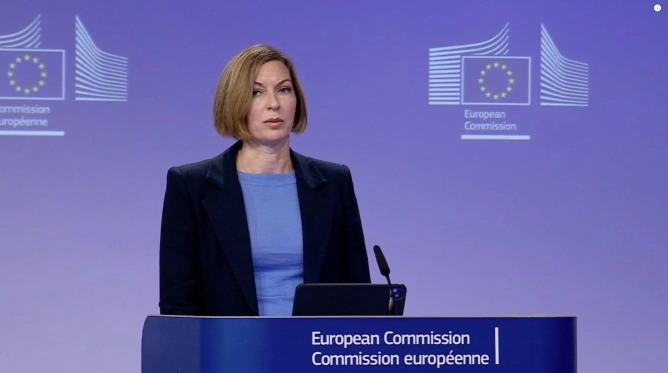
The European Commission is discussing with the Member States the possible use of the EU Blocking Statute in the context of US sanctions against members of the International Criminal Court, but has not decided to activate or expand the instrument. Responding to questions about the measures the Union can take to protect the ICC’s functioning, spokesperson Siobhán McGarry said that the European executive is engaged in ongoing exchanges with national governments regarding this mechanism and that diplomatic efforts remain the preferred option.
In brief
1. The Commission says it is in constant discussion with the Member States about the Blocking Statute in the context of sanctions affecting the International Criminal Court.
2. The European executive has not announced the activation of the instrument or the inclusion of US sanctions against the ICC in its annex.
3. Siobhán McGarry reaffirmed that the EU will continue to provide practical support to the Court and its staff so that it can fulfil its mandate.
4. The Commission says that diplomacy remains the preferred option for the time being and refuses to anticipate possible US measures that have not yet been adopted.
5. The position comes after Judge Nicolas Guillou and Members of the European Parliament called for more effective European protection against the effects of sanctions on payments and financial services.
The Blocking Statute is a European regulation created to protect EU operators against the extraterritorial effects of certain legislation adopted by third countries. The instrument can limit the recognition and enforcement within the Union of such measures, prohibit certain European operators from complying with foreign legislation covered by the regulation, and, under the conditions laid down therein, allow the recovery of damages. However, it does not automatically apply to every foreign sanction, since the legislation and measures concerned must fall within its scope and the relevant annex.
This distinction is central in the ICC case. The Commission has not said that the current US sanctions against the Court’s judges or prosecutors are already covered by the Blocking Statute, nor that an amendment to its annex has been decided. The statement from Brussels merely confirms that the instrument is being examined together with the Member States and that, for now, there is no European decision to activate or expand it for this situation.
The question addressed to the Commission came after concerns emerged about possible new US measures against the institution as a whole. The European executive refused to treat these scenarios as established facts and said it does not comment on assumptions concerning decisions that have not been adopted. For this reason, any sanctions against the Court as an institution should not be presented as a US measure already in force on the basis of the 29 September briefing.
McGarry nevertheless reaffirmed the Union’s political position regarding the ICC. The Commission says that support for the Court has not changed and that the EU will continue to provide practical assistance so that the institution can continue its work, including investigations into war crimes and crimes against humanity. In a separate statement in September, the High Representative criticised the US sanctions against ICC President Judge Tomoko Akane and legal officer Abdoulaye Seye and said that the Union would continue to support the Court’s independence and functioning.
The Commission has maintained the same line in previous briefings. In August, the European executive stated that it was facilitating measures deemed appropriate to ensure the ICC’s operational continuity and that it was working in close contact with the Court to assess possible responses. This support does not, however, amount to activating the Blocking Statute, which represents a distinct legal measure and would have direct consequences for European economic operators.
The issue has an important financial dimension because sanctions against persons associated with the ICC may affect their ability to use banking services, payment systems or other services provided by companies with exposure to US jurisdiction. French Judge Nicolas Guillou told Members of the European Parliament that the sanctions targeting him had produced effects in Europe as well, while Members of Parliament called on the Commission to examine the available protection instruments.
The Commission’s response of 29 September does not, however, introduce a new instrument in response to this situation. The new element is the explicit confirmation that the Blocking Statute is the subject of ongoing discussions with the Member States and that, despite pressure for more rapid legal intervention, the European executive currently retains diplomacy as its primary course of action.
The Blocking Statute was initially adopted in 1996 in response to the extraterritorial effects of certain US measures concerning Cuba, Iran and Libya and was subsequently updated. The Commission describes it as an instrument for protecting European individuals and companies engaged in lawful activities against the effects of foreign legislation that the Union does not recognise as extraterritorially applicable. Its extension to a new sanctions regime would nevertheless require a specific legal intervention and would not arise automatically from the mere existence of US sanctions.
The pressure on the Court also has broader institutional consequences. The Assembly of States Parties to the Rome Statute decided to move its 2026 session from the UN headquarters in New York to The Hague, citing, among other things, restrictions affecting the participation of certain Court officials subject to US sanctions and visa issues for certain delegations and organisations. The decision illustrates that the effects of the measures are not limited to the individual financial situation of sanctioned persons.
For the time being, the Commission has not set a timetable for any possible amendment to the Blocking Statute, nor has it said under what conditions it would abandon the priority given to diplomatic efforts. The European position thus consists of two distinct elements: political and practical support for the ICC, which is already under way, and the analysis of additional legal mechanisms, on which no decision has yet been announced.
Latest News
23:03
22:44
22:40
22:37
22:34
See more news
NEWS ON THE SAME TOPICS