[EXPLANATORY] How Europe became the main financial and military pillar of Ukraine




Always see our news on Google
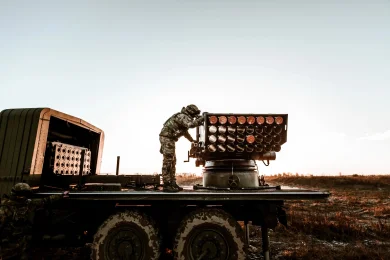
In just four years, the European Union has transitioned from being a partner in Western support for Ukraine to being the main financial and military supporter of Kyiv. With over 200 billion euros mobilized, a new loan of 90 billion euros, mechanisms based on immobilized Russian assets, and funding plans extending into the next decade, Europe is building not only Ukraine's resilience in war but also its financial, industrial, and institutional infrastructure for the future. This transformation simultaneously changes both Ukraine and the European Union, redefining security, budget, enlargement, and the geopolitical ambitions of the continent. The moment when Europe took the lead At the beginning of the large-scale Russian invasion, Western support for Ukraine was almost invariably described in relation to the United States. Washington provided the most significant military packages, signaled the strategic coalition of the West, and was perceived as the actor without which Ukraine's resistance would have been much harder to sustain. Europe had an essential role but was mainly seen through contributions that complemented the American effort: economic sanctions, financial support, humanitarian aid, assistance for refugees, and support for the functioning of the Ukrainian state. Four years later, this image is no longer sufficient to describe reality. Data presented by the European Parliament's Research Service, largely based on analyses from the Kiel Institute, show a much deeper role change than the simple accumulation of sums suggests. According to the Council of the European Union, "Team Europe," meaning the European Union and its member states, has mobilized over 200 billion euros for Ukraine and for Ukrainians affected by the war since the beginning of the Russian invasion in February 2022. This sum includes financial, military, and humanitarian support, as well as costs incurred by member states for hosting Ukrainian refugees. The over 200 billion euros describe the scale of the European effort but, more importantly, mark a political shift. In 2022, Europe was completing the support architecture built around the United States. By 2025, it had nearly fully covered the withdrawal of American support and had become the main supporter of Ukraine when financial, military, and humanitarian allocations are taken into account. According to data analyzed by the Kiel Institute and subsequently synthesized by EPRS, European military support increased by 67% in a single year, reaching 28.4 billion euros. At the same time, American military allocations dropped to 0.4 billion euros. Non-military European support rose by 59%, reaching a record level of 32.4 billion euros. Beyond the differences between instruments, budgets, and payment schedules, the political order of Western support had changed: Europe was no longer just the partner complementing the American effort but the actor taking on an increasing share of strategic responsibility. This change alters how the entire European policy towards Ukraine should be read. In 2022, the dominant question was whether Europe could contribute enough for Ukraine to resist. By 2026, the question is whether Europe can sustain, almost on its own, a historic financial, military, and industrial effort in a context where American support can no longer be treated as a permanent guarantee. The war in Ukraine has thus become one of the most concrete tests of European strategic autonomy. For years, the concept circulated through strategic documents, political speeches, and security conferences, often with a dose of useful ambiguity. However, the Russian invasion has provided a practical test: the ability of the European Union and its member states to mobilize money, armaments, industry, sanctions, financial guarantees, and political commitments in a dossier that directly concerns the security of the continent. This autonomy is expressed here not through a doctrinal statement but through a succession of budgetary and institutional decisions. Europe finances the functioning of the Ukrainian state, contributes to military supplies, supports defense production, prepares for reconstruction, and seeks to transform the cost of war into a manageable long-term commitment. For a Union that is usually cautious in defense matters, the pace of this adaptation is in itself a major political change. The transformation is most clearly seen in the financial instruments created after 2022. In the early months of the war, European support was dominated by the logic of urgency. Ukraine needed weapons, budgetary liquidity, humanitarian assistance, and support for millions of displaced persons. European mechanisms largely responded to this immediate pressure: rapid decisions, successive packages, exemptions, exceptional mobilizations, and political coordination among capitals. Over time, support entered a much more structured phase. The Ukraine Facility, Union-guaranteed loans, mechanisms related to immobilized Russian assets, and planning support for the period 2028-2034 show that Ukraine is no longer treated merely as a crisis to be managed from one package to another. It has become a strategic commitment that enters the budgets, priorities, and institutional compromises of the Union. The difference is significant. A crisis is managed through exceptional instruments and emergency decisions. A strategy is built through institutions, predictable resources, multiannual frameworks, and mechanisms capable of withstanding political changes. The evolution of European support for Ukraine indicates precisely this transition: from emergency reaction to long-term support architecture. The new European loan of 90 billion euros illustrates this stage more clearly than any political formulation. According to EPRS, about 60 billion euros are directed towards strengthening Ukraine's defense capabilities, while approximately 30 billion are for macro-financial and budgetary support. Reuters noted, at the time of the ratification of the agreement by the Ukrainian parliament, that the package is designed to cover immediate budgetary needs but also to support Ukraine's capacity to continue its defense effort in the medium term. The structure of this loan shows the direction in which European support is moving. Europe finances Ukraine's budgetary survival but also its capacity to produce, defend itself, and function as a state in a prolonged war. The line of separation between financial support, military support, and industrial policy is becoming increasingly difficult to draw. The Ukrainian budget, defense production, sanctions, immobilized Russian assets, and the prospect of joining the European Union are all becoming part of the same strategic dossier. This is the political stake of the change. Ukraine is no longer just the beneficiary of European solidarity. It has become one of the projects through which the European Union tests its capacity to act as a strategic power: to mobilize resources, to maintain unity among member states, to build new financial instruments, and to support a country at war without losing sight of its own budgetary and political stability. Understanding this transformation is essential for the rest of the story. The over 200 billion euros mobilized so far do not form a single fund, a single program, or a single budget line. They are the result of overlapping financial, military, humanitarian, and political instruments created at different moments of the war. To understand what Europe is actually financing, who decides, where the money comes from, and how sustainable this effort is, one must take a closer look at the financial architecture behind the figure of 200 billion euros. Figures that describe the change According to the European Parliament's Research Service, based on data from the Kiel Institute, European support for Ukraine entered a new phase after 2025. - The European Union and its member states have mobilized over 200 billion euros for Ukraine and for Ukrainians affected by the war since the beginning of the large-scale Russian invasion. - In 2025, Europe surpassed the United States as the main supporter of Ukraine when financial, military, and humanitarian allocations are taken into account. - European military support increased by 67% in a single year, reaching 28.4 billion euros, while American military allocations dropped to 0.4 billion euros. - Non-military European support rose by 59%, reaching 32.4 billion euros, a level sufficient to almost fully compensate for the withdrawal of American support. - In April 2026, the Council of the European Union finalized the 90 billion euro loan for Ukraine, intended for budgetary and defense needs for 2026 and 2027. - Of this loan, approximately 60 billion euros are directed towards Ukraine's defense capabilities, while approximately 30 billion are for macro-financial and budgetary support. What the 200 billion euros actually buy In any war, there is a visible front and a less visible one. The former consists of trenches, drones, anti-aircraft systems, shells, and maps showing the movement of the contact line. The latter is found in finance ministries, central banks, tax administrations, and institutions that must pay salaries, pensions, hospitals, schools, energy, infrastructure, and public services while the country is under attack. Ukraine is fighting on both fronts at the same time. While public attention naturally focuses on weapons and military developments, the resilience of the Ukrainian state also depends on its ability to finance an economy at war. From this perspective, the over 200 billion euros mobilized by the European Union and its member states do not form just a package of aid. They buy time: time for Ukraine to continue fighting, to pay its institutions, to maintain essential public services, and to avoid turning military aggression into financial collapse. According to the Council of the European Union, the Union and the 27 member states have provided 200.6 billion euros for Ukraine and for the Ukrainian population since the beginning of the Russian aggression. Of this amount, 104.6 billion euros represent financial, economic, and humanitarian support, 75.2 billion euros military support, 17 billion euros costs related to Ukrainian refugees in the Union, and 3.8 billion euros come from revenues generated by immobilized Russian assets. EPRS uses the same order of magnitude and shows that European support must be understood as a combination of macro-financial assistance, Ukraine Facility, military support, guarantees, loans, and aid for refugees. This structure is essential. Long wars are not sustained only through ammunition but also through the state's ability to continue functioning. A country can lose resilience not only on the battlefield but also when it can no longer pay teachers, doctors, civil servants, soldiers, energy suppliers, or basic public services. In a prolonged war, budgetary stability becomes part of national security. A significant part of European support does not directly finance the military front but the administrative and economic infrastructure without which the front cannot be sustained. The Council describes economic and financial support for Ukraine as a combination of grants, loans, guarantees, and budgetary support, playing a role in maintaining economic stability, covering immediate needs, and supporting recovery and long-term reconstruction. The formulation is institutional but important: Brussels no longer treats support for Kyiv as a succession of crisis payments but as a financial architecture that links immediate survival to reconstruction. The difference between European support and American support is most clearly seen in the form of money. EPRS, based on data from the Kiel Institute, shows that American support for Ukraine has largely come in the form of non-repayable grants, while approximately 82% of European financial assistance is provided in the form of loans with very favorable conditions. These loans include long grace periods, and the Union covers the interest through grants. This difference does not indicate a simple opposition between American generosity and European prudence. It reflects how the Union's budget functions. Large additional grants are politically and budgetarily harder to approve because they require agreements among member states, space within the European financial framework, and compromises on common priorities. Union-guaranteed loans allow for the mobilization of large sums with a lower immediate pressure on national budgets. For Ukraine, the form of support remains decisive. A grant covers a need without turning into public debt. A loan, even granted under favorable conditions, enters the financial architecture that the Ukrainian state will have to manage for years to come. Therefore, European support must be analyzed on two levels: its capacity to keep Ukraine functional today and the effect it will have on the sustainability of Ukraine's debt in the years after the war. This is where the role of the International Monetary Fund comes in. In February 2026, the IMF board approved a new 48-month agreement through the Extended Fund Facility, worth 5.9 billion SDR, equivalent to approximately 8.1 billion dollars, as part of a broader international package of 136.5 billion dollars. The IMF presented the program as a tool for maintaining macroeconomic and financial stability, restoring debt sustainability, and advancing structural reforms. EPRS reiterates the same logic and notes that the program aims for macroeconomic stability, governance reforms, and supporting Ukraine's objective of joining the European Union. The link between financing and reforms is one of the defining features of European support. Money is not transferred just to cover a deficit. It is connected to Ukraine's ability to maintain budgetary stability, manage its debt, reform its administration, and remain on the European trajectory. Financial support thus becomes an instrument of immediate survival but also one of institutional transformation. This logic explains why European support for Ukraine cannot be reduced to a single category. Macro-financial assistance keeps the state functional. Military support sustains defense capacity. Guarantees and loans allow for the mobilization of larger resources than immediately available grants. The Ukraine Facility introduces a dimension of reform and reconstruction. Aid for refugees shows that part of the cost of the war is borne directly within member states. Revenues from immobilized Russian assets add a legal and political dimension, as they transform sanctions into a source of financing for Ukraine. The geography of European contributions also shows how the war is perceived within the Union. According to EPRS, Germany remains the largest European contributor in absolute terms, followed by France, Italy, the Netherlands, and Sweden. However, relative to the size of their economies, the Baltic and Nordic states are among the largest supporters of Ukraine. The difference is not just accounting. It reflects a geography of European security. For states closer to Russia and Belarus, support for Ukraine is seen as part of their own defense, not as a distant foreign policy. The 200 billion euros must therefore be read as a map of the war seen through public finances. They finance armaments but also administration. They cover immediate budgetary needs but also long-term reforms. They help Ukraine resist militarily but also avoid financial collapse. They support refugees in member states but also future reconstruction. Around this sum, the nature of European support becomes clearer: not a single fund, not a single decision, not a single policy, but a combination of instruments through which the Union seeks to simultaneously support a country at war, an economy under pressure, and a path to accession. What European support includes According to the Council of the European Union and EPRS, the 200.6 billion euros mobilized by the Union and its member states for Ukraine combine several forms of support, with different functions. - 104.6 billion euros represent financial, economic, and humanitarian support, including budgetary and macro-financial assistance. - 75.2 billion euros represent military support, aimed at Ukraine's defense capacity. - 17 billion euros cover costs related to Ukrainian refugees hosted in member states of the Union. - 3.8 billion euros come from revenues generated by immobilized Russian assets. - European support includes macro-financial assistance, Ukraine Facility, grants, guarantees, loans, humanitarian aid, and reconstruction-related instruments. - According to EPRS, approximately 82% of European financial assistance is provided in the form of loans with favorable conditions, while American support has largely been offered in the form of grants. - In February 2026, the IMF approved a new program of 8.1 billion dollars for Ukraine, part of an international package of 136.5 billion dollars, aimed at macroeconomic stability, debt sustainability, and structural reforms. The 90 billion euro loan and Europe's change of strategy In the early months of the large-scale Russian invasion, military support for Ukraine was mainly assessed by the speed of deliveries. Public debate focused on the systems that could be sent, the number of available shells, tanks, air defense, drones, ammunition, and the capacity of Western states to transform political promises into real equipment. It was the logic of military urgency: Ukraine had to resist, and its partners had to empty, adapt, or redirect existing stocks to respond to a crisis unfolding in real time. Four years later, this logic remains necessary but can no longer sustain a prolonged war on its own. Rapid deliveries still matter, but they must be complemented by production, multiannual contracts, industrial capacity, budgetary planning, and financial mechanisms that provide Ukraine with predictability. From this perspective, the European loan of 90 billion euros marks a stage change. It not only covers immediate needs but finances Ukraine's capacity to produce, resist, and function in a prolonged war. The Council of the European Union finalized, on April 23, 2026, the last legislative element necessary for the 90 billion euro loan granted to Ukraine, politically agreed upon by the European Council in December 2025. According to the Council, the adoption of the package allows the Commission to start payments in the second quarter of 2026. The loan is intended for Ukraine's most urgent budgetary and defense needs for 2026 and 2027, within a framework conditioned by reforms. The European Commission presented the package in January 2026 as a loan with limited recourse for Ukraine, intended for the period 2026-2027 and known as the Ukraine Support Loan. In its communication, the Commission linked the new instrument to the need to provide Ukraine with stable and predictable financing at a time when the war continues to exert major pressures on the budget, economy, and defense capacity. The structure of the loan most clearly shows the change of strategy. According to EPRS briefing, of the total 90 billion euros, an indicative amount of 60 billion is intended for strengthening Ukraine's defense capabilities, while approximately 30 billion will cover macro-financial assistance and budgetary support. EPRS specifies that weapons and military equipment financed through the loan should, in principle, come from the European Union, the European Economic Area, or the European Free Trade Association, with exceptions when products are not available or cannot be delivered on time. This provision gives the loan a dual function. It supports Ukraine but can also support the European defense industrial base. The money is not just designed as a financial transfer to Kyiv but as part of an architecture in which Ukraine's demand for equipment, ammunition, and industrial capabilities can fuel European production. In this way, Ukraine's security and Europe's defense industry become increasingly intertwined. For Ukraine, this change is vital. A state in a high-intensity war cannot indefinitely rely on the budgetary decisions of external partners, on existing stocks of allies, or on the slow pace of Western industry. External deliveries remain essential, but the capacity to produce more ammunition, drones, components, and equipment internally becomes a condition for survival. In a war where technological innovation occurs directly on the front, the Ukrainian industry is not just a beneficiary of European support but also a space for rapid adaptation to the realities of the conflict. The perspective from Kyiv confirms this change. Reuters reported on May 28, 2026, that the Ukrainian parliament ratified the loan agreement with the European Union, with 298 votes in favor, well above the necessary majority. According to Reuters, the ratification allows the Ukrainian government to direct funding towards defense spending, energy resilience, and covering the budget deficit, with 45 billion euros planned for 2026 and another 45 billion for 2027. Reuters also noted that the support comes with strict conditions, similar to those in IMF programs, including anti-corruption reforms, increasing domestic revenues, and transparency in the business environment. This internal dimension is important. The loan does not remain just a decision made in Brussels. It enters Ukraine's budgetary policy, defense planning, and the difficult negotiation between the need for external funding and the conditions for reform. Reuters reported that the additional funding allowed for preliminary changes to the Ukrainian budget and a reduction in the projected deficit, while defense spending was expected to increase significantly compared to initial estimates. The European mechanism also says something about how the Union is trying to overcome its own blockages. EPRS notes that the loan is made through enhanced cooperation and does not involve financial obligations for the Czech Republic, Hungary, and Slovakia. The formula is technical, but the political significance is clear. When complete unanimity becomes difficult, a group of member states can advance within a common European framework, avoiding total paralysis. In the case of Ukraine, support has become important enough for the Union to seek institutional solutions that allow action even when full political consensus does not exist. The Commission had formulated this problem as early as December 2025 when it presented two options to cover Ukraine's financing needs in 2026 and 2027: loans through European financing and a solution related to reparations owed by Russia. The Commission's communication placed support for Ukraine within a broader framework, in which financing is not just a matter of budgetary liquidity but also one of accountability for the costs of the war. This link between the loan, defense, and Russia's accountability will remain one of the central axes of European support. The 90 billion euro loan is financed through Union loans on capital markets and guaranteed by the Union's budget. EPRS notes that the European budget will cover the costs of interest and other associated costs, estimated at around 1 billion euros for 2027 and approximately 3 billion euros annually starting in 2028, using first available budgetary resources and, if necessary, a special instrument. Here lies one of the fundamental constraints of the Union. Europe can mobilize large sums, but each new commitment creates pressure on the multiannual budget, on member states, and on future European priorities. Analyses such as that of the Jacques Delors Institute regarding the Union's support for Ukraine in 2026 are useful precisely because they show the tension between political ambition and the institutional tools available. Support for Ukraine does not depend only on political will but also on the Union's ability to combine the European budget, capital markets, guarantees, and special mechanisms without disrupting the internal balance among member states. Thus, the 90 billion euro loan marks the transition from survival aid to financing a resilience strategy. The first European packages were built to ensure that Ukraine does not collapse under the shock of invasion. This instrument seeks to provide the necessary resources for Ukraine to continue functioning as a state, to develop its military capabilities, to support its defense industry, and to remain on the European trajectory. In this sense, the loan is not just a financial decision. It is one of the clearest expressions of how Europe ties its security to Ukraine's capacity to resist. What the 90 billion euro European loan contains The Council of the European Union finalized on April 23, 2026, the legislative package for the 90 billion euro loan granted to Ukraine for 2026 and 2027. The funding is intended for Ukraine's urgent budgetary needs and defense industrial capabilities. - According to EPRS, approximately 60 billion euros are directed towards strengthening Ukraine's defense capabilities, while approximately 30 billion are for macro-financial assistance and budgetary support. - For the first tranche of 2026, EPRS mentions 45 billion euros: 8.35 billion through macro-financial assistance, 8.35 billion through the Ukraine Facility, and 28.3 billion for supporting Ukraine's defense industrial capabilities. - Reuters reported that the Ukrainian parliament ratified the agreement on May 28, 2026, with 298 votes in favor, and the funding is set to support defense spending, energy resilience, and covering the budget deficit. - The loan is made through enhanced cooperation and does not involve financial obligations for the Czech Republic, Hungary, and Slovakia, according to EPRS. - EPRS notes that weapons and military equipment financed through the loan should, in principle, come from the European Union, the European Economic Area, or the European Free Trade Association, with exceptions when products are not available or cannot be delivered on time. Ukraine's reconstruction and the cost that will change the debate about the European budget The cost of Ukraine's reconstruction is large enough to change the debate about the future European budget. The joint assessment conducted by the Government of Ukraine, the World Bank Group, the European Commission, and the United Nations estimates the needs for recovery and reconstruction at 587.7 billion dollars over a ten-year horizon, equivalent to almost three times Ukraine's GDP in 2025. The World Bank notes that socioeconomic losses have reached 666.7 billion dollars, reflecting major disruptions in trade, industry, public services, and the livelihoods of the population. EPRS takes the same estimate and places it in the broader context of Ukraine's external financing needs and debt sustainability. This figure must be read alongside the financial commitments already made by the Union. The support of over 200 billion euros mobilized so far has covered military resistance, the functioning of the Ukrainian state, humanitarian assistance, and aid for refugees. The 90 billion euro loan for 2026 and 2027 extends this logic towards financing the defense industry and future budgetary needs. Reconstruction adds another scale to the issue. It does not only concern keeping Ukraine functional but also rebuilding an economy, infrastructure, and a state after years of systematic destruction. In practice, reconstruction cannot be separated from the duration of the war. Each additional year of conflict increases the level of destruction, prolongs dependence on external financing, delays the return of private investments, and pushes further the moment when Ukraine can finance a larger part of its own needs. UNDP, in its RDNA5 presentation, emphasizes that needs remain concentrated in the frontline oblasts and in major metropolitan areas, and recovery must ensure the continuity of essential services and the reconstruction of infrastructure through a "build back better" approach. This formulation takes reconstruction out of the strictly accounting realm. It is not just about concrete, power lines, roads, or public buildings. Reconstruction means the capacity of a society to function under conditions of prolonged insecurity: repaired housing, rebuilt energy networks, reopened schools, functional hospitals, local administrations capable of providing services, and communities that can receive back displaced populations. The human dimension is as important as the infrastructural dimension. Reuters, citing the joint assessment of the World Bank, European Commission, UN, and Government of Ukraine, reported that total destruction caused by the war has reached 195 billion dollars, with the most affected sectors being housing, transport, and energy. According to the same report, the housing sector accounted for 61 billion dollars in damages, with approximately 14% of the housing stock affected. These figures show that reconstruction will also be a large-scale social operation, linked to the return of the population, the reintegration of veterans, the functioning of schools, and the restoration of communities. The European Union is already trying to prepare for this stage through the Ukraine Facility, the 50 billion euro instrument created for the period 2024-2027. The European Commission describes the Facility as a mechanism dedicated to the recovery, reconstruction, and modernization of Ukraine, as well as supporting its path towards EU accession. EPRS calls it the Union's flagship program for the recovery, reconstruction, and rapprochement of Ukraine with the European Union. The importance of the Ukraine Facility does not lie only in the financial dimension. The instrument shows how Brussels is trying to link budgetary support to reforms. Payments are not designed as simple transfers to cover deficits but are connected to the Ukraine Plan, governance objectives, administrative reforms, alignment with European standards, and conditionality. The Council approved, on May 28, 2026, a seventh payment of nearly 2.8 billion euros to Kyiv under the Ukraine Facility, after Ukraine fulfilled 11 of the 20 milestones required for that tranche. EPRS provides the broader context for this decision: the Commission had proposed a partial payment of approximately 2.95 billion euros, while 1.18 billion euros remained suspended until certain outstanding steps were fulfilled. Reconstruction thus becomes inseparable from the reform of the Ukrainian state. Private investors will not only assess the need for highways, power plants, housing, or factories. They will evaluate the quality of institutions, the independence of the judiciary, the fight against corruption, property protection, and the predictability of regulations. From the Union's perspective, financing reconstruction without reforms would risk creating fiscal dependency without institutional modernization. From Ukraine's perspective, reforms are the condition for transforming external aid into development capital. This logic explains the role of the Ukraine Investment Framework, the pillar of the Ukraine Facility aimed at mobilizing investments. EPRS shows that the mechanism has 9.5 billion euros in guarantees and grants and is designed to mobilize up to 40 billion euros in public and private investments. By the spring of 2026, 8.4 billion euros had been allocated, representing 88% of the total capacity of the mechanism, with estimated investments of 25.2 billion euros. The model is typical of how the Union uses the European budget. Limited public resources are transformed into guarantees, financial leverage, and risk-reduction mechanisms to attract additional capital. Brussels cannot single-handedly pay for Ukraine's reconstruction, nor does it seek to build a program based solely on public grants. The strategy is to use European financing to stabilize the state, reduce risks, and attract investments that, under normal market conditions, would avoid an economy still under military threat. The Ukraine Recovery Conference 2026, scheduled in Gdańsk and co-hosted by Poland and Ukraine, confirms this orientation towards investments and economic reconstruction. The organizers present the conference as a framework for mobilizing international support and catalyzing investments for Ukrainian companies, focusing on the sectors most affected by Russian aggression: energy, critical infrastructure, and logistics. The preparatory events for the conference, including the EU-Ukraine Business Summit in Brussels, show that reconstruction is already being treated as an international economic dossier, not just as a post-conflict program. The future multiannual budget of the Union confirms the same change of status. Ukraine is no longer treated as a temporary crisis that can only be financed through exceptional instruments. The Commission's proposal for the 2028-2034 financial framework includes allocations of 88.9 billion euros, at 2025 prices, to support Ukraine. The funds could be granted in the form of grants, guarantees, or loans and would be mobilized through a special thematic instrument, the Ukraine Reserve, outside the usual ceilings of the multiannual budget. This integration of Ukraine into the Union's budgetary architecture is one of the most important political changes brought about by the war. Support for Kyiv is no longer just a series of exceptional decisions made under the pressure of events. It becomes a structural line of European financial planning. This will force institutions and member states to discuss Ukraine alongside the major internal priorities of the Union: cohesion, agriculture, defense, competitiveness, energy transition, and enlargement. For the European Union, Ukraine's reconstruction will also be a test of political capacity. The sums needed exceed the usual instruments of the European budget, and public support for financing Kyiv will depend on how citizens perceive the link between Ukraine and their own security. As the war drags on, support for Ukraine will need to be explained more clearly as part of European security, not just as external funding for a country at war. Reconstruction, however, opens an even more sensitive issue than the dimension of costs. Part of Ukraine's future financing is linked to immobilized Russian sovereign assets in Western jurisdictions, and the debate over the use of these funds has become one of the most complex legal and financial confrontations generated by the war. Figures of reconstruction The joint assessment RDNA5 conducted by the Government of Ukraine, the World Bank Group, the European Commission, and the UN estimates the needs for recovery and reconstruction at 587.7 billion dollars over ten years, nearly three times Ukraine's GDP in 2025. - The World Bank estimates socioeconomic losses at 666.7 billion dollars, reflecting the impact of the war on trade, industry, public services, and livelihoods. - Reuters reported, based on the joint assessment, that direct destruction caused by the war has reached 195 billion dollars, with the most affected sectors being housing, transport, and energy. - The Ukraine Facility provides up to 50 billion euros in stable and predictable support for the period 2024-2027, for recovery, reconstruction, and modernization of Ukraine. - The Council of the European Union approved on May 28, 2026, a payment of nearly 2.8 billion euros to Kyiv, after fulfilling 11 of the 20 milestones required for that tranche. - The Ukraine Investment Framework has 9.5 billion euros in grants and guarantees and aims to mobilize up to 40 billion euros in public and private investments. - The Commission's proposal for the multiannual financial framework 2028-2034 includes 88.9 billion euros to support Ukraine, through grants, guarantees, or loans, within a special instrument called the Ukraine Reserve. Russian assets and Europe's new financial weapon In the early months of the war, the debate about sanctions against Russia focused on trade, energy, and access to technology. As the conflict prolonged and the costs of support for Ukraine increased, attention shifted to another category of resources: the financial assets of the Russian state in Western jurisdictions. This change has transformed one of the most technical themes of international financial law into one of the most important political dossiers of the war. Around Russian assets, questions arise about sanctions, accountability, war reparations, the stability of the financial system, and the future of Western support for Ukraine. The stakes are simple in formulation but difficult in application: how far can Western democracies go in using the resources of an aggressor state to finance the defense and reconstruction of the attacked country? According to data presented by EPRS, the value of immobilized Russian sovereign assets globally approaches 300 billion euros, with a significant portion located in European jurisdictions. The sum is large enough to influence the debate about financing Ukraine's reconstruction and sensitive enough to generate one of the most complex legal and political confrontations in recent years. Initially, the West's goal was to block Russia's access to its own financial reserves. The immobilization of assets has reduced Moscow's ability to use these resources during the war and sent a clear political signal: aggression against Ukraine will have long-term financial costs. As Ukraine's needs have grown, the question has changed. If assets remain immobilized for years, can they contribute to financing the country that Russia has attacked? The response found by Western states has so far been an intermediate one. Instead of direct confiscation of assets, the choice has been made to use the revenues generated by them. The distinction is essential. The principal, that is, the actual assets, remains immobilized. The extraordinary revenues produced by these assets can be used to support loans granted to Ukraine. Bruegel explains that the assets of the Central Bank of Russia generate revenues and exceptional profits as long as they remain immobilized. Instead of reaching the principal, Western states have decided to use these revenues as a source of financing for Ukraine. This solution allows for the mobilization of significant resources without directly entering the much more controversial area of confiscating sovereign assets. This approach has underpinned the G7 initiative known as the Extraordinary Revenue Acceleration Loan Initiative. Under this framework, G7 states agreed to provide Ukraine with loans of approximately 50 billion dollars, repaid through revenues generated by immobilized Russian sovereign assets. The statement from the G7 finance ministers presents the mechanism as a way to transform extraordinary revenues from Russian assets into a long-term source of support for Ukraine. Reuters described the agreement as one of the most important financial compromises among Western allies. The mechanism allows for the mobilization of very large sums for Ukraine but avoids, at least for the moment, a decision for complete confiscation that would raise much more difficult legal, financial, and diplomatic questions. The European Union has built its own mechanism around the same logic. EPRS shows that the Ukraine Loan Cooperation Mechanism uses revenues generated by immobilized Russian sovereign assets to support loans granted to Ukraine. The European Commission has integrated this approach into the package regarding Ukraine's financing for the period 2026-2027, presenting Russian assets as one of the components that allow for the long-term support of the European financial effort. The use of revenues is, however, only the first level of the debate. In the background, the discussion about the complete confiscation of assets continues. Here lies one of the most difficult legal and political confrontations generated by the war: the difference between using the profits produced by immobilized assets and transferring the actual assets to Ukraine. Analysis centers such as CEPS argue that there are solid legal arguments for a more extensive use of Russian assets. In its analysis titled The $300 Billion Question, CEPS argues that Russia's aggression and the obligation to repair damages create exceptional circumstances that can justify more ambitious measures than simply using revenues generated by assets. On the other hand, organizations such as the Istituto Affari Internazionali warn that central bank assets are protected by fundamental principles of international law and that complete confiscation could create precedents with far-reaching effects for the global financial system. IAI describes the dossier of Russian assets as a test for the legal and financial credibility of the European Union. This divergence explains why, despite the consensus on the use of revenues, complete confiscation remains controversial. EPRS notes that the European Parliament and the European Commission continue to support the complete confiscation of Russian assets as a political objective, while several member states remain cautious. The dispute concerns not only the relationship with Russia but also how the Union wants to be perceived as a legal and financial actor. At the center of this debate is Belgium. Its role is important because Euroclear, the financial infrastructure through which a large part of immobilized Russian assets is managed, is located in Brussels. The European Policy Centre has argued that using assets to finance Ukraine is compatible with international law, but that Belgium needs guarantees and a European mechanism for risk mitigation, considering its disproportionate exposure to potential litigation and reprisals. From Ukraine's perspective, the debate has a direct dimension. The costs of reconstruction, estimated at nearly 588 billion dollars, far exceed the current financing capacity of Western donors. In these conditions, Russian assets appear as one of the few potential sources on a scale comparable to reconstruction needs. The political argument is strong: the aggressor state should contribute to paying for the destruction it has caused. From the European Union's perspective, the situation is more complex. Russian assets offer a possible source of financing for Ukraine but raise questions about the legal security of sovereign assets, the role of the euro in the international financial system, the credibility of European financial centers, and the risks of long-term litigation. A decision that seems morally evident can have legal and financial consequences that are difficult to manage if it is not built on a solid basis. This tension explains why the issue is not treated merely as a foreign policy problem. It is discussed simultaneously by finance ministries, central banks, European institutions, experts in international law, and financial market actors. In few other war-related dossiers do security policy, international law, and global finances intersect so clearly. For now, the Western consensus stops at the use of revenues generated by Russian assets. This solution provides Ukraine with important resources and maintains pressure on Russia, but it does not fully resolve the problem of financing reconstruction. As the costs of war and recovery increase, political pressure for more ambitious solutions will also rise. The issue of Russian assets will thus remain one of the most important tests of Europe's ability to transform sanctions into a strategic financial instrument. Russian assets in a few figures According to EPRS and G7 initiatives, immobilized Russian sovereign assets have become one of the main potential sources of financing for Ukraine, but their use remains limited by legal and political constraints. - Nearly 300 billion euros represent the value of immobilized Russian sovereign assets globally. - G7 uses revenues generated by these assets to support loans of approximately 50 billion dollars granted to Ukraine through the Extraordinary Revenue Acceleration Loan Initiative. - The Ukraine Loan Cooperation Mechanism uses revenues generated by Russian assets to support loans granted to Ukraine. - The European Parliament and the European Commission continue to support the complete confiscation of assets as a political objective, while several member states remain cautious. - Belgium has a central role in the debate, as Euroclear, the financial infrastructure through which a large part of immobilized Russian assets is managed, is located in Brussels. Financial support, the defense industry, reconstruction, and Russian assets are parts of the same process. In recent years, the European Union has built tools that resemble less and less classical external aid and more and more the mechanisms used in preparing the accession of new member states. For this reason, the relationship between Brussels and Kyiv is beginning to be defined not only by war and financing but also by the perspective of European integration. Ukraine and the transformation of the European Union In the early months of the large-scale Russian invasion, European support for Ukraine was mainly presented as a response to a security crisis. The European Union financed the resistance of an attacked country, supported refugees, imposed sanctions, and tried to prevent the economic collapse of the Ukrainian state. Four years later, this description no longer covers the entire reality. The instruments built by Brussels around Ukraine resemble less and less classical external assistance programs and more and more the mechanisms used in the processes of European accession and integration. This transformation does not result from a single political decision but from the accumulation of financial instruments, reform programs, and monitoring mechanisms that link the support given to Kyiv to institutional modernization and rapprochement with the European Union. The clearest example is the Ukraine Facility. The European Commission describes this instrument as the central mechanism through which the Union supports the recovery, reconstruction, and modernization of Ukraine, in parallel with its path towards EU accession. The Facility is not just a funding fund. It combines budgetary support, investments, technical assistance, and reforms into a structure that resembles the instruments used in the advanced stages of preparation for accession. This link between money and reforms is one of the most important features of the current relationship between Brussels and Kyiv. Unlike traditional humanitarian aid or emergency assistance programs, European funding is not designed just to cover immediate needs. It is also used to influence how the institutions of the Ukrainian state function. EPRS explains that the Ukraine Facility operates around a reform and investment plan, known as the Ukraine Plan, which sets concrete milestones and conditions for unlocking funds. Implementation is monitored through a system of indicators and a scoreboard managed by the European Commission. From this perspective, each tranche of funding also becomes an instrument for assessing institutional progress. The mechanism is familiar to anyone who has followed previous enlargements of the Union. Before accession, candidate states receive financial support, but access to funds is conditioned on reforms in areas such as the rule of law, public administration, transparency, competition, and the functioning of institutions. In the case of Ukraine, the war has not suspended this logic. It has accelerated it. The perspectives of Brussels and Kyiv are increasingly converging around this idea. The Ukraine Facility Plan Dashboard, managed by the Ministry of Economy of Ukraine, tracks the implementation of the milestones assumed in relation to the European Union and provides an overview of the progress of reforms. The platform treats reforms not just as necessary obligations for access to funding but as concrete steps in the process of rapprochement with the European Union. This approach explains why progress assessment has become so important. According to EPRS, by the spring of 2026, the Commission was monitoring the implementation of 151 milestones and reforms provided for in the Ukraine Plan. A significant part had already been fulfilled, while other measures remained in the process of implementation or temporarily blocked access to certain funds. The Council of the European Union provided a concrete example of how this system works when it approved, in May 2026, the seventh payment under the Ukraine Facility. The decision was possible after assessing the progress made by Ukraine and verifying the milestones assumed. The mechanism shows how the Union seeks to combine financial support with political and institutional accountability. In this context, economic and institutional reforms can no longer be separated from macroeconomic stability. The International Monetary Fund emphasizes the same link in its program for Ukraine. The country report from 2026 presents macroeconomic stability, governance, debt sustainability, and structural reforms as indispensable elements for long-term recovery and for European integration. In this reading, reconstruction is not limited to infrastructure and investments. It involves institutions capable of efficiently managing resources, attracting private capital, and providing predictability to investors. The same logic is also visible in how Ukraine's reconstruction is presented internationally. The Ukraine Recovery Conference 2026 is not organized just as an event dedicated to financing infrastructure projects. Its program emphasizes reforms, investments, economic integration, and rapprochement with the European single market. Reconstruction is treated as an opportunity for economic and institutional modernization, not just as an operation to repair the destruction caused by war. All these developments converge towards a deeper change. Before 2022, the enlargement of the European Union was mainly discussed in relation to the Western Balkans and, to a more limited extent, with the Eastern Partnership. Today, Ukraine occupies a different position. The volume of mobilized resources, the level of conditionality, the scale of reforms, and the progressive integration into European policies make Ukraine a case without precedent in the recent history of enlargement. EPRS suggests this transformation when analyzing support for Ukraine within the future multiannual budget of the Union. The Commission's proposal for the 2028-2034 period includes approximately 88.9 billion euros to support Ukraine through grants, guarantees, and loans. The fact that Ukraine is already appearing in the debate about the next multiannual financial framework shows that it is no longer treated as a temporary crisis but as a structural priority of the Union. This change also has effects on the European Union itself. The gradual integration of Ukraine obliges Brussels to rethink its own policies. Agriculture, cohesion, industrial policy, energy security, defense, and the European budget will be influenced by the perspective of a country with Ukraine's size, economic structure, and vulnerabilities joining. As the rapprochement becomes more concrete, the debate about Ukraine becomes a debate about the future of the Union. This is one of the most important consequences of the war. Support for Ukraine began as a response to Russia's aggression but has become a process of mutual transformation. Ukraine is obliged to reform its institutions under conditions of war, and the Union is obliged to adapt its financial, budgetary, and political instruments to the perspective of integrating a country at the center of European security. In the last four years, support for Ukraine has evolved from a reaction to a crisis to a transformation strategy. Financing, reforms, reconstruction, and European integration have become components of the same process. From this perspective, Ukraine is no longer just one of the most important external policy dossiers of the European Union. It has become one of the dossiers that directly influence how the Union defines its own future. How Ukraine approaches the European Union The Ukraine Facility, the Ukraine Plan, the monitoring of reforms, and Ukraine's integration into the future European budget show that the relationship between Brussels and Kyiv is increasingly approaching the logic of an accession process. The Ukraine Facility provides up to 50 billion euros for recovery, reconstruction, and modernization, in parallel with the rapprochement with the European Union. EPRS shows that the implementation of the Ukraine Plan is monitored through a system of indicators and reforms, and payments are conditioned on the progress made. The Council of the European Union approves payments from the Ukraine Facility based on assessments of the milestones fulfilled by Ukraine. The IMF considers that macroeconomic stability, structural reforms, and good governance are essential for Ukraine's recovery and its rapprochement with the European Union. The European Commission proposes approximately 88.9 billion euros for Ukraine in the multiannual financial framework 2028-2034. In 2022, the European Union was reacting to military aggression and trying to prevent the collapse of a neighboring state. In 2026, the same Union finances Ukraine's defense, supports the functioning of the economy, prepares for reconstruction, and monitors reforms reminiscent of accession processes. This evolution shows that the relationship between Brussels and Kyiv can no longer be understood solely through the lens of war. Support for Ukraine has become one of the most important political projects of the European Union and one of the main tests of its capacity to act as a geopolitical, financial, and institutional power.
Latest News
17:54
17:47
17:38
17:31
17:29
See more news
NEWS ON THE SAME TOPICS
.webp)