European experts propose a five-step system to prevent the resumption of war after a ceasefire in Ukraine



Always see our news on Google
An eventual ceasefire in Ukraine should not be treated as the beginning of a rapid normalization with Russia, argues a group of experts in European security and transatlantic relations. They propose gradually building a system that keeps Ukraine capable of defending itself, ties any relaxation of sanctions to Moscow's verifiable behavior, and reduces the risk that military incidents, hybrid attacks, or divergences among allies could provoke a new war.
In short, the proposal starts from the hypothesis that the war could end with a ceasefire that stops high-intensity fighting without resolving the status of occupied territories, Ukraine's security, or the long-term relationship between Russia and Europe. The authors recommend a five-stage process, from monitoring the ceasefire and stabilizing the front to rules for the deployment of forces, limited cooperation in common areas, and possibly permanent institutions for risk reduction. Ukraine should remain sufficiently armed to deter a new attack, and the West would not recognize Russian annexations. Military support, reconstruction, and European integration would be linked to compliance with the agreed framework. The relaxation of sanctions against Russia would be phased, conditional, and reversible. Verified violations could suspend benefits or automatically reactivate economic restrictions. The document is a proposal formulated by the authors of the study, not an official position of the European Union or the European Council on Foreign Relations, and does not describe negotiations already agreed upon with Ukraine or Russia.
The authors call the model "managed disorder," a controlled confrontation in which the rivalry between Russia and the West would continue but would be framed by rules, verifications, and consequences established before the emergence of a crisis. The goal is not reconciliation with Moscow or the conclusion of a comprehensive political agreement, which the study considers unlikely in the near future, but to prevent an incomplete ceasefire from turning into a new military confrontation.
The analysis was developed by a group that includes European Council on Foreign Relations researcher Jeremy Shapiro, Samuel Charap from RAND, the director general of the Clingendael Institute, Bob Deen, director of the Finnish Institute of International Affairs, Hiski Haukkala, Ivan Krastev, Hanna Notte, and former American official Jim O’Brien. ECFR specifies that its publications express the views of the authors, not a collective position of the organization.
The first stage would begin only after the conclusion of a negotiated ceasefire primarily between Ukraine and Russia. In the first approximately two years, the parties would clearly delineate the line of control, prohibit new large-scale offensive operations, and establish restrictions on long-range missiles and attack platforms located near the front. A direct military line between Russia and Ukraine and a common or tripartite monitoring mechanism would be created, which could benefit from the support of the United Nations without necessarily being administered by it.
The authors separate the monitoring of the ceasefire from assessments by Western intelligence services. The common mechanism would be used for reporting incidents and resolving disputes between the parties, while European and American governments would continue to use classified information, satellite imagery, and Ukrainian data to decide whether Russia is preparing a new offensive and what deterrent measures are necessary.
After a period of approximately six to twelve months without major violations and with constant access for inspectors, the process could move to stabilizing the front. In this stage, the authors propose zones with reduced personnel and armament on both sides of the contact line, verified withdrawal of heavy artillery and long-range systems, and direct channels between local Russian and Ukrainian commanders.
In parallel, a second channel would be opened between NATO and Russia for notifying military exercises, limited exchanges of data regarding forces and positions, observing certain maneuvers, and resuming American-Russian discussions on strategic stability. Ukraine would participate directly in negotiations regarding its own contact line and should be consulted when NATO-Russia discussions affect its security, but the two processes would not be merged into a single negotiation.
The document also proposes separate channels for incidents in the Black Sea, NATO-Russia deployments, and situations that could trigger sanctions or military responses. Turkey would have a central role in the Black Sea mechanism due to its control over the Bosporus and Dardanelles and the working relationships maintained with both Moscow and Kyiv.
In the next stage, estimated by the authors to be four to seven years after the ceasefire, the rules would focus on the positioning of forces, notifying movements, and limiting the most destabilizing systems, without preventing Ukraine, European states, or Russia from rebuilding their armies. The proposal includes geographical ceilings for personnel near Ukraine and NATO's eastern flank, observers at some exercises, and discussions regarding the deployment of missiles and dual-use systems.
Hybrid attacks would be addressed through a separate system of certification and sanctioning. Sabotaging critical infrastructure, cyberattacks on essential services, operations against electoral processes, or attacks on European defense production could be considered violations if the evidence meets agreed standards. The authors acknowledge that attributing these operations will remain contested and do not propose a general cyber non-aggression treaty.
Support for Ukraine occupies a central place. The study proposes a "defensible and resilient" Ukraine, sufficiently armed so that a new invasion would be costly, but without a military posture built for offensive operations against Russian territory. The authors advocate for continued military assistance, joint arms production, the development of the Ukrainian defense industry, and progressive integration into the EU. They specify that Ukraine's legal and political claims to occupied territories must be maintained, without recognizing Russian conquests.
The study proposes using stages of European integration, funding for reconstruction, and military cooperation as incentives for compliance with the framework by Kyiv. The authors warn at the same time that EU membership cannot replace a clear military guarantee. The mutual assistance clause in Article 42(7) of the Treaty on European Union does not provide the integrated command structure and defense commitments of NATO, and any additional guarantee should have its own triggering and decision-making procedures.
For Russia, the authors propose a combination of deterrence and economic incentives. The relaxation of sanctions would only be granted after verifying specific behaviors, could be quickly withdrawn, and would be followed by the reactivation of restrictions when Russia violates the rules. The document does not assume that Moscow itself desires cooperation and acknowledges that Russian authorities may consider instability more advantageous than a system with limits and verifications.
Decisions regarding compliance with conditions could be made by a European group composed of states with military power, financial resources, and high geographical exposure. The study mentions France, Germany, Poland, the United Kingdom, and the Nordic and Baltic states, while EU institutions would manage the economic components, sanctions, enlargement, and political legitimacy.
The authors propose that this group should establish in advance what constitutes a violation and what consequences it produces. Minor procedural violations could suspend a round of negotiations or a stage of sanction relaxation, refusal of access to inspectors could partially reactivate restrictions, and major attacks on defense production could trigger broader measures. Decisions would be made by qualified majority, so that a single state could not block the application of a previously agreed response.
Cooperation with Russia would be allowed in limited areas, such as prisoner exchanges, nuclear safety, commercial navigation in the Black Sea, search and rescue in the Arctic, combating proliferation, and exchanging climate data. These channels would not represent the normalization of relations and could be suspended if Russia undertakes serious destabilizing actions in another area.
The complete institutionalization of the system could take over ten years. Among the options described are an American-European-Russian commission for risk reduction, a modular arms control instrument, and permanent protocols for crisis management. The authors acknowledge that this stage may not be reached and use the proposed periods as guidelines, not as a negotiated calendar.
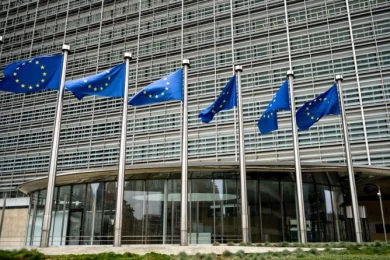
The proposal appears while the war continues, and the official position of the European Union remains to support a comprehensive, just, and lasting peace based on the UN Charter, international law, and Ukraine's territorial integrity. The European Council called on Russia, in June 2026, to accept a complete, unconditional, and immediate ceasefire and stated that the path to peace cannot be decided without Ukraine.
EU leaders have stated that member states are prepared to contribute to security guarantees for Ukraine and to monitor a potential ceasefire, including through the European Union Satellite Centre. However, this is still a general political position; European institutions have not adopted the five-stage system, the European decision-making group, or the proposed automatic mechanism for relaxing and reactivating sanctions in the ECFR study.
The Council extended in June the sectoral economic sanctions against Russia until July 31, 2027, and continued to adopt new listings in July, including against entities involved in the manufacture of drones used by Russia. Current measures aim to maintain pressure on Moscow to stop the war and engage in meaningful negotiations, without an official timeline for their relaxation after a potential ceasefire.

Latest News
22:57
22:50
22:36
22:14
21:56
See more news
NEWS ON THE SAME TOPICS