Informat.ro Summary / Energy ceasefire announced by Trump: Kyiv asks for details, Moscow does not confirm, while attacks continue


Always see our news on Google
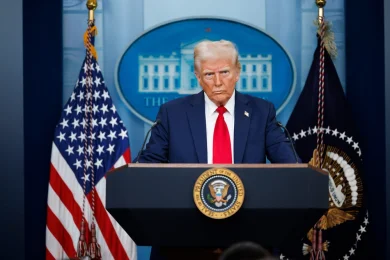
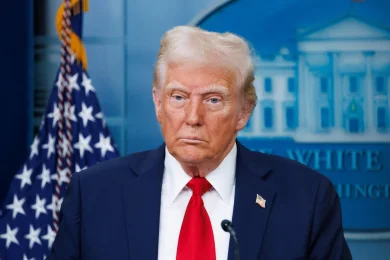
U.S. President Donald Trump, announced on Sunday, October 11, an energy ceasefire between Russia and Ukraine, which he said would take effect “immediately.” The announcement, however, was not accompanied by details, and subsequent reactions showed that the existence and scope of the agreement remain unclear. Volodymyr Zelenskyy said the information surprised him and that he was awaiting clarification from Washington. Moscow has not publicly confirmed the agreement, while Kyiv reported new strikes on energy infrastructure after the American president’s message, Reuters emphasizes.
At the center of the dispute is an essential difference: Trump spoke of an “energy ceasefire,” but a White House official explained to Axios that the proposal initially concerns only refineries. Ukraine, however, is calling for power plants and the electricity grid to be protected. Reciprocity is the condition invoked by Zelenskyy: Kyiv is willing to stop attacks on Russian oil facilities if Russia ceases strikes on Ukraine’s energy system.
What does the American proposal actually provide?
“Effective immediately, there is an ENERGY CEASEFIRE in the war between Russia and Ukraine. Both sides have agreed. Do not violate it!” Trump wrote on Truth Social. The message does not specify the ceasefire’s duration, the facilities protected, the verification mechanism, or the possible consequences of violating it. No detailed text of the agreement appears in the reports consulted.
The explanation subsequently provided to Axios by a White House official significantly narrows the meaning of the announcement. According to the official, it concerns a possible “refinery-for-refinery” arrangement: each side would stop attacks on the other’s refineries. A ban on striking power plants and energy networks could follow at a later stage if the first measure works.
This formula does not fully address Ukraine’s demand. A Ukrainian official explained to Axios that the country has only one refinery, which has been attacked repeatedly and is not fully operational, while Russia has an extensive network of refineries. “We import diesel and gasoline. We need the Russians to stop attacking our electricity grid,” the official said. Exclusive protection for refineries would therefore provide unequal benefits to the two sides.
Was Ukraine informed about the ceasefire? What did Russia know?
Zelenskyy’s statements show that the Ukrainian leader had not been informed of the existence of a final agreement in the terms presented by Trump.
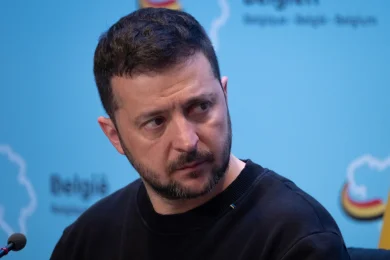
“It was news to me. But if the Russians accept an energy ceasefire, Ukraine will accept it,” he told Axios. The Ukrainian president also requested clarification about when the attacks should begin to cease.
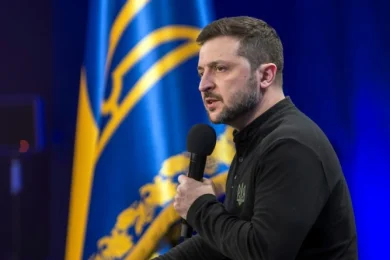
Later, Zelenskyy said that Ukraine supports such a ceasefire but is awaiting details from the United States. He discussed the announcement with NATO Secretary General Mark Rutte, Canadian Prime Minister Mark Carney, and Finnish President Alexander Stubb. These consultations confirm Kyiv’s willingness to examine the proposal, not that it had previously approved an agreement with known provisions.
In Russia’s case, diplomatic contacts must be distinguished from acceptance of an agreement. According to the Axios report, the White House official said that the Russians were “thinking about” the proposal and that Washington was to find out whether they were prepared to accept it. Reuters did not report confirmation from Moscow after Trump’s announcement. Therefore, the available information does not support the claim that both states had already agreed to an operational ceasefire.
Zelenskyy calls for attacks on the entire energy system to stop
The Ukrainian president’s position is that de-escalation must be mutual and accompanied by real guarantees. Before Trump’s announcement, Zelenskyy had reiterated that Ukraine could stop strikes on Russian refineries only if Moscow ceased attacks on Ukrainian energy infrastructure. Thus, this is not a rejection of the ceasefire, but a rejection of a unilateral halt to Ukrainian attacks.
The energy dispute overlaps with deteriorating relations with Washington
On Saturday, Trump asked Zelenskyy to stop attacks on Russian refineries and urged Ukrainians to replace their leader through elections. Zelenskyy responded that choosing the president is a matter for Ukrainians and proposed holding an election if Russia accepts a total ceasefire lasting 60 days. Ukrainian law prohibits elections under martial law, according to Reuters.
What happened after the announcement
Several hours after Trump’s message, Ukrainian authorities reported that Russian attacks on energy facilities continued. Zelenskyy mentioned the strike on a combined heat and power plant in Kharkiv. A Ukrainian official confirmed to Reuters that the attack occurred after the ceasefire announcement.
The Associated Press also reported the Ukrainian president’s statements concerning attacks on energy infrastructure in Kyiv and Kharkiv. Zelenskyy said that Ukraine was prepared to refrain from striking Russian energy facilities and was awaiting the same willingness from Moscow. apnews
These reports contradict the image of an effective halt to energy attacks. However, in the absence of terms confirmed by both sides, there is a distinction between establishing that strikes continued and determining that a precise agreement was violated. If the American proposal concerns only refineries, power plants would not yet be included—precisely the issue highlighted by Kyiv.
EU: support conditional on compliance with the ceasefire
European reactions focus both on compliance with a possible agreement and on the scope of the protection offered to Ukraine. According to Reuters and AFP reports aggregated in the NewsVibe feed, EU foreign policy chief Kaja Kallas said Monday in Luxembourg that the Union would welcome the ceasefire once it was effectively respected. She emphasized that there is still no certainty that Russia will comply and that the halt to attacks should not concern only refineries.
Kallas also called for U.S. sanctions against Moscow to help bring the war to an end. Estonian Foreign Minister Margus Tsahkna said that, for now, “the energy ceasefire is not working.” European Commissioner for Defense Andrius Kubilius urged the EU and Ukraine to develop their own strategy for achieving peace, according to press reports.
Pressure on Kyiv and the stakes surrounding fuel
The announcement comes after the agreement presented by Trump concerning the supply of Russian diesel to American and global markets. The American president attributes part of the rise in fuel prices to Ukrainian attacks on refineries, at a sensitive moment ahead of the midterm elections. Zelenskyy disputes this explanation and points to the war in the Middle East as a more important factor.
Reuters reported, citing a person familiar with the situation, that Washington threatened to halt intelligence sharing and weapons purchases through the PURL mechanism to pressure Kyiv to stop the attacks. Axios, however, presents conflicting accounts regarding the threat concerning intelligence, including an American denial. For now, Trump’s political announcement is not supported by common public terms, confirmation from Moscow, or a verifiable halt to the attacks.
*****Summary prepared with the help of a data-monitoring feed provided by the NewsVibe Romania media-monitoring platform. The analysis, data, and images presented were enhanced with the help of Machine Learning and Artificial Intelligence tools.
Latest News
22:52
22:51
22:27
22:24
22:23
See more news
NEWS ON THE SAME TOPICS
.webp)