Carnegie Europe warns that tensions between France and Germany weaken the European Union's ability to act strategically.



Always see our news on Google
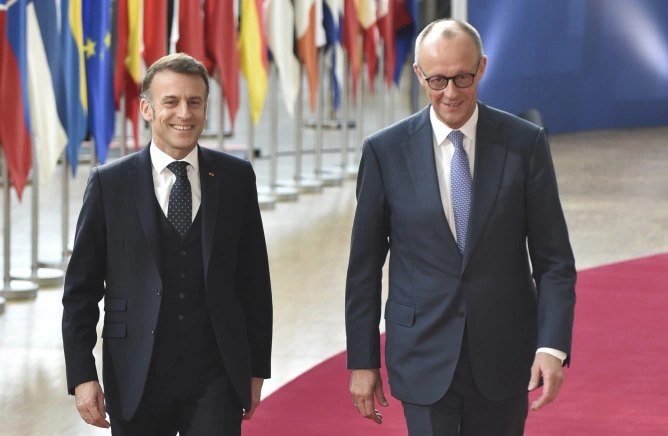
Rym Momtaz, editor-in-chief of Strategic Europe at Carnegie Europe, argues that the Franco-German relationship is going through a crisis that can no longer be treated as a usual episode of tension between Paris and Berlin. In a commentary published on June 16, she argues that geopolitical changes, defense issues, the relationship with the United States, China, energy, and the divergences between the strategic cultures of the two capitals require a permanent coordination mechanism, a Franco-German "situation room".
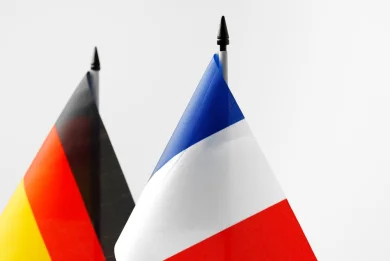
The relationship between France and Germany is once again at a moment of tension, but the international context makes the dysfunction between Paris and Berlin more dangerous for the European Union than in previous crises, Rym Momtaz argues in a commentary published by Carnegie Europe. The author argues that the two capitals need a permanent institutional framework, a Franco-German "situation room" to manage the daily strategic differences between the two political and administrative systems.
In short
1. The commentary starts from the crisis of the Future Combat Air System project, the future European fighter jet developed by France, Germany, and Spain.
2. Rym Momtaz argues that Franco-German tensions go beyond this project and are found in defense, trade with China, energy security, and the relationship with the United States.
3. The author warns that the European Union cannot operate at full capacity without a more coherent Franco-German relationship.
4. The proposed solution is a permanent bilateral coordination mechanism, treated by Paris and Berlin as a matter of national security.
5. The commentary notes that there are also areas of cooperation, including nuclear dialogue, artificial intelligence, and quantum computing.
The commentary published by Carnegie Europe describes the collapse of the Future Combat Air System project as a symptom of the broader crisis between France and Germany. FCAS, a Franco-German and Spanish project for the future European fighter jet, has reached a critical point after years of tensions between the political and industrial interests of the partners.
Rym Momtaz writes that the way the deterioration of the project was announced was emblematic of the state of the bilateral relationship. According to the commentary, German officials leaked information to the press ahead of the Berlin Air Show, which surprised Paris and created the impression of a fait accompli, while French reactions placed the responsibility on Berlin.
The author argues, however, that FCAS is just one of the divergences affecting the Franco-German relationship. In discussions about European defense, trade relations with China, energy security, or the relationship with the United States, she observes that officials from both countries quickly resort to mutual accusations and the reactivation of historical suspicions that the European project was supposed to overcome.
The commentary notes that the European Union has become accustomed to managing the difficult relationship between Paris and Berlin, but that the current geopolitical moment is different. The war in Ukraine, uncertainty regarding American security guarantees, competition with China, and pressure on the European industry make Franco-German dysfunction affect the Union's ability to act strategically.
Momtaz writes that states like Denmark, Estonia, Finland, or Poland are responding more actively to the geopolitical moment, but warns that "without repairing Franco-German dysfunction, the European Union cannot operate at full capacity." The central idea is that Europe needs France and Germany not just as separate powers, but as a political engine capable of producing a common direction.
The author's proposal is to create a permanent structure for strategic coordination between Paris and Berlin. She describes this structure as a kind of Franco-German "situation room," with the role of ensuring daily that the two governments do not drift too far apart.
Such a mechanism would require, according to the commentary, that both countries treat their bilateral relationship as a matter of national security. Momtaz argues that dedicated personnel, constant political attention, and an approach that includes politics, defense, industry, and the business environment would be necessary.
The analysis identifies the structural differences between the two capitals. In Berlin, Zeitenwende has created a desire for Germany to break free from French strategic dominance and no longer be just the financier of the European Union, but German strategic thinking remains, according to the author, limited by dependence on American security guarantees, industrial interests, and fiscal orthodoxy.
In Paris, the growing assertiveness of Germany is viewed with unease. Momtaz notes that the prospect of Germany returning to the top of the European military ranking, at least according to budget figures, is not comfortable for France, but emphasizes that the German resurgence should not be perceived as a threat to Paris.
The commentary shows that the disappearance of the stabilizing role of the United States, as an external arbiter and guarantor of European security, has brought to the surface tensions that NATO and the American presence have tempered for decades. The UK's exit from the European Union has eliminated, in the author's interpretation, another balancing mechanism, and attempts to strengthen the Weimar Triangle with Poland have not replaced this function.
However, the text does not present the Franco-German relationship as completely blocked. Momtaz notes that France and Germany created in March 2026 a nuclear coordination group for doctrinal dialogue regarding conventional capabilities, missile defense, and French nuclear deterrence, a step that would have been very difficult for Germany in the past.
Cooperation also exists in strategic technological areas, including artificial intelligence and quantum computing. The author recalls that when Paris and Berlin find a point of convergence, they can produce transformative decisions, such as the post-Covid-19 recovery fund.
The Carnegie Europe commentary has a direct political conclusion: the Franco-German relationship can no longer be managed solely through periodic summits, reactions to crises, or last-minute compromises. For the European Union to be able to act in a harsher international environment, Paris and Berlin must invest daily in mechanisms that reduce misunderstandings, anticipate conflicts, and transform occasional cooperation into a permanent strategic capacity.
Latest News
17:45
17:38
17:35
17:24
17:24
See more news
NEWS ON THE SAME TOPICS