search icon
search icon
Flag Arrow Down
Română
Română
Magyar
Magyar
English
English
Français
Français
Deutsch
Deutsch
Italiano
Italiano
Español
Español
Русский
Русский
日本語
日本語
中国人
中国人

Change Language

arrow down
  • Română
    Română
  • Magyar
    Magyar
  • English
    English
  • Français
    Français
  • Deutsch
    Deutsch
  • Italiano
    Italiano
  • Español
    Español
  • Русский
    Русский
  • 日本語
    日本語
  • 中国人
    中国人
Sections
  • News
  • Exclusive
  • INSCOP Surveys
  • Podcast
  • EU
  • Diaspora
  • Republic of Moldova
  • Politics
  • Economy
  • Current Affairs
  • International
  • Sport
  • Health
  • Education
  • IT&C knowledge
  • Arts & Lifestyle
  • Opinions
  • Elections 2025
  • Environment
About Us
Contact
Privacy policy
Terms and conditions
Quickly scroll through news digests and see how they are covered in different publications!
  • News
  • Exclusive
    • INSCOP Surveys
    • Podcast
    • EU
    • Diaspora
    • Republic of Moldova
    • Politics
    • Economy
    • Current Affairs
    • International
    • Sport
    • Health
    • Education
    • IT&C knowledge
    • Arts & Lifestyle
    • Opinions
    • Elections 2025
    • Environment
104 new news items in the last 24 hours
  1. Home
  2. Current Affairs

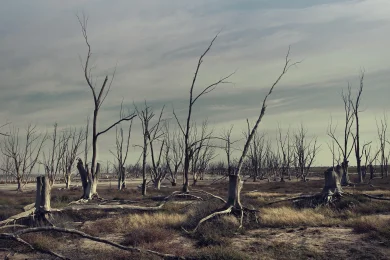
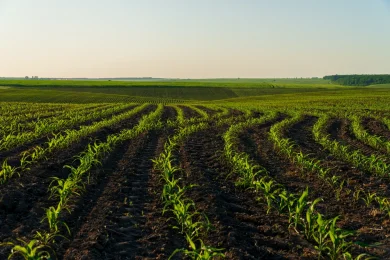
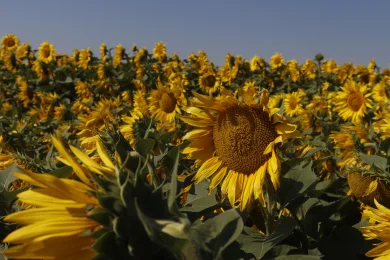
A study shows that climate change will reduce global yields of six major crops by 11-24% by 2100, seriously affecting food security.

Delia Niculescu
whatsapp
facebook
linkedin
x
copy-link copy-link
19 June 2025, 11:00
main event image
Current Affairs
foto:shutterstock
google-preference

Always see our news on Google

According to a study published in the journal Nature, climate change will reduce global agricultural production capacity, with yields of six key crops, such as wheat and maize, expected to fall by up to 24% by 2100. Every one degree Celsius rise in temperature will reduce calorie intake by 120 kcal per person per day. The study, carried out over eight years in 55 countries, highlights the negative impacts of climate and current farming practices, without taking into account changes in cropping. The most affected regions will be the most productive, and subsistence communities in Africa will suffer significant losses.

Sources

sursa imagine
Profit.ro
Randamentele agricole mondiale vor scădea cu procente cuprinse între 11% și 24%, până în 2100
sursa imagine
G4Media
Randamentele agricole mondiale vor scădea cu procente cuprinse între 11% şi 24%, până în 2100
sursa imagine
Economica
Randamentele agricole vor scădea pe plan global cu procente cuprinse între 11% și 24% până în 2100 din cauza schimbărilor climatice – studiu revista Nature
sursa imagine
Agerpres
Randamentele agricole mondiale vor scădea cu procente cuprinse între 11% și 24%, până în 2100
sursa imagine
Financial Intelligence
Randamentele agricole mondiale vor scădea cu procente cuprinse între 11% şi 24%, până în 2100

Latest News

23:06

Latvia and Lithuania are considering stopping the transit of Russian grain through their ports amid the war in Ukraine

22:45

A Turkish comedian faces up to nine years in prison for “insulting” Erdogan

22:05

Spain recorded the highest temperature of the year, 45.7°C in Andalusia

21:35

Volodymyr Zelenskyy calls on Russia to halt fire during visits by U.S. envoys to Moscow and Kyiv

21:05

Volodymyr Zelenskyy: A Russian drone struck the headquarters of Ukraine's secret service in Kyiv. At least seven injured

See more news

NEWS ON THE SAME TOPICS

event image
International
Extreme weather phenomena severely affect agriculture in Great Britain, causing a food crisis.
event image
Environment
Climate change reduces Europe's water reserves. Drought is 5 times more frequent in the West and 11 times in the East.
event image
EU
Drought and heat hit summer crops in the EU: corn decreases by 7%, soybeans by 14%, and fodder becomes a problem in the west and center of the continent.
event image
Current Affairs
The heat waves and drought severely affect agriculture in Europe / Romania is among the few countries with more favorable prospects.
event image
EU
The European Commission says that EU agriculture will hold up in 2026, but farmers are pressured by costs, drought, and uncertainty.
event image
International
The heat wave in Europe disproportionately affects poor households. The burden falls on the most vulnerable.
app preview
Personalized news feed, AI-powered search, and notifications in a more interactive experience.

app preview app preview
climate change food security Yield agriculture

Editor’s Recommendations

main event image
Opinions
12 hours ago

Andrei Cornea: Călin Georgescu and Nicușor Dan - the enigmas of mass hypnosis

app preview
Personalized news feed, AI-powered search, and notifications in a more interactive experience.

app preview
app store badge google play badge
  • News
  • Exclusive
  • INSCOP Surveys
  • Podcast
  • EU
  • Diaspora
  • Republic of Moldova
  • Politics
  • Economy
  • Current Affairs
  • International
  • Sport
  • Health
  • Education
  • IT&C knowledge
  • Arts & Lifestyle
  • Opinions
  • Elections 2025
  • Environment
  • About Us
  • Contact
Privacy policy
Cookies Policy
Terms and conditions
Open source licenses
All rights reserved Strategic Media Team SRL

Technology in partnership with

anpc-sal anpc-sol