SPECIAL Informat.ro / From "Black Volga" to TikTok. How an urban legend became a real risk in Romania



Always see our news on Google
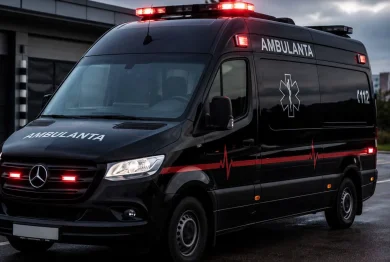
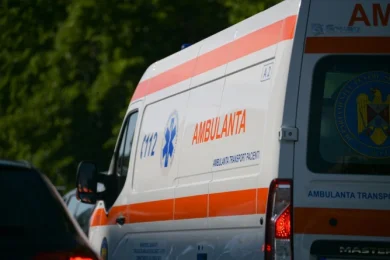
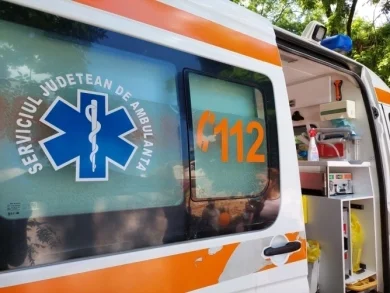
The attack on an ambulance on a mission, in Recea-Cristur, in Cluj County, shows how an old urban myth can produce real violence in the age of viral videos. Romania is not unique in having the legend of the "black ambulance," which has variants in several countries of the former socialist bloc, but it is a special case due to two recent episodes in which panic has led to assaults — against a writer, in Bucharest, in 2018, and against a real medical crew, in Cluj, in 2026.
The legend is not based on confirmed cases of ambulances that would kidnap children for blood or organs. Romanian authorities have repeatedly rejected this narrative, and the Ministry of Internal Affairs stated, including after the incident in Cluj, that no case of an ambulance involved in the kidnapping of a person has been recorded in Romania.
The attack in Cluj
On the evening of August 8, an ambulance was sent to Recea-Cristur to provide care to a patient. According to press reports, the ambulance was attacked with bats, axes, and stones by people invoking TikTok rumors about a supposed "ambulance that kidnaps children."
The driver was injured in the eye by shards of broken glass and underwent surgery. The police identified several individuals involved, and by Monday morning, seven people had been placed under preventive arrest.
The case should not be treated merely as an episode of local violence. It illustrates the mechanism by which an unverified claim, presented in the form of a video, can produce effects before authorities or the press can contradict it. The Ministry of Internal Affairs warned that messages about so-called "black ambulances" have been supported by photographs and clips created entirely or modified with artificial intelligence applications.
A precedent in Bucharest
In Romania, the panic caused by this myth did not first appear in its recent history in Cluj. On the night of July 4 to 5, 2018, writer Doina Popescu-Brăila was assaulted near the North Station in Bucharest after several people confused the vehicle she was in with the supposed "black ambulance."
Doina Popescu-Brăila was traveling through the country in a former ambulance, transformed into a vehicle used for the cultural project "Save Literature." The vehicle was inscribed for the project, did not belong to the ambulance service, and had no medical use, aspects clarified at the time by the police.
According to reports from that time, the woman was sleeping in the parked vehicle on a street in Sector 1 when she was assaulted by a group of men. The individuals who attacked her assumed that the vehicle was the "ambulance that kidnaps children," exactly the narrative that authorities had labeled as false and panic-inducing.
The difference between 2018 and 2026 is significant. In Bucharest, the victim was a person using a vehicle similar to an ambulance for a cultural project; in Cluj, the victim was a real medical crew sent to an intervention. In both situations, the myth was transformed into a direct accusation against identifiable people.
The roots of the myth
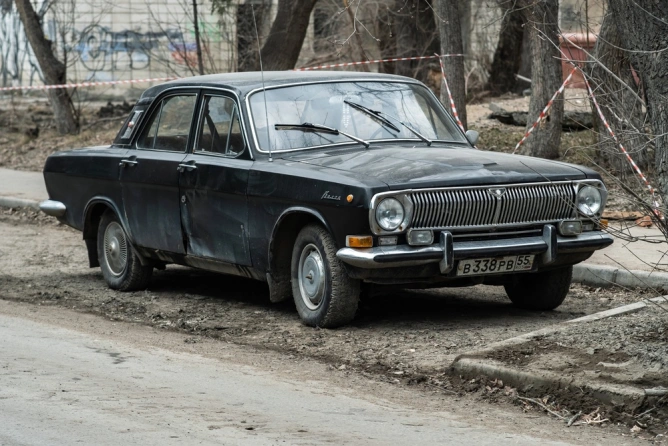
The "black ambulance" is the Romanian version of an older family of urban legends from Central and Eastern Europe, known mainly as the "black Volga." Researcher Anna Kirziuk analyzed stories about a dangerous black car, spread between the 1950s and 1980s in the Soviet Union and other socialist states.
The stories did not have a single form and cannot be definitively linked to a single place of origin. Some Soviet variants started from the image of a black car associated with the disappearance of people; others spoke of children kidnapped for blood or organs. In Poland, the legend became known as "Czarna Wołga," and in Czechoslovakia, it adapted as "černá sanitka" — "black ambulance."
In the communist context, the Volga car had a special significance. It was a rare vehicle, associated with high-ranking officials, institutions, and people who had access to privileges inaccessible to the majority of the population. The black car thus became a symbol of an unseen authority, difficult to control and, in the collective imagination, potentially dangerous.
The fear of authority
A possible explanation for the strength of the legend lies in the memory of Soviet repression. In the Stalinist era, the NKVD — the Soviet political police and one of the institutions from which the Soviet security apparatus later developed — was involved in mass repressions, arrests, and deportations. Anna Kirziuk proposes the hypothesis that two Soviet variants of the "black Volga" legend are linked to the social experience of Stalinist repression: the car that takes people and their unexplained disappearance.
One of these variants, spread in Moscow in the 1950s-1960s, centered on Lavrenti Beria, former head of the NKVD and close associate of Joseph Stalin. According to research, the rumor said that Beria roamed the city in a black car, looking for young women whom he would lure or abduct; the story continued to circulate even after Beria's arrest in 1953. This is an urban legend analyzed as a phenomenon of social memory, not as independent evidence for each episode invoked by the rumor.
In other variants, appearing later, the identity of the occupants of the car changes from one community to another. Kirziuk mentions versions in which the "black Volga" would be driven by priests, Jews, foreigners, or KGB officers and would kidnap children to take their blood, supposedly sent abroad. The researcher places this narrative in the international family of legends about organ and blood theft, not in the area of documented kidnappings.
A third variant, circulated mainly among children in the 1970s-1980s, was vaguer: a black Volga would take children, without the story specifying who was in the car, why they were abducted, or what happened to them. It is precisely the lack of a concrete explanation that allowed the legend to express, according to Kirziuk, the adult fear of state violence.
As the story passed from one community to another, details changed. The drivers could be security agents, KGB agents, foreigners, priests, monks, doctors, or characters described through local stereotypes. Sometimes the kidnapping aimed at blood for rich or sick people; other times, organs or obscure rituals. The flexibility is one of the explanations for its resilience: the legend could take on the fears of each era without having to change its basic structure.
From Volga to ambulance
In socialist Poland, "Czarna Wołga" became the most well-known formula: a black limousine, sometimes red, that would stop near children and abduct them. In former Czechoslovakia, the story took the form of the "black ambulance," which was said to kidnap children for organs. The rumor was so widespread in the 1980s that Czechoslovak television intervened to debunk it.
In Romania, the legend also received local adaptations. Retrospective reports from the Romanian press note that, during the communist period, the story of the "black Dacians" circulated, whose occupants were sometimes described as "sectarians" who would kidnap children for blood or organs. These are elements of urban folklore, not confirmed cases: Adevărul notes that the legend was not supported by victims or concrete evidence, and Libertatea mentions that a version from before 1989 invoked "sectarians" who would steal people's blood.
After 1990, in some Romanian versions, the mysterious vehicle was replaced by the "black ambulance." The change made the story easier to present as plausible: the ambulance could be associated, in the logic of the rumor, with the transport of a person and with medical themes such as blood, transplantation, or organ harvesting. However, it is a narrative construction, not a description of facts: the Ministry of Internal Affairs states that no case of an ambulance involved in the kidnapping of persons has been recorded in Romania.
In 2026, the same story returned on TikTok, supported by images that the Ministry of Internal Affairs described as created entirely or modified with artificial intelligence applications. Authorities warned that such materials can make an old rumor seem current and credible, even though they do not constitute evidence of kidnappings.
What TikTok changed
In the past, such rumors were transmitted mainly orally: within families, among children, at school, or in neighborhoods. The transmission was slow, and the story changed from one narrator to another. Currently, video platforms allow for the almost instantaneous distribution of a supposed "evidence" to large audiences, before the source, location, and timing of the filming can be verified. The Ministry of Internal Affairs warned, after the case in Cluj, that the images supporting the myth were false, created entirely or modified with the help of artificial intelligence applications. In this sense, technology did not invent the legend, but it changed the speed at which it can spread and the appearance of credibility it can acquire.
This is the risk demonstrated by the two Romanian cases. In 2018, a cultural vehicle was confused with the "black ambulance," and its occupant was assaulted. In 2026, a real ambulance was attacked while responding to a patient.
Romania, a special case with clear limits
In the monitoring by NewsVibe conducted on the regional equivalents of the legend — "černá sanitka," "czarna wołga," "чёрная Волга" and "черная линейка" — no comparable cases to the attack in Cluj have been identified in the recent available results: the assault of a real medical crew against the backdrop of accusations that they would kidnap children.
Searches and monitoring by NewsVibe cannot completely exclude local incidents not covered by the press or difficult to find in online archives.
However, in the recent results consulted for Poland, the Czech Republic, Slovakia, Russia, Ukraine, and Bulgaria, there is no clear contemporary incident comparable to the attack in Cluj: the assault of a real medical crew on an emergency mission, after the spread of an accusation that they would kidnap children. This allows for a more precise conclusion: the Cluj case is unusual in the available data, not proof that the myth is exclusively Romanian.
*****Summary created with the help of a data monitoring flow provided by the NewsVibe Romania media monitoring platform. The analysis, data, and images presented have been enhanced with the help of Machine Learning and Artificial Intelligence tools.
Latest News
21:56
21:55
21:24
21:19
21:14
See more news
NEWS ON THE SAME TOPICS


.webp)