A 70-year study of Eurovision shows why pop songs in English no longer guarantee victory




Always see our news on Google
Researchers analyzed over 1,700 songs from 51 countries and found that the English language, pop genre, danceability, and more lyrics were factors of success, but have since become the standard of competition.
A study covering nearly 70 years of Eurovision shows that pop songs in English, with a danceable beat and more lyrics, have been associated with better competition results, but this formula has become so widespread that it no longer offers a decisive advantage.
In short
Researchers from Switzerland and the United States analyzed Eurovision entries from 1956 to 2024.
The study covered over 1,700 songs from 51 countries.
The researchers used audio data from Spotify, artificial intelligence for genre classification, and analysis of emotional themes in lyrics.
The results show that songs in English, pop, danceable, and with more lyrics have been associated with success.
However, the researchers say that there is no formula that guarantees victory, as Eurovision is constantly changing.
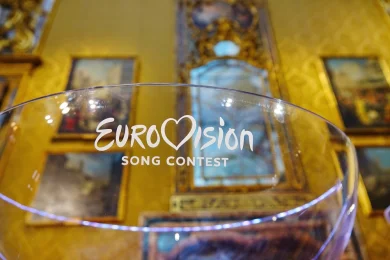
A study published in the Royal Society Open Science journal and presented by CORDIS, the EU service for research results, analyzed nearly seven decades of participation in the Eurovision Song Contest to understand how countries and organizers learn from each other and how the competition has changed.
Researchers from Switzerland and the United States studied participating songs between 1956 and 2024, covering over 1,700 songs from 51 countries. They used audio data from Spotify to assess features such as danceability and acoustic level, as well as artificial intelligence tools to classify musical genres and identify emotional themes in lyrics.
The results indicate that certain choices have been associated with success in competition. Songs sung in English, framed in the pop genre, with a high level of danceability and more lyrics have had, over time, better chances of performing well.
According to the researchers, participating countries have gradually learned these lessons by observing both winning songs and those that lost. Subsequently, many delegations adapted their entries based on these patterns.
The study shows that as this formula has become more widely used, it has lost its status as a competitive advantage. Instead of ensuring victory, it has come to function more as a minimum requirement to remain competitive.
"What was once a competitive advantage is now the standard," said Arthur Capozzi, a postdoctoral researcher at ETH Zurich. "Pop songs in English, with a danceable beat, are becoming a basic requirement."
The study also identifies countries that seem to have deliberately resisted the advantage of the English language. Spain, France, Italy, and Portugal are presented as examples of states that continue to sing in their own languages, even though this choice is not among the established factors of statistical success.
The authors of the study argue that this choice reflects a priority given to national culture and the promotion of their own language, rather than a strategy solely focused on maximizing chances of victory.
"There are exceptions, in the sense that they continue to sing in their own language, even if this is not one of the established success factors," said Capozzi. In the researchers' interpretation, these countries use cultural identity to differentiate themselves from the rest of the competition.
The analysis also shows that Eurovision organizers are evolving and adapting over time. According to Dirk Helbing, a professor of computational social sciences at ETH Zurich, there is no successful formula that works permanently, neither for participating countries nor for organizers.
"There is no single successful formula that always works, neither for participating nations nor for organizers," said Helbing.
He added that Eurovision needs to implement necessary changes to maintain strong public interest. The competition continues to evolve and, according to the researcher, must do so to remain interesting.
"We did not find a formula that guarantees success," said Helbing.
The Eurovision Song Contest began in 1956 as a television experiment and has become one of the most-watched music competitions in the world. According to the CORDIS article, the event attracts around 160 million viewers globally.
Over time, Eurovision has launched or strengthened international careers, including those of artists like ABBA and Celine Dion, and has become known for both its visual spectacle and eccentric performances, as well as for geopolitical tensions, controversies, and boycotts.
The study presented by CORDIS shows that the influence of Eurovision is not just musical or televisual, but can also be analyzed as a process of collective learning, in which participating countries learn and adapt their strategies, while organizers change the competition to keep it unpredictable and relevant.
Latest News
22:50
22:36
22:24
22:20
22:16
See more news
NEWS ON THE SAME TOPICS