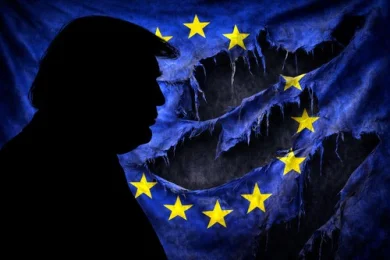

It has been a few years since the international system is no longer that welcoming planet from the years 2000-2015, where countries you wouldn't think to visit today were simple exotic tourist destinations. Donald Trump's second term has contributed, although it has just begun, significantly to the reconfiguration of the rules of the game.
I do not want to comment now in a moral key on the performance of the American president. After all, it is a debate that should be held, whether this sudden reconfiguration of American foreign policy in the last year is just the individual imprint of President Trump or whether it is, beyond his unmistakable style, rather a response required by Russia's repositioning (the war that began in 2022 definitively ending the global strategic vacation between 2000 and 2015) and the evident technological success of China, which has increasingly acquired a military component as well.
The truth is that, at the second coming of Donald Trump, so to speak, there was also a comfort among analysts who attributed the fact that the international system has gone off the rails to the weakness of Biden's presidential term. Or to Obama's previous tendency to be too friendly with Russia and, especially, with China. All of these are debatable, however: international relations are not an exact science. But that does not prevent a multitude of foreign policy analysts from explaining to us where Bush went wrong, where Clinton went wrong, just like with Obama, Trump. Strangely, no one comments on where Putin went wrong, for example...
Donald Trump seems to initiate a competition with commentators who seek to understand the movements. After Alaska, everyone announced that the relationship has been reset and we will see how everything is resolved. And similarly after a few other highly publicized interventions, but of smaller magnitude. However, from intervention to intervention, it has proven difficult to reconstruct a map of the geopolitical interests of the Trump administration. The degree of unpredictability in the behavior of the American president determines the degree of uncertainty in the international system. And this president is very unpredictable. We do not know, however, how chaotic he is. Most likely, he does not think in the simplistic categories with which we have been accustomed by popular geopolitics articles. And we should see a little beyond his media performance.
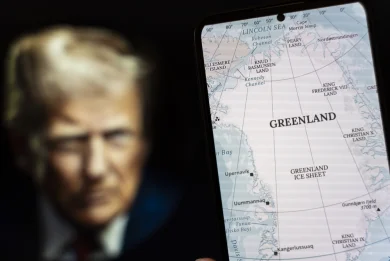
Our long winter vacation was, in its last part, dominated by the Maduro-Venezuela episode and the discussion around Greenland. As for Russia vs. Ukraine... ice at the shore, as they say in the weather report. As a result, analyses that built around the revitalization of the Monroe doctrine (pardon, Donroe) and the division of the world into three, between Trump, Putin, and Xi, have multiplied. Of course, there was also room for a parade of erudition, with some mentioning in passing that the world has been divided into three before, between Octavian Augustus, Mark Antony, and Lepidus. But let's wait, better, because, as I said, the degree of unpredictability is quite high. It is hard to believe that the Trump administration will interpret the Monroe doctrine in an isolationist way and contrary to the engagement that the United States has practiced for decades in relation to Eurasian powers. As a result, let us not be surprised that today Venezuela is on the agenda, tomorrow Greenland, the day after tomorrow Iran. I do not believe that Venezuela was necessarily the signal that we have withdrawn into the western hemisphere. It could rather have been the signal that look what operation we are capable of doing.
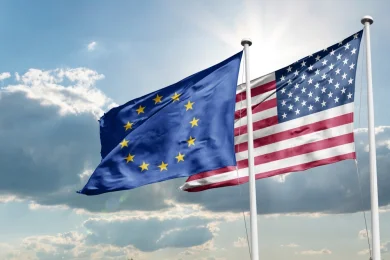
What is interesting in this episode is something else. The whole planet expected that, after Maduro's extraction from the presidential palace, an invasion would follow, or at least a small revolution. Surprise, the old regime is willing to cooperate, and Donald Trump seems to have achieved what he set out to do with minimal costs, avoiding the wasteful wars quickly won in different parts of the planet, but unsustainable in the long term, of his predecessors. Of course, it is disturbing the American president's contempt for international norms and institutions, the acquisitive and confrontational manner of relating to his Western allies, as well as the way he looks at small countries. But to imagine that America, that lonely superpower of the 1990s and 2000s, has decided to manifest its power by dividing the planet into spheres of influence, being the only one of the three powers that would de facto restrict its own sphere, is a bit premature. Moreover, for us, as a country, it is of course another matter: Romania has always benefited when it has evolved in a collaborative international environment based on norms. When the system was conflictual and everyone sought to impose their interests, we did not end well. Nevertheless, the great success of NATO and the EU remains the absence of war between member European states, for a continuous period of decades. Realpolitik or not, the big and small players of the international system should not forget that there is life after the omelet. There is that saying: if you want to make an omelet, you have to break eggs. Just don't break more than you want to eat.
Latest News
23:00
22:55
22:47
22:39
22:33
See more news
NEWS ON THE SAME TOPICS