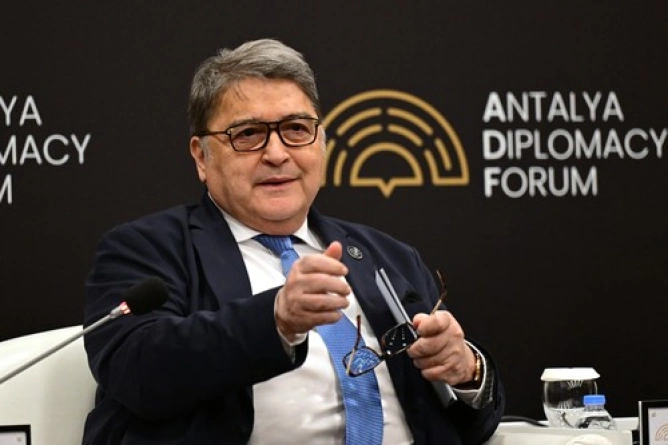
Emil Hurezeanu: What purpose can diplomacy have today?



Always see our news on Google
Diplomats, as I have known them, do everything possible to maintain a state of normality in the machinery room and they do it with results.
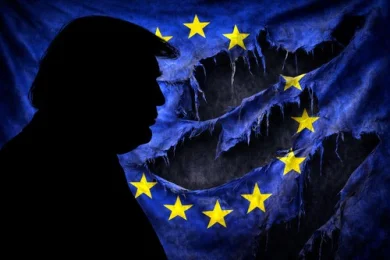
Donald Trump, the elected leader for a second time of the most powerful democratic state in the world, practices diplomacy, but he does it in an unusual way, different from his predecessors, his contemporaries, his counterparts. Those who are close to him have a similar attitude: direct language, sometimes brutal, harsh, lacking nuance, not empathetic at all, in the sense that it is not always about a complicity understanding, nonverbal of the interlocutor, but on the contrary, it is often about a direct attack that disconcerts him.
On the other hand, in the eastern hemisphere, to speak in Jeffersonian terms, in Moscow, there is a leader who, with his entire administration, has been betting for several years on technological developments that make possible the dominance of lies, of post-truth, of a different factuality and practices an aggressive war, lying and using hybrid warfare, fake information, poisoning, threats.
You would say that, in this situation, politeness and decorum no longer exist, neither in the East nor in the West. But, thank God, they still exist, because these two gentlemen are not alone, on their own. Around them exists an entire world that still preserves the inertia of decorum, good faith, and their appropriate language. [...]
When we talk about diplomacy, we must say that there is indeed a diplomatic language. More precisely, there is a technical-formal level of the language used by diplomats in communication between them, in communication between them and politicians, respectively in the communication of all – diplomats and politicians – with society in general. The message thus transmitted outside the political-diplomatic circle is decoded, usually by journalists, and reaches the beneficiaries of the information. There is, of course, also the diplomatic language which, sometimes, includes silence. In fact, silence is considered one of the main virtues of diplomatic language. Silence immediately says something to the interlocutor, who is a representative of another state, when negotiating, for example. Silence or hiding under silence, the reserve regarding a certain subject, regarding certain words is immediately interpreted by the other in a way that has nothing to do with silence as an absence of communication, but with reserve, which is something entirely different.
Romano Guardini, an author who wrote much about the language of the Church, says that "silence is not muteness, but is the opposite of non-silence which is chatter, talkativeness." Silence is the space between interlocutors, between parties, in which the person waiting for the words that save him, that redeem him, functions best, the words through which, ultimately, what needs to be communicated is communicated. In a way – certainly, on a more trivial scale – this also works in diplomatic language.
Let us remember that the Latins called ambassadors or envoys "oratores", because one of the main qualities of the one who came with a message from one state to another was related to the formulation of the message. Because of this, diplomats are identified with speakers, with those who formulate, who express, and, also for this reason, one of the strangest and most paradoxical languages of specialists in communication between them and with the wider world is this language of diplomats.
There are, of course, also the languages of diplomacy. These were Chinese and Akkadian even before Latin. Ancient Greek was a language of diplomacy between the warring Greek city-states, which prevented or postponed wars through diplomacy. However, the force with which Latin imposed itself was extraordinary. For many centuries, Latin was the language of diplomacy; it was only in 1806 that it ended with Latin as a diplomatic language. Otherwise, even today Latin is the diplomatic language of the Vatican, for example. All documents of the Vatican, all communications of papal nuncios with their "central" are made in Latin. The official language of Hungary, for example, was Latin, until 1806, just as it was in the Holy Roman Empire of the German nation, dissolved by Napoleon, which had Latin as its official language.
International treaties, however, have not been made in Latin since 1648, when the Thirty Years' War ended. Then Latin was replaced by French – lingua franca. And this replacement was not brutal at all, because the French always believed that they bore the hallmark of Latinity. The French always believed that the French language is the most suitable for diplomacy, because its rational structure allows it to express more nuanced, more precise what needs to be expressed. A legendary ambassador of France in Hitler's Germany, between 1933-1943, André François-Poncet, captured by the Nazis in 1943 and sent to a luxury hotel somewhere in Switzerland, where he stayed until about 1945, wrote an article in Revue des Deux Mondes, in the 1950s, in which he pleads for the abandonment of babble and a return to rationality, thus to the French language. I specify that such pleadings are made more and more often by allies than by the French. In fact, there are still today mandatory exams for knowledge of the French language, if you want to enter diplomacy, as is the case in Austria. In France, of course, there is no exam for the German language. [...]
In 1919, at Versailles and Trianon, the lingua franca of diplomacy began to be the English language. Decisive was, of course, the fact that World War I was won by France, Great Britain, Romania – let’s admit! – only through the American landing in 1917. It also mattered that, unlike Clemenceau, who spoke perfect English, the British Prime Minister Lloyd George and American President Woodrow Wilson did not speak French. Both were exceptions in this regard, because British prime ministers and professors at Princeton all spoke French. Even within the German-speaking space, until then, diplomats spoke French among themselves: Metternich or Bismarck were excellent speakers of the French language. [...] And today, in diplomacy, the lingua franca is the English language, even if at the UN or NATO, at the OECD, at the OSCE, theoretically, there are more linguae francae. For example, at the UN, in addition to French and English, there are official languages Chinese, Spanish, and Arabic, but the working languages, the so-called "working languages", remain English and French.
In the end, today, more and more, everyone speaks their own language, in the sense of the babble that André François-Poncet, as a last Mohican in the 1950s, fought against. For example, Donald Trump speaks a language that is not the language of international politics, although it is clearly a simple, blunt, declarative, unpredictable English [...].
Although we are in the midst of an era of advanced communication technology, today, as they have always done, diplomats are the ones who speak the least. They do not allow themselves and are not allowed. Just as doctors' prescriptions are indecipherable and only pharmacists understand their writing, so too must diplomats understand each other in a way that they are not understood by others. Diplomats are not presidents, prime ministers, or ministers. They are politicians and politicians can and must speak. Trump and Putin, who are at the head of the political, administrative, but also diplomatic apparatus of their countries, speak, and their actions, their speeches, their public interventions determine more transformations and changes – expected or unexpected – than any diplomatic approach. [...]
So, following Hölderlin who wondered what poetry is for in times of war, we also ask ourselves what diplomacy is still for today. Today, presidents can talk to each other on the phone, they can write on X, messages are transmitted directly, why should one still incur expenses with a diplomatic apparatus? A party called SOS, which announces its generic intention to save the country with this acronym, demands that there be no more ambassadors, but only spokespersons for embassies, that no more be invested in maintaining diplomatic headquarters and so on.
[...] In the time of Metternich and Talleyrand, no one reached diplomacy if they did not ensure their own living abroad. If they did not have in the family estates or wealth, Romanian ambassadors in the 19th century could not afford rent in the capitals where they were sent. Until late, after World War I, Romanian ambassadors did not receive salaries. You see that there is a reason in the practice of American presidents to send ambassadors, in important capitals, those who have substantially sponsored their electoral campaign. [...]
But diplomats, as I have known them, do everything possible to maintain a state of normality in the machinery room and they do it with results. Certainly, now, five million Romanians in the diaspora say that they are "the true ambassadors of Romania", as they like to call themselves often and rightly so sometimes. They are workers, doctors, IT specialists among foreign workers, doctors, IT specialists, but also locals from Germany, America, England, and so on. So, in a sense, they are the true ambassadors of Romania. Today, 10,000 doctors in Germany are Romanians. Their resonance box is the patients they heal and who are not only Romanians. Then there are their colleagues from clinics, other German doctors or from other countries. All the more so as 500 of these 10,000 doctors are heads of clinics. They ensure a resonance box of a true Romania. For us, this is also true, but it is a minority. Similarly, for example, what bricklayers or neo-Protestants do is very important. They are also "the true ambassadors". So you sometimes wonder: indeed, what is the use of this story with diplomats and diplomacy? Therefore, what can a diplomat do today? A diplomat cannot give interviews, for example. A diplomat is not allowed to say: "It is outrageous what I see on television!" If, however, he is allowed to give interviews, he says: "It is surprising what is happening." The public, which is today the beneficiary of the most direct messages coming from all social networks and which lives in an infosphere in which it hears the greatest nonsense, when it hears this kind of expression responds: "This is not what I expect from the diplomat who represents me." The public confuses those who have the responsibility of silence, of implication, of understatement, having the tendency to confuse them with weakness and helplessness. [...]
Diplomacy is useful because it ensures the state of functioning, at the level of the coded communication of this profession, with other diplomats. At this level and with this code, you find out what really happens... I would say that, although it has become a paradoxical profession, although decorum has long been eclipsed by insolence as the dominant mode of communication – insolence can often have good intentions too, but it has a greater power of penetration and persuasion, therefore more mathematically, statistically, quantitatively than decorum – we are in a rather thankless situation. Because these politicians must be supported when they come to power and win votes, and in the vision of the majority of voters they are still the exponents of good causes...
https://www.dilema.ro/tema-saptaminii/ce-rost-mai-poate-avea-diplomatia-azi
Latest News
14:36
14:35
14:26
14:24
14:16
See more news
NEWS ON THE SAME TOPICS