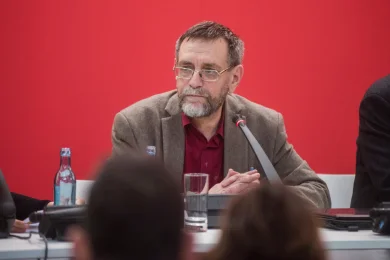
Andrei Cornea: A revolutionary era




Always see our news on Google
There is a celebrated and seemingly simple definition of the political, attributed to none other than the famous Carl Schmitt, a penetrating critic of liberalism, a supporter for some years of Hitler, yet still indispensable for political philosophy: the political (or perhaps its essence) consists in the art of distinguishing friend from foe. We know what the political is, it would seem, and we even know how to show who is and who is not a true politician. Provided we clarify who our authentic friends are in a certain context.
It is known: a good definition must ensure that the terms we use to define are clearer and better known than the term being defined by them; otherwise, it leads to something akin to trying to see darkness through gloom. For a long time, we assumed that clarifying those terms had nothing to do with this model.
In our case, it seemed for a long time that we knew quite well where the main landmarks were and who the main enemies were, and who were, if not definitive friends, at least allies. In any case, during the Cold War, it was quite clear: our friends were also the friends of freedom, of human rights, and so on. The outlines were not always rigid and smooth, but still, with a good approximation, the definition worked. It was the West against the East, taken, of course, in a metaphorical sense and somewhat simplified, but not unrealistic.
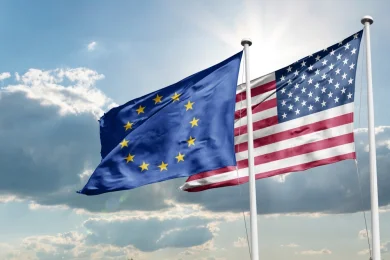
And later, the definition of the political functioned in almost the same terms and was based on almost the same distinction. Our transition to democracy, social, economic, and cultural progress, the opening of society largely assumed the same traditional foes and the same friends. For example, we joined NATO and entered the European Union. For example, we relied on certain allies and avoided the ideas and propaganda of others. Things went, with a good approximation, just like that: friends and enemies remained well separated, distinctions. The international world (and its internal reflection) still had relatively clear outlines and, even if often the nuances should not have been ignored, we always knew, in general terms, where we should direct ourselves and who and where our models were.
Do we still know such things today? Or have the criteria eroded, the nuances invaded the canvas, and even sometimes the main colors have reversed, as when the negative of a photograph is produced?
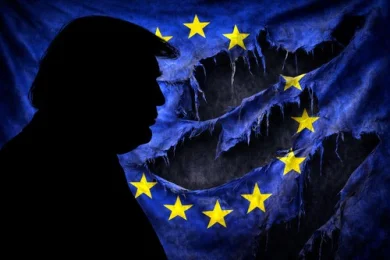
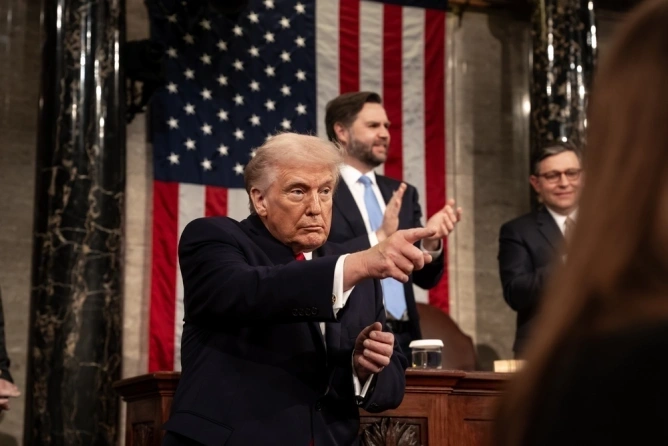
Who are our friends now, when the greatest and strongest among them cooperate with the enemy, in ways that are not even too subtle, but downright vulgar? In the Trump era, you can no longer be sure that you have the same allies as before, nor the same enemies, nor the same friends. Trump and Vance support Orbán, the Hungarian prime minister, who blocks funds for Ukraine, who fights against neo-imperial Russia, which is our eternal enemy and that of freedoms. So Trump is the enemy of our freedoms. Of independence. Or are there limits to this transitivity? We are told to separate things. To be more careful. Agreed, but how do we establish criteria when the relativization that has come from across the Ocean has undermined almost any solid criterion?
And then, how do we separate the antipathy, even the horror towards Trump and Trumpism from our old admiration for America? How will we succeed in not confusing the servile, cynical, corrupt, and incompetent clique around the current president with the famous institutions of the great republic, which we took as a model and looked at with enthusiasm since our youth?
Or how will we know to remain friends of Israel, which fights for survival in this war, as well as in so many others for 78 years, without becoming at the same time friends of Netanyahu and some of his quasi-fascist ministers? We must do it, otherwise we risk becoming more friends with the theocratic fascism of the Iranian Revolutionary Guards. God forbid! Separating goals from means is not easy; but perhaps even harder is to separate the just goal of the national survival of the Jewish state from the private interests of political and legal survival of the temporary prime minister, when they run down the same road for a time. How to be, in these days of confusion, pro-Zionist, but against the current Israeli prime minister? And yet, it is necessary.
Carl Schmitt would be considered naive today: he believed that his definition definitively clarified what is and what is not political. A sharp view, an attentive and wise spirit, capable of looking both into the past and anticipating, as far as possible, the future, could have discovered who the true enemies are and who the friends are in history, in the international world, in society. The political, therefore, was still possible. Those who could practice it were still possible: statesmen. And some of them could be remarkable, sometimes even great.
A revolutionary era.
Latest News
08:19
08:03
07:40
07:23
07:11
See more news
NEWS ON THE SAME TOPICS