The failures in heating double the amounts for paying for heating in January 2026.



Always see our news on Google
In January 2026, I discovered that winter can be cold. I found out again that the Romanian state is fragile exactly where it should be solid. In basic infrastructure. The frost between January 12 and 15 did not cause a crisis. It brought it to the surface.
When the heating network failed, it did not fail "because of the weather", but because of years of delays, improvisation, and administrative lies. Old pipes, huge losses, cosmetic investments, and zero backup plan. A system that works only in good weather is not a system, but an illusion.
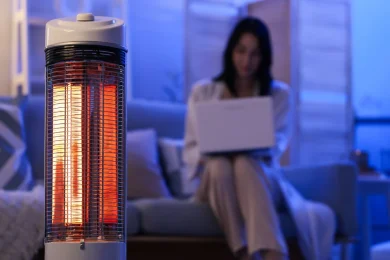
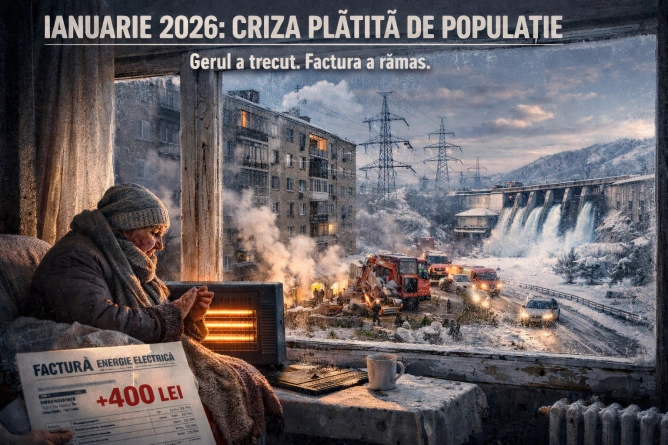
At that moment, the state did what it does every time: it withdrew. It left the citizen to fend for themselves. Without heat, without clear explanations, without automatic compensations. The only sure solution was electric heating, the most expensive and inefficient option for households. The result was immediate: the amounts to be paid for heating will be doubled. On the monthly bill of about 400 lei for heating a two-room apartment in Bucharest, the costs for the electricity consumed by people to heat themselves (about 250 kWh of additional electricity consumption) will also be added, respectively increasing the electricity bill by about 400 lei. Double cost, not for comfort, but for survival.
AEI warning. People should expect costs more than double for heating in January 2026. Two weeks of nighttime temperatures between -6 and -11 degrees Celsius in Bucharest are coming, which will add costs for the heating of Romanians.
This money is not an inevitable consequence of the market. It is the direct cost of the administration's failure. An informal tax, but perfectly real, charged to those who have been abandoned by public services.
On January 13, at 5:00 PM, electricity consumption reached 9,119 MWh/h, the highest level in recent years. The official reaction was typical: "too high consumption", "pressure on the system". No talk about the cause. No accountability. As if millions of people had simultaneously decided to test the limits of the network, not to heat their freezing homes.
This record consumption is presented as an anomaly, but the reality is more uncomfortable: it is only 5% below the average from 1989, in a Romania that then consumed 74% more annually. The difference is fundamental. Back then, we consumed for industry. Today, we consume to avoid freezing. Not progress, but regression.
The structure of production at that peak of consumption says more than any political speech. Hydropower provided 27% of the need, being the main pillar of stability. Exactly that hydropower demonized for years in superficial debates, where dams are treated as an absolute evil, and energy realism is ignored. Without hydropower, Romania would have been completely dependent on expensive and uncertain imports.
Imports were the second source of consumption and reached 23%. This is not a sign of "European integration", but of strategic vulnerability. At peak consumption, energy is not bought cheaply or safely. It is bought expensively, under pressure, and the bill ends up being paid by the population, either through facts or through inflation.
The greatest hypocrisy is that while citizens pay these costs, the public discourse remains stuck between green slogans and convenient silences. The energy transition is invoked, but real infrastructure is ignored. There is talk of ideals, but hard decisions are avoided: modernizing the heating system, serious investments in stable capacities, assuming political costs.
This was not a natural crisis. It was an administrative crisis.
A state that cannot provide heat in winter is not a state in transition, but a state that is functionally failing. And when this failure is paid directly by citizens, without explanations and without assumed responsibilities, we are no longer talking about bad luck or bad weather, but about a broken social contract.
Next winter will come again. The pipes will be just as old. The speeches, just as empty.
The question is not whether it will happen again. The question is how long we will continue to pay for a state that does not deliver but bills without error.
Latest News
22:55
22:48
22:22
22:14
21:54
See more news
NEWS ON THE SAME TOPICS