The price of $95/barrel does not mean peace. It means that the market believes in control.




Always see our news on Google
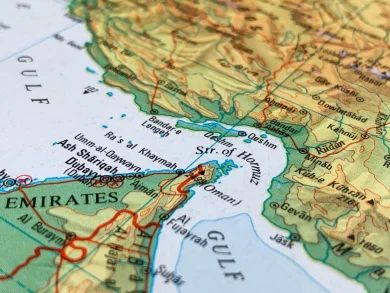
The price of Brent oil at 95 USD/barrel is not a sign that the situation in the Strait of Hormuz has stabilized. It is, rather, evidence that the markets are still betting on rationality.
Because, if they truly valued the existing physical risk — a reduced transit of up to 80–90% through a point that carries almost 20% of global oil — oil would not be at 95 USD/barrel. It would already be at 130 USD/barrel. The difference between these two numbers is not technical. It is psychological.
At 95 USD/barrel, the market sends a very clear message, namely that the current blockage is seen as temporary and manageable.
But the numbers on the ground tell a different story:
• reduced flows to 10–20% of normal
• increased maritime insurance costs by 2–5 times
• logistical rerouting adding +10–20% transport costs
Nevertheless, Brent has not remained above 100 USD. Why? Because the market does not react only to reality, but to probabilities. And the dominant probability, at this moment, remains de-escalation.
The central scenario with a probability of 55–65% is that we are heading towards a partial de-escalation. This makes prices likely to have the following probable trend:
• Brent: 92–103 USD/barrel in the coming days
• Brent: 88–100 USD/barrel in 2 weeks
• Diesel Amsterdam: 165–195 USD/barrel
Controlled de-escalation is the most likely because all actors lose massively if the situation spirals out of control — and so far their behavior clearly shows that they are testing the limits but avoiding total rupture. None of the major powers, nor small countries, nor even Iran, has an interest in oil reaching 150–200 USD/barrel in the long term, as it would throw the global economy into a global recession.
The likely desired scenario is that flows through the Strait of Hormuz return to 40–60% of normal, and an informal agreement or global pressure can stabilize the situation. This is, in fact, the scenario that the market is "buying" today at 95 USD/barrel.
Another scenario that could emerge with a probability of 25–35% is one of stress that would bring about regional escalation, and could cause prices to likely reach:
• Brent: 103–118 USD/barrel in a few days
• Brent: 110–130 USD/barrel in 2 weeks
• Diesel Amsterdam: 220–255 USD/barrel
Here we enter into another logic, not just risk, but the market accepts that there is a real loss of supply of around 5–8 million barrels/day. In this scenario, every incident counts. A tanker hit. A mine activated. Affected infrastructure in Saudi Arabia or the United Arab Emirates.
The market no longer reacts gradually. It reacts in jumps.
Most likely, the leaders at the top will not "choose" escalation. But it is possible that an accident (a mine being hit by a ship) or a semi-autonomous actor or a local commander dissatisfied with the current situation could provoke escalation by destroying a ship, critical infrastructure, etc. and thus escalate the situation.
There is also a critical scenario, with a very low probability (1–5%) of a near-total blockage occurring. In such a situation
• Brent: 120–145 USD/barrel in a few days
• Brent: 135–170 USD/barrel in 2 weeks
• Diesel Amsterdam: up to 260–320 USD/barrel
Here the notion of "risk premium" disappears. We enter into a supply shock. A near-complete blockage of Hormuz means removing from the market up to 15–18 million barrels/day — the largest global energy impact in human history. And in this scenario, there are solutions; governments can intervene to release strategic stocks, and the global economy will not feel the effect of this blockage, at least not in the coming weeks.
At 95 USD/barrel, the market still believes that things will not spiral out of control. But this belief is fragile, because the difference between stability and crisis can be determined by the emergence of an event. A single incident can move oil by 30–50 dollars in a few days. And the global economy along with it.
In Romania, we estimate that the average prices of normal diesel will fluctuate by +/- 15 bani/l in the next 2 weeks, but will remain above the level of 9.5 lei/l until the end of April 2026.
Latest News
07:02
23:06
22:49
22:37
22:22
See more news
NEWS ON THE SAME TOPICS