Ursula von der Leyen welcomes the unlocking of the EU-Mercosur agreement, considering it a strategic signal for European trade.


.webp)

Always see our news on Google
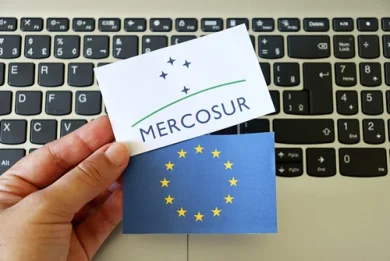
The Council's decision to support the EU-Mercosur trade agreement allows for the transition to the political signing stage of an agreement negotiated for 25 years, presented by the European Commission as a key instrument for competitiveness, trade diversification, and global partnerships.
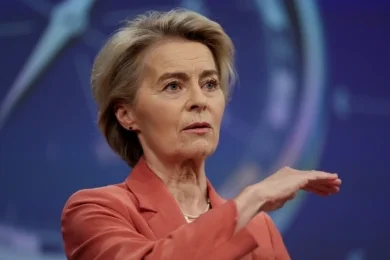
European Commission President Ursula von der Leyen welcomed the decision of the Council of the European Union to support the EU-Mercosur trade agreement, stating that it sends a strong political signal regarding the strategic direction of the Union in a global context marked by trade tensions and economic fragmentation.
In short
1. The EU Council has decided to support the EU-Mercosur agreement.
2. The political signing of the agreement will follow under the presidency of Paraguay.
3. The negotiations lasted 25 years.
4. The agreement creates a market of approximately 700 million people.
5. The Commission estimates annual savings of about 4 billion euros for EU exporters.
In her statement, the Commission President emphasized that the Council's decision allows the European Union to move towards the political signing of the EU-Mercosur agreement, described as a "substantial and mutually beneficial agreement." Von der Leyen stated that the agreement reflects the EU's commitment to economic growth, competitiveness, and the diversification of trade relations, in a world described as "increasingly hostile and transactional."
The EU-Mercosur agreement is expected to create the largest free trade area in the world, bringing together approximately 700 million people. According to the Commission, about 60,000 European companies already export to Mercosur countries, and half of these are small and medium-sized enterprises that would benefit from tariff reductions, simplified customs procedures, and estimated savings of about 4 billion euros annually in export duties. EU exports to Mercosur are projected to increase by nearly 50 billion euros by 2040.
At the same time, the Commission acknowledged the concerns expressed by farmers and the European agricultural sector. The statement mentions the existence of protection mechanisms for agriculture, strengthening import controls, and the inclusion of 350 European geographical indications, a number greater than in any other EU trade agreement.
Beyond the economic dimension, von der Leyen presented the agreement as a platform for political dialogue and strategic cooperation between the EU and Mercosur, aimed at strengthening relations with Latin America and providing the Union with a more active role in shaping global trade.
The EU-Mercosur agreement is the result of negotiations that began 25 years ago and has been, over time, a politically sensitive file in several member states. The Council's decision does not mean the immediate entry into force of the agreement, but allows for the transition to the political signing stage and, subsequently, to the ratification procedures. In the Commission's presentation, the agreement is part of a broader strategy through which the EU seeks to reduce trade dependencies, strengthen its strategic autonomy, and reaffirm its role as a predictable trading partner.
Latest News
20:20
20:15
20:08
20:01
19:56
See more news
NEWS ON THE SAME TOPICS