Ursula Von der Leyen calls for a more realistic and interest-oriented European foreign policy



Always see our news on Google
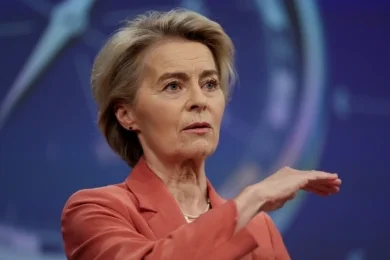
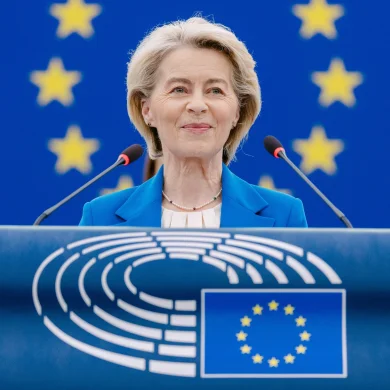
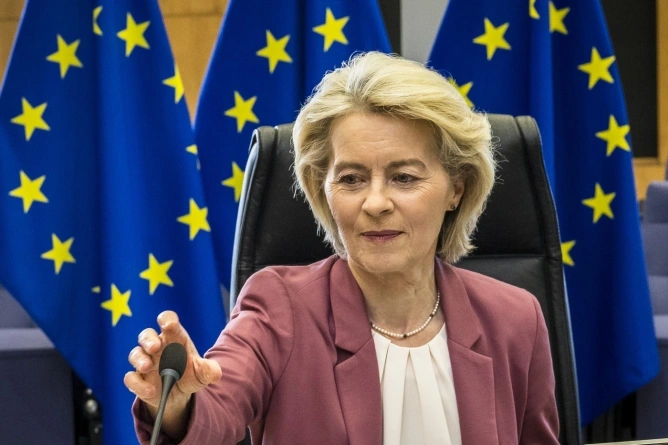
The President of the European Commission, Ursula von der Leyen, stated at the 2026 EU ambassadors' conference that the Union must adopt a more realistic foreign policy focused on interests, in a world marked by instability, and argued that security must become the organizing principle of European action, from defense and data to industry, infrastructure, technology, and trade. Ursula Von der Leyen calls for a more realistic and interest-oriented European foreign policy, with security as the organizing principle of EU action. Ursula von der Leyen at the 2026 EU ambassadors' conference, where she called for a more pragmatic European foreign policy, a new security strategy, and a firmer design of European power in defense, trade, and global partnerships. The President of the European Commission, Ursula von der Leyen, stated at the 2026 EU ambassadors' conference that Europe must adopt a "more realistic and interest-oriented" foreign policy, in a world where the Union "can no longer be the custodian of the old world order," and argued that security must become "the organizing principle of our action" in the new European security strategy being prepared.
In short Von der Leyen said that Europe "can no longer be the custodian of the old world order" and that it must "forge its own European path" to defend its interests in a world where it can no longer rely solely on the rules-based international system.
The President of the Commission stated that the EU is working on a new European security strategy and that "security must become the organizing principle of our action," including in areas such as defense, data, industry, infrastructure, technology, and trade.
She said that Europe has begun "a generational project, European independence," and indicated an increase in defense spending to up to 800 billion euros by 2030.
Von der Leyen stated that the EU will support Ukraine "regardless of what happens elsewhere," including through the proposal of a 90 billion euro loan, and linked the expansion towards Ukraine, Moldova, and the Western Balkans to Europe's common security interest.
On trade and investments, she said that the EU's network of trade agreements covers almost 50% of global GDP, and that Global Gateway has already surpassed the initial target of 300 billion euros mobilized and could exceed 400 billion euros next year.
Ursula von der Leyen used her speech at the 2026 EU ambassadors' conference to call for a recalibration of European foreign policy in the face of a world she described as more unstable, more conflictual, and less predictable. She said that the Union must look at reality "as it is today" and accept that "Europe can no longer be the custodian of the old world order, of a world that has disappeared and will not return." In this context, she stated that the Union will continue to defend the rules-based international system, but "can no longer rely on it as the only way to defend its interests" and cannot assume that its rules will protect it from the complex threats it faces.
The speech was built around the idea that the EU needs a "more realistic and interest-oriented" foreign policy and a reflection on its own decision-making mechanisms. Von der Leyen said that Europe must "forge its own European path" and find "new ways of cooperating with partners," adding that the Union must soberly analyze whether its doctrine, institutions, and decision-making process, designed in a post-war world of stability and multilateralism, "have kept pace with the speed of change" and whether the current system is "more of a help or a hindrance" to its credibility as a geopolitical actor.
The starting point of her analysis was the conflict in the Middle East. Von der Leyen said that the debate about the nature of the war in Iran is missing the essential and that Europe must focus on the real consequences of the situation. She stated that "no tears should be shed for the Iranian regime," which she accused of bringing "death and repression to its own people" and "devastation and destabilization across the region through its proxies armed with missiles and drones." At the same time, she pointed out that the war is already producing spillover effects on energy, finance, trade, transport, and population displacement, that "our citizens are caught in the crossfire" and that "our partners are under attack." She reaffirmed "full solidarity" with Cyprus after British military bases on the island were targeted and NATO troops were called to shoot down a drone.
Against this backdrop, von der Leyen argued that the idea of Europe withdrawing from the chaotic world around it is "pure and simple a mistake." She said that Europe must be prepared to "project power more firmly" to counter aggression and foreign interference "with all our tools, economic or diplomatic, technological or military." In the same vein, she announced that the new European security strategy, prepared together with the High Representative and the EU's diplomatic service, will place security at the center of European action. "Security must become the organizing principle of our action," she said, specifying that this must become the implicit mindset "from defense to data, from industry to infrastructure, from technology to trade."
In the defense plan, von der Leyen said that Europe has done "more in the field of defense in the last year than in previous decades" and spoke about "an accelerated increase in defense spending, to up to 800 billion euros by 2030." She stated that member states are ramping up investments to record levels and conveyed that "peace and security in Europe depend on us, and we fully assume this responsibility." At the same time, she insisted that standing on one's own feet does not mean standing alone. In this sense, she invoked the EU's security and defense partnerships with countries outside the Union, the opening of the SAFE program to Canada, discussions for integrating defense supply chains with India, and progress in relations with Australia.
A central chapter of the speech was Ukraine. Von der Leyen said that "Europe will always stand by Ukraine, no matter what happens elsewhere," describing the country as "a proud European nation" fighting for European freedoms, both as a future member of the Union and as "the first line of defense for Europe." She stated that peace must be "complete, just, and sustainable" and insisted that the war cannot be concluded in a way that plants the seeds of future conflicts. In this context, she prioritized "sustained financial support" and recalled the Commission's proposal for a 90 billion euro loan for Ukraine's needs. Von der Leyen acknowledged the difficulties encountered in adopting this package and linked them to the issue of the European system's capacity to deliver effectively, but insisted that the EU will respect its commitments, because "our credibility, and more importantly, our security, are at stake."
She directly linked the enlargement policy to European security. Von der Leyen said that it is "of capital importance" for the Union to be prepared by already bringing the Western Balkans, Moldova, and Ukraine closer to the EU. In her formulation, "enlargement knows no ideology, it is a matter of common interest and European security" and the Union must be ready to deliver "as soon as the moment comes."
The second pillar of the speech was trade and investments. Von der Leyen explicitly stated that "trade does not just mean economy, but power" and reviewed a series of recent or ongoing trade agreements, from Mexico, Switzerland, and Indonesia, to Mercosur, India, and Australia, as well as negotiations with the Philippines, Thailand, Malaysia, the United Arab Emirates, and several states in East and Southern Africa. She stated that the world "wants to trade with Europe" and that the Union's trade network "has never expanded so quickly." According to the President of the Commission, EU agreements currently cover "almost 50% of global GDP," and more than half of European trade takes place within its own network of agreements, providing European companies with predictable and rules-based access to more than half of the world.
Von der Leyen also presented Global Gateway as an example of a pragmatic and interest-oriented foreign policy. She said that, in about four years since its launch, the initiative has already surpassed the initial target of 300 billion euros mobilized and expressed her conviction that it will exceed the threshold of 400 billion euros next year, as there is global demand for European investments. In her speech, she invoked investments in clean energy supply chains in North Africa, in skills for mineral processing along the Lobito corridor, in digital connections along the corridor from India, the Middle East, to Europe, and in local pharmaceutical industries in Africa and the Caribbean. She argued that this model produces mutual benefits, with Europe gaining stronger supply chains, while its partners gain sustainable investments in infrastructure, skills, and jobs. In this context, she recalled that, in the future European budget, the Commission proposed a 75% increase in funding for the Global Europe component.
In diplomatic terms, von der Leyen reaffirmed the EU's commitment to the UN and its Charter, reminding that, together with member states, the Union remains the largest financial contributor to the UN system. At the same time, she said that, in a more conflictual world, the UN system needs reform and that, when traditional formats get blocked, Europe must seek creative ways to address the most serious crises, including through quartets, contact groups, or regional initiatives. However, she insisted that new initiatives must complement the UN, not compete with or replace it, and placed in this framework the reconstruction of Gaza and the goal of peace for Palestinians and Israelis.
In conclusion, von der Leyen said that Europe is facing a real choice. The Union can remain anchored in the habits and certainties of a world that has passed, or it can "choose a different destiny for Europe," building a foreign policy that "makes it stronger at home, more influential globally, and a better partner for countries around the world." She described this direction as a central pillar of "European independence," meant to protect the Union's interests and promote its values "not with nostalgia and not mourning the old world, but shaping the new one."
The speech was delivered at the 2026 EU ambassadors' conference and is part of the preparation of a new European security strategy. The message from the President of the Commission comes at a time marked by the escalation of the conflict in the Middle East, the continuation of Russia's war against Ukraine, the expansion of the European defense agenda, and the acceleration of the EU's trade and investment policy through free trade agreements and Global Gateway.
https://2eu.brussels/ro/stiri/ursula-von-der-leyen-cere-o-politica-externa-europeana-mai-realista-si-orientata-pe-interese-cu-securitatea-drept-principiu-de-organizare-al-actiunii-ue
Latest News
15:58
15:54
15:53
15:52
15:46
See more news
NEWS ON THE SAME TOPICS