Von der Leyen promises support for Romania and Bulgaria and announces EU presence in Abu Dhabi



Always see our news on Google
The visit of the Commission President focuses on Black Sea security and on new European support, with no amounts announced yet. For Abu Dhabi, a joint Commission–European Council team has been announced, but the Kremlin maintains that the negotiations remain strictly trilateral. Separately, Kyiv says it has agreed with the EU on an emergency mechanism for Ukraine’s needs.
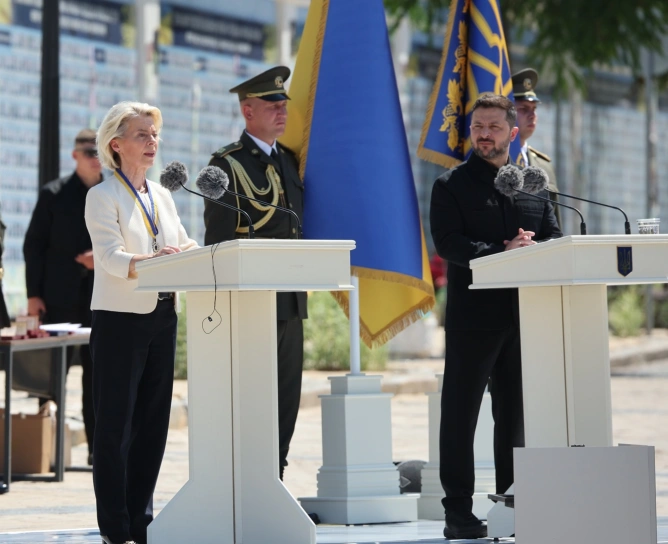
On Monday, Ursula von der Leyen called for freedom of navigation in the Black Sea to be restored, ahead of consultations in Romania and Bulgaria, for which the European Commission promises new support in the area of security and resilience. After a call with Volodymyr Zelenskyy, the Commission President also announced the EU’s presence in Abu Dhabi, where discussions on ending the war in Ukraine are being prepared. The Kremlin, however, maintains that the actual negotiations on 10–11 November remain trilateral, between Russia, Ukraine and the United States.
In brief
The Commission promises new support for Romania’s and Bulgaria’s security and resilience, without announcing an amount or instruments. The 9–10 November visit focuses on maritime surveillance, defence and crisis response.
Von der Leyen calls for navigation in the Black Sea to be restored and supports a truce for food and energy infrastructure. No agreement with Russia or new naval mission has been announced.
The EU announces a presence in Abu Dhabi, where discussions are scheduled for 10–11 November. Euronews identifies the Seibert–Boura team; the Kremlin maintains that the actual negotiations remain between Russia, Ukraine and the US. Direct EU–Russia contact has not been confirmed.
Zelenskyy says he has agreed on a European emergency mechanism for Ukraine’s needs. The announcement is attributed to Kyiv, contains no amount or confirmation of a payment, and is separate from the support promised to Romania and Bulgaria.
Statements in Bucharest are scheduled for Monday at 17:00, while the conference in Varna is scheduled for Tuesday at 12:00, Romanian time. Von der Leyen intends to meet Zelenskyy again in Dublin towards the end of the week.
The 9–10 November visit aims to strengthen maritime surveillance, accelerate defence investment and improve crisis response. The Commission Representation in Romania announced that von der Leyen would present new European support for both countries, without specifying its amount, instruments or timetable for delivery. The promise does not amount to funding that has already been approved or paid.
The Commission says that approximately half of the hybrid threats, attacks and incursions on EU territory reported this year have affected Romania, Bulgaria and the Black Sea region. The estimate is attributed to the European executive, which does not publish a total number or methodology in this statement. It should not be confused with an accounting exclusively of attacks on commercial vessels.
“Freedom of navigation in the Black Sea must be restored and maintained,” von der Leyen said after her call with Zelenskyy. The Council of the International Maritime Organization condemned, at its 2–6 November meeting, Russia’s attacks on commercial vessels and infrastructure serving the Ukrainian maritime corridor. Protecting these routes concerns both the safety of seafarers and the transport of goods and agricultural products.
The Commission President reiterated her support for Ukraine’s call for a truce to protect food and energy infrastructure. This position had also been expressed in October. Monday’s statement does not announce Russia’s acceptance of the proposal, a ceasefire currently in force, or the launch of a new European naval mission.
Regarding the peace negotiations, von der Leyen said that the EU would be present in Abu Dhabi alongside its partners. Euronews reports, citing European institutional confirmations, that a joint Commission and European Council team will be led by Björn Seibert, the Commission President’s chief of staff, and Anna-Maria Boura, the principal foreign policy adviser to European Council President António Costa. France, Germany and the United Kingdom will also be represented.
However, the presence in the capital of the United Arab Emirates does not confirm European participation in all sessions or a direct meeting with the Russian delegation. Kremlin spokesperson Dmitry Peskov said on Monday that the format remains one between the Russian and Ukrainian delegations, with American mediation. According to Reuters, he referred to the separate communication channels that Washington and Kyiv have with the Europeans. Direct EU–Russia contact in this framework remains unconfirmed.
Zelenskyy says he coordinated positions for Abu Dhabi with von der Leyen. The teams had discussed reconstruction and security guarantees in Brussels; the Ukrainian statement does not announce a final agreement.
Russian attacks have affected electricity, water and heating supplies, with particularly serious problems in Kyiv, Dnipropetrovsk, Sumy, Donetsk and Kherson, according to Zelenskyy. The Office of the President of Ukraine says that the leaders agreed to use a European emergency mechanism to finance immediate needs, and that the teams are working on implementation.
The mechanism was announced by Kyiv, without an amount or confirmation of a payment. Ursula von der Leyen’s public statement does not identify it. This support is separate from the measures promised to Romania and Bulgaria. The leaders also discussed winter preparations and Ukraine’s European path.
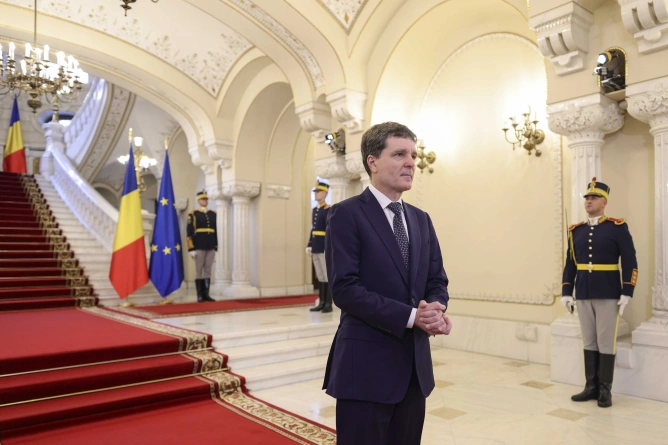
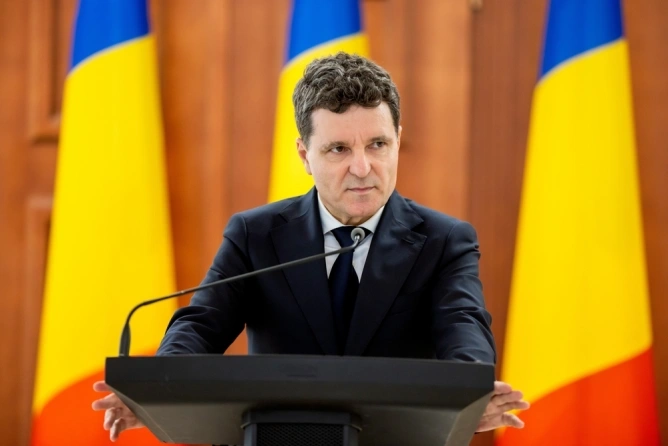
In Bucharest, the programme published by the Commission includes meetings with President Nicușor Dan and Prime Minister Luca-Alexandru Niculescu. The joint statements at Cotroceni Palace are scheduled for 17:00 Romanian time on 9 November.
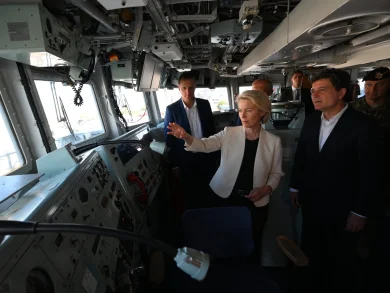
On Tuesday, 10 November, von der Leyen is scheduled in Varna to meet Bulgarian Prime Minister Rumen Radev and visit the Nikola Vaptsarov Naval Academy. The press conference is scheduled for 12:00 Romanian time; both conferences will be broadcast on EbS+. The Commission President also announced a new meeting with Zelenskyy in Dublin towards the end of the week, for discussions with other leaders about steps towards peace.
Monday’s messages link the security of the Black Sea region to the protection of civilian infrastructure and diplomatic efforts for Ukraine. They leave two concrete issues open: the form and value of the new European support, and how the Europeans’ presence in Abu Dhabi will fit into the negotiations announced in a trilateral format.
Latest News
09:54
09:45
09:29
09:24
09:19
See more news
NEWS ON THE SAME TOPICS