The G20 meeting ends without an agreement for the Black Sea; Zelensky announces an initiative with Turkey for a grain corridor



Always see our news on Google
There was no maritime truce agreed in Atlanta. Separately, Zelenskyy and Erdoğan discussed protecting grain exports in Istanbul, while Ankara will continue consultations, including with Russia. Kyiv is preparing trilateral talks for the first half of November, without a schedule confirmed by all parties.
The G20 foreign ministers’ meeting, held in Atlanta on 30–31 October 2026, ended without a joint agreement on the security of navigation in the Black Sea. On the same day the discussions ended, Volodymyr Zelenskyy announced in Istanbul that he had agreed with Recep Tayyip Erdoğan to work on a grain corridor. These are two distinct diplomatic efforts: neither the G20 outcome nor the statements by the two presidents announce a maritime truce or a new mechanism already in operation.
In brief
1. The G20 foreign ministers’ meeting on 30–31 October ended with a statement by the American presidency, without a joint communiqué or an agreement to halt attacks in the Black Sea.
2. Zelenskyy says he agreed with Erdoğan to work on a grain corridor. Türkiye confirms that discussions will continue, including with Russia; no routes, security guarantees, or operating schedule have been announced.
3. Marco Rubio confirms ideas presented by Türkiye and India for grain shipments. The US is examining Turkish proposals, but the American official speaks of diplomatic interest, not decisive progress in the negotiations.
4. The EU supports protecting navigation, infrastructure, and agricultural exports. Kallas says that Ukraine had accepted the proposal, while Russia had rejected it; Moscow had previously stated that it was examining ideas, without prospects for reviving the former agreement.
5. Kyiv is preparing talks with the US and Russia for the first half of November. The timeframe, the participation of Türkiye and European partners, and the locations of the meetings have not been definitively confirmed by all parties.
In Atlanta, the American presidency issued its own statement, not a joint communiqué from the participants. The document invokes the safety of navigation, transit through international waterways, and the protection of critical infrastructure. It opposes using food trade as an instrument of political or economic coercion, but does not establish obligations for Russia and Ukraine to halt attacks, a schedule, or guarantees for commercial vessels.
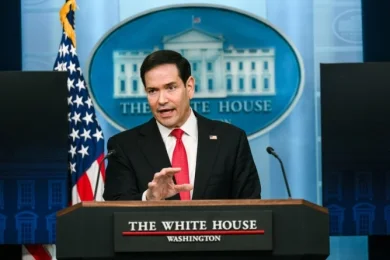
At the closing press conference, US Secretary of State Marco Rubio said that the states recognized the importance of the issues discussed, but continued to hold different positions on the solutions. Regarding the Black Sea, he confirmed that Türkiye and India had presented ideas for facilitating grain shipments. Washington is examining proposals sent by Ankara one or two weeks earlier.
Rubio spoke of renewed interest among some states in facilitating or guaranteeing a possible arrangement and avoided describing it as progress in the negotiations. A solution for grain shipments would address a distinct issue of the war, without ending the conflict between Russia and Ukraine.
In Istanbul, the discussion between Zelenskyy and Erdoğan focused on Black Sea security and the possibility of protecting agricultural exports. The Ukrainian president announced that the two had agreed to work on a grain corridor that would exist and operate effectively. He did not present routes, inspection procedures, or guarantees against attacks, and did not announce the resumption of the 2022 agreement.
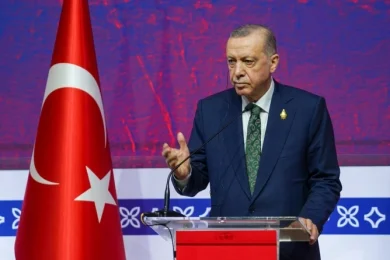
Erdoğan confirmed that he had discussed navigation safety with Zelenskyy and condemned attacks on civilian vessels, regardless of who commits them or what justifications they invoke. The Turkish president said that he would continue discussions with the parties to restore safety in the Black Sea and that he intended to address the issue with Russia as well.
The Turkish statement thus supports the continuation of negotiations, but does not publish the terms of a corridor agreed with Moscow. The distinction matters to transport operators: the political will to work on a solution does not, by itself, provide protection for vessels, a verification system, or rules applicable in the event of breaches of commitments.
The two presidents also discussed economic cooperation. The Ukraine–Türkiye free-trade agreement, signed in 2022, entered into force on 1 October 2026, according to Erdoğan’s statement. Zelenskyy linked the possibility of making use of it to progress on freedom of navigation. However, the entry into force of the trade agreement does not establish a maritime security mechanism.
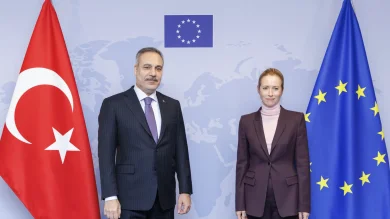
In her G20 address, the EU’s foreign policy chief, Kaja Kallas, called on partners to support an arrangement for freedom of navigation that would protect civilian shipping, critical infrastructure, and agricultural exports. She said that Ukraine had accepted the proposal, while Russia had rejected it, and called for diplomatic contacts with Moscow to be used to advance the effort.
In parallel, the EU supports an immediate, complete, and unconditional ceasefire in Ukraine. A limited navigation arrangement would have a narrower scope than ending the entire war, even though it could reduce risks to trade and food security.
Moscow’s position before the meeting illustrates the difficulty of the negotiations. On 26 October, Russian Deputy Foreign Minister Aleksandr Alimov stated that Russia was examining proposals for the safety of grain transport and was discussing them with Türkiye and other states, but that it saw no prospects for reviving the old initiative. He cited difficulties affecting Russian exports of agricultural products and fertilizers. The statement does not constitute acceptance of a new mechanism, nor is it a response to the subsequent Zelenskyy–Erdoğan meeting.
Indian Foreign Minister Subrahmanyam Jaishankar described three areas of consultations with Russia, Ukraine, and European partners: protecting civilian vessels and sailors, resuming grain shipments through the Black Sea, and avoiding attacks on energy infrastructure. He considered the last component the most complicated, because the parties may understand differently what infrastructure should be protected. This involvement, too, was not presented as an agreement accepted by Russia and Ukraine.
Canadian Foreign Minister Anita Anand said that she had discussed with her Ukrainian and Indian counterparts a limited truce in the Black Sea and halting attacks on Ukraine’s electrical infrastructure. She assessed that Russia was not demonstrating the willingness necessary for an agreement.
The current discussions should not be confused with simply reactivating the 2022–2023 Black Sea Grain Initiative. The mechanism negotiated with the participation of the UN and Türkiye provided for coordination in Istanbul, inspections, and rules for vessels transporting food products from Ukrainian ports. It enabled the export of 32.9 million tonnes before Russia ended its participation on 17 July 2023.
Ukraine subsequently used alternative maritime routes to continue exports. Therefore, the expression “grain corridor” does not mean that shipments had been completely halted until the current discussions. A new arrangement could seek to protect existing routes or establish another multilateral formula; the statements from Istanbul do not specify the option being negotiated.
Zelenskyy also announced that Ukraine was preparing a discussion format with the United States and Russia for the first half of November. He said that he had discussed with Erdoğan the possibility of involving Türkiye and European partners, as well as holding meetings on Turkish territory. The announced timeframe represents Kyiv’s intention, not a schedule publicly confirmed by all parties, and the participation and location have not been definitively established.
For Romania and Bulgaria, EU and NATO member states with Black Sea coastlines, protecting navigation is directly relevant to security and trade. However, any agreement concerning commercial vessels would require its own security commitments; the existence of European maritime-surveillance projects does not automatically make it operational.
Latest News
16:29
16:12
16:10
16:02
15:59
See more news
NEWS ON THE SAME TOPICS