Kallas: The EU and Turkey support an arrangement for freedom of navigation in the Black Sea



Always see our news on Google
After meeting with Hakan Fidan, Kaja Kallas reaffirmed EU and Turkish support for an arrangement on navigation in the Black Sea and raised European objections to the Turkey–Libya memorandum. The diplomatic arrangement is distinct from the maritime center developed by Romania and Bulgaria.
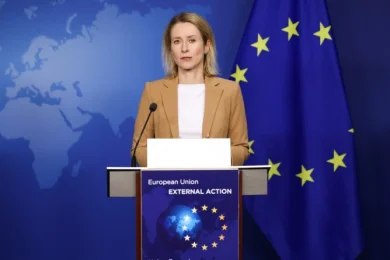
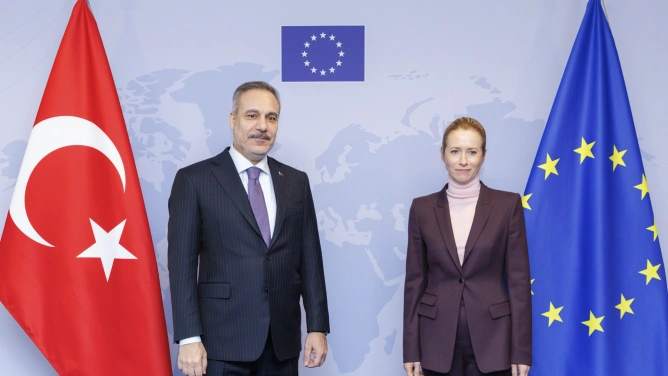
The European Union and Turkey support an arrangement for freedom of navigation in the Black Sea, Kaja Kallas said after meeting with Turkish Foreign Minister Hakan Fidan on Wednesday, October 21, 2026, in Brussels. The EU’s chief diplomat said she had called for increased pressure on Moscow to end the war and had conveyed to Fidan the EU’s objections to the maritime memorandum between Turkey and Libya.
In brief
After her meeting with Hakan Fidan on October 21 in Brussels, Kaja Kallas said that the EU and Turkey support an arrangement for freedom of navigation in the Black Sea and that she had called for greater pressure on Moscow to end the war.
This is a reaffirmation of political support for an initiative already under way, without announcing a concluded agreement, timetable, or enforcement mechanism. The Turkish ministry confirmed the meeting, without details about its results in that message.
The diplomatic arrangement concerning navigation is distinct from the maritime security center being developed by Romania and Bulgaria with EU support. The Commission briefing did not confirm a role for Turkey in this project.
Kallas raised with Fidan Libya’s vote on the Turkey–Libya maritime memorandum and reiterated the EU’s position that it violates the sovereign rights of third countries. The two also discussed the process of resolving the Cyprus issue.
The EU reaffirmed its position in a statement on October 21, following the joint Costa–von der Leyen message of October 20. Ankara, by contrast, maintains that the memorandum has been in force since 2019 and complies with international law.
The meeting also addressed the South Caucasus and the Middle East. Kallas condemned the Houthi attacks and called for freedom of navigation through the Strait of Hormuz to be restored, without passage fees or tariffs.
In the message published after the talks, Kallas linked support for navigation to the dangerous escalation of Russia’s actions in the Black Sea. The position she presented expresses the two sides’ political support for an arrangement; the message does not announce the conclusion of an agreement and does not establish a timetable or an enforcement mechanism. The Turkish Foreign Ministry separately confirmed the meeting, without publishing details about the discussions’ results in that message.
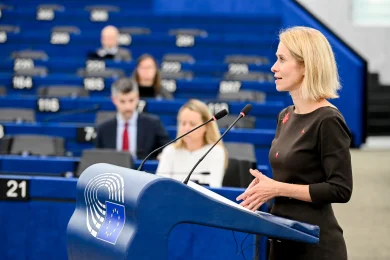
The diplomatic initiative was already under way. In her address to the European Parliament on October 20, Kallas had said that the EU was working with Turkey, India, and other partners, including food-importing countries, to promote such an arrangement. According to her, Ukraine had proposed it, while Russia had rejected it. The statement after the meeting with Fidan thus reconfirms support for this initiative at a time when attacks threaten commercial shipping and Ukrainian exports.
This diplomatic arrangement is distinct from the maritime security center that Romania and Bulgaria are developing with EU support. Asked at the Commission briefing on October 21 about a possible Turkish role in the center, spokesperson Christian Wigand specified that the project is led by the two Member States and that the Union supports them. The response did not confirm a role for Ankara, nor did it announce a change in the project’s participants.
The center aims to improve maritime situational awareness, according to explanations Kallas gave in Parliament the previous day. She emphasized the early detection of threats and the exchange of information in real time. Supporting an arrangement for navigation, by contrast, concerns the diplomatic effort to protect the movement of ships and supply routes through the Black Sea.
The discussion with Fidan also included good-neighborly relations and progress in the process of resolving the Cyprus issue. Kallas said she had raised the October 20 vote by Libya’s House of Representatives on the maritime memorandum with Turkey and had stressed the violation of the sovereign rights of third countries. This is the EU’s position, which Ankara disputes.
The memorandum, signed in 2019, concerns the delimitation of maritime jurisdictions in the Mediterranean. In a statement issued on October 21 by the High Representative on behalf of the EU, the Union reaffirmed that the document does not comply with the law of the sea, is null and void, and cannot produce legal consequences for third countries. The position restates the European conclusions of 2019, reiterated in June 2025; it does not constitute a new ruling by a court on the dispute.
António Costa and Ursula von der Leyen had declared the agreement “null and void” in a joint message on October 20, in which they expressed the EU’s solidarity with Greece and Cyprus. Turkey, however, welcomed the Libyan vote and maintains that the memorandum has been in force since 2019 and protects the mutual interests of the two countries, in accordance with international law and the principle of equity.
Kallas further reported that the meeting addressed developments in the South Caucasus and the Middle East. She condemned the Houthi attacks on Saudi Arabia and Yemen and accused Iran of making navigation through the Strait of Hormuz dangerous and costly. The EU’s chief diplomat called for freedom of navigation to be restored without passage fees or tariffs.
Latest News
08:05
07:50
07:35
07:21
22:52
See more news
NEWS ON THE SAME TOPICS