Von der Leyen to Visit Romania for Talks on Black Sea Security, Moldova and the EU Budget



Always see our news on Google
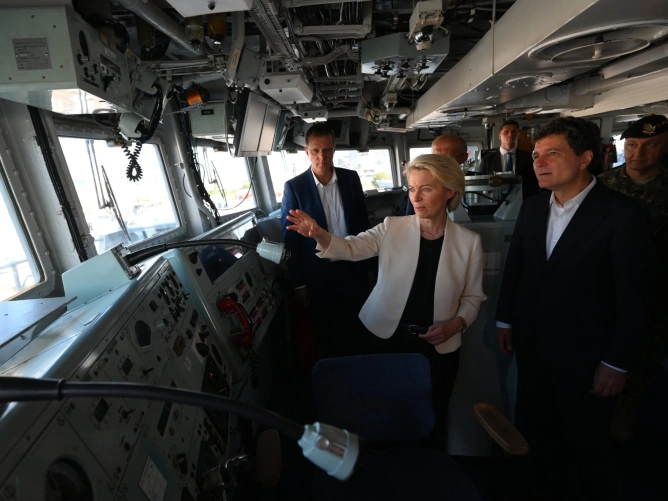
The President of the European Commission will meet on Monday, November 9, with Nicușor Dan and Prime Minister Luca Niculescu, before a stop in Bulgaria. The Romanian agenda includes regional security, competitiveness and energy, EU enlargement, and budget negotiations for 2028–2034. Romania and the Commission are already discussing the development of a civilian maritime security hub.
European Commission President Ursula von der Leyen will come to Bucharest on Monday, November 9, for meetings with President Nicușor Dan and Prime Minister Luca Niculescu, as part of a trip to the Black Sea region. Regional security, energy and competitiveness, support for the accession of the Republic of Moldova, and the Union’s future budget are the topics announced by the Romanian side.
In brief
The visit to Romania is scheduled for November 9, and the stop in Bulgaria for November 10. In Bucharest, meetings with the president and prime minister are planned; in Varna, with Prime Minister Rumen Radev and at the Nikola Vaptsarov Naval Academy.
On November 6, Romania and the Commission discussed the gradual development of the maritime security hub for the Black Sea. The mechanism is civilian and aims to facilitate information sharing and protect infrastructure, in complementarity with NATO.
The Commission considers that Moldova can pursue the completion of accession negotiations by early 2028 if it maintains the pace of reforms. The objective does not represent a guaranteed accession date.
The budget of nearly €2,000 billion for 2028–2034 is the Commission’s initial proposal, not an adopted budget or an allocation established for Romania.
The Commission’s calendar confirms Monday’s meetings in Bucharest and Tuesday’s trip to Varna, where von der Leyen will meet Bulgarian Prime Minister Rumen Radev and visit the Nikola Vaptsarov Naval Academy. The meeting with Nicușor Dan is announced for 3:30 p.m. at Cotroceni Palace, according to the announcement by the Presidential Administration.
Presidential adviser Valentin Naumescu presented the agenda for the discussions: European defense and security, with an emphasis on the Black Sea, competitiveness and energy issues, EU enlargement, particularly support for the Republic of Moldova, and the 2028–2034 multiannual financial framework. These are the topics prepared for the meeting, without the announcement establishing any outcomes or new funding.
In the maritime sector, the discussions already have a starting point. Defense Minister Ștefan-Radu Oprea and the Commission’s Executive Vice-President Roxana Mînzatu addressed on November 6 the gradual operationalization of the security hub for the Black Sea. According to the Ministry of National Defence communiqué, the mechanism is civilian in nature, and the ministry supports it through expertise and interinstitutional cooperation, in complementarity with NATO initiatives.
The hub is provided for in the European strategic approach to the Black Sea and aims to improve surveillance, information sharing, and the protection of critical maritime infrastructure. The project is not a new military operation. Discussions about its gradual development do not mean that it is already operating at full capacity.
The Oprea–Mînzatu meeting also addressed European defense projects of common interest and investments through SAFE. The minister requested that the future European budget provide adequate resources for the security of the eastern flank, particularly in the Black Sea region. This request does not amount to the approval of funding for the hub.
Support for the Republic of Moldova is back on the agenda following the Commission’s assessment of November 4. The European executive records the opening of four negotiating clusters during the period under review and considers the conditions for opening the remaining ones to have been met. Maintaining the reforms would allow Moldova to pursue the completion of negotiations by early 2028. The roadmap is indicative, and the conclusion of negotiations and accession are distinct stages; joining the Union also requires the agreement of the member states and ratification of a treaty.
Budget negotiations concern, separately, the Commission’s proposal for 2028–2034, presented in July 2025: nearly €2,000 billion over seven years. It includes national and regional partnership plans and priorities concerning competitiveness, security, and resilience. For Romania, the stakes concern the resources and conditions of future investments. The final amounts and rules remain under negotiation between the European institutions; the visit alone does not establish the distribution of funds.
Latest News
17:27
17:17
17:05
16:55
16:48
See more news
NEWS ON THE SAME TOPICS
.webp)