The EU condemns the repression of protests in Iran and is preparing new sanctions, without a decision regarding the Islamic Revolutionary Guard Corps.


Always see our news on Google
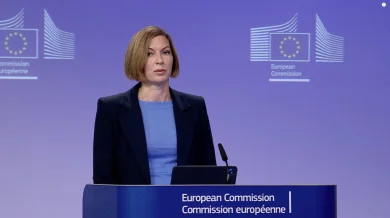
The European Commission states that it is analyzing the extension of sanctions against Iranian authorities responsible for violence, emphasizing that any potential designation of the Islamic Revolutionary Guard Corps as a terrorist organization remains a political decision that requires the unanimity of member states.
The European Commission condemned the violent repression of protests in Iran and conveyed that it is analyzing possible additional sanctions against those responsible for serious human rights violations. However, the EU executive specified that there is currently no decision regarding the inclusion of the Islamic Revolutionary Guard Corps on the Union's list of terrorist organizations.
In short
The EU condemns the use of force against protesters in Iran
The Commission is analyzing options for new sanctions within the existing regimes
The IRGC is already targeted by several EU sanctions, but is not on the terrorist list
Any potential designation as a terrorist organization requires the unanimity of member states
During the daily briefing in Brussels, the European Commission expressed its solidarity with Iranian citizens protesting against the authorities and deemed the use of lethal force and mass arrests unacceptable. European officials reminded of the calls made by the Commission President, Ursula von der Leyen, for the immediate release of detained protesters and the restoration of internet access.
The Commission confirmed that it is analyzing the possibility of extending sanctions against individuals and entities involved in the repression of protests, using the existing EU legal framework regarding serious human rights violations. According to the executive, these measures are being prepared at a technical level, but their adoption depends on the agreement of member states in the Council.
Regarding the Islamic Revolutionary Guard Corps (IRGC), the Commission emphasized that the organization is already subject to European sanctions under several distinct regimes, including for human rights violations, for involvement in Iran's ballistic and nuclear programs, and for support provided to Russia in the war against Ukraine. However, including the IRGC on the EU's list of terrorist organizations is a separate procedure, with specific legal requirements.
The EU executive avoided anticipating the final position of member states, stating that discussions regarding a potential terrorist listing are taking place confidentially and that such a decision can only be made by unanimity, according to EU rules on sanctions.
The Islamic Revolutionary Guard Corps, in Romanian Corpul Gardienilor Revoluției Islamice, is a military and state security structure of Iran, distinct from the regular army, playing a major role in internal repression, regional policy, and Iran's military programs. The EU has already imposed sanctions against the IRGC under several regimes, but has not designated it as a terrorist organization, a decision that would require the unanimity of member states. The EU's relationship with Iran is defined by a policy of "critical engagement," which combines diplomatic dialogue with targeted sanctions. Over the past few years, the Union has gradually expanded sanctions regimes against Iranian authorities, but major impact decisions, such as designating an organization as terrorist, remain exclusively within the competence of member states gathered in the Council of the European Union.
Latest News
11:41
11:41
11:34
11:28
11:26
See more news
NEWS ON THE SAME TOPICS
.webp)