OECD warns that earlier retirement for women may widen income gaps in old age




Always see our news on Google
Earlier retirement for women, used in some systems to compensate for family responsibilities, may reduce their income in old age, the OECD warns in its Pensions at a Glance 2025 report. Pension differences were the subject of a joint ECON–EMPL hearing held on Tuesday, 3 November 2026, at the European Parliament, with the participation of OECD expert Monika Queisser. The issue is how retirement rules can mitigate inequalities accumulated over the course of a career, without an immediate advantage leading to weaker financial protection in the long term.
In brief
1. The OECD warns that a lower retirement age for women may reduce accrued entitlements. The report analyses the effects of national rules; it does not propose a single retirement age in the EU.
2. In 2024, the average gross pension of women aged at least 65 in the EU was 24.5% lower than that of men, according to Eurostat. The OECD average was around 23%; the two aggregates cover different groups of countries.
3. In the OECD model for a mother with two children, a five-year career break reduces the pension by approximately 5% at the average wage, compared with a mother with a full career. Mandatory systems mitigate approximately half of the effect of the interruption, on average.
4. The model assumes a return to work; many additional years of reduced hours may further diminish income and contributions. Labour-force participation, the number of hours worked and wages remain decisive factors.
5. Survivor pensions reduce, on average, by approximately one third the gap in mandatory earnings-related systems. The hearing did not change retirement ages or existing entitlements.
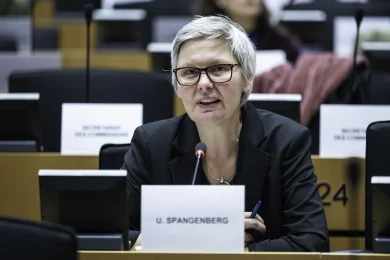
The hearing brought together the Committee on Economic and Monetary Affairs (ECON) and the Committee on Employment and Social Affairs (EMPL), as part of Gender Equality Week. Five experts participated, including Monika Queisser, Senior Counsellor in the OECD’s Directorate for Employment, Labour and Social Affairs and Head of the Social Policy Division. Parliament announced a discussion on the structural causes of pension differences, the labour market and the effects of tax systems. The meeting was an expert hearing, with no reform adopted.
The OECD report explains why earlier retirement does not always represent an effective compensation for care work. A shorter career generally means fewer years in which contributions and entitlements are accumulated. In some pension formulas, the expected duration of payments also matters, meaning that early retirement may reduce the monthly amount. The effect depends on the rules of each system; the report does not say that an identical reduction applies to all women.
Women spend, on average, more years in retirement than men. If pensions in payment are indexed to prices, their purchasing power may be protected, but their relative income compared with the wages of active workers may decline when wages rise faster. A longer retirement period may widen this difference. Therefore, assessing a lower retirement age must also include the level of income received thereafter.
In Eurostat data for 2024, the average gross pension of women aged at least 65 was 24.5% lower than that of men. The indicator includes old-age benefits, survivor pensions and periodic payments from individual private plans. It compares pension beneficiaries and does not directly measure poverty or the income of all older people. The values are averages, not medians: the difference calculated by Eurostat on the basis of the median pension was, separately, 24.9%.
The largest average differences in the EU were in Malta, at 40.3%, the Netherlands, at 36.3%, and Austria, at 35.6%. The smallest were in Estonia, at 5.6%, Slovakia, at 8.4%, and Hungary, at 9.6%. For OECD countries, the report indicates a decrease in the average gap from 28% in 2007 to approximately 23% in 2024. The EU and OECD averages are not interchangeable: the composition of the groups and statistical coverage differ.
A lower individual pension alone does not describe a household’s standard of living. This also depends on a partner’s income, other resources and the number of people sharing them. The OECD country profile for Belgium shows an individual pension gap of approximately 31% in 2024, but a gap of 8.1% in the equivalised disposable income of households of people aged at least 65. The OECD also points to fluctuations generated by occupational lump-sum payments and limited samples. The difference between the indicators does not eliminate the risk of financial dependence or falling income after the loss of a partner.
The main cause identified by the OECD is the difference between earnings accumulated over the course of working life. Career length, hours worked and hourly wages contribute in roughly similar proportions to this gap. In 2023, women’s expected career length was approximately 34 years on the OECD average, almost six years shorter than men’s. Employed women worked around 5.1 fewer hours per week, while the hourly pay gap was approximately 11%. In earnings- and contribution-based systems, these differences are transmitted into pensions.
To limit losses from periods of care, countries may recognise years without professional activity as contribution periods or grant additional entitlements for raising children. The OECD compares these mechanisms through a hypothetical career: entering the labour market at age 22 in 2024, two children born in 2032 and 2034, a five-year break beginning in 2032 and retirement at the age that allows access without penalty.
At the average wage, the break reduces the pension of a mother with two children by approximately 5% on average, compared with that of a mother with a full career. The five years represent approximately 11% of the modelled average career, around 44 years. The OECD concludes that mandatory systems mitigate approximately half of the effect of the break. This is a simulation result, not a loss measured for every mother, nor a promise to reimburse half of the unpaid contributions.
The comparison must also retain the reference point used. The OECD chart separates advantages granted simply for having children from the loss caused by interrupting work and from their combined effect compared with a childless woman. In Germany and France, certain bonuses may exist even without a career break. In other systems, credits cover only part of the interruption. For Slovenia, the model shows that a mother with two children and a five-year break would need to retire three years later than a woman with a full career in order to meet the conditions without penalty; the result concerns the hypothetical career and the rules used in the report.
An important limitation is returning to work after the break. If the woman continues for many years with reduced hours or remains outside the labour market, accumulated income and contributions may be lower than in the modelled scenario. Credits for a period of care do not automatically compensate for all these losses. The report links a lasting reduction in pension differences to access to quality jobs, care services and a more balanced distribution of unpaid work.
Survivor pensions remain another important protection. The OECD estimates that they reduce by approximately one third the gender gap in mandatory earnings-related pension systems, while women account on average for 88% of beneficiaries in the countries analysed that have such benefits. The indicator does not refer to a one-third reduction in the entire EU gap. Reforms must take into account both protecting living standards after a partner’s death and incentives to accumulate individual entitlements.
Through its March 2026 resolution, the European Parliament had already called for an action plan to reduce pay and pension gaps. Setting retirement ages and national formulas remains primarily the responsibility of the Member States, within the limits of European obligations. The November hearing adds expertise to this debate; it does not introduce a single European age and does not alter pensions in payment.

Latest News
14:05
14:03
13:58
13:57
13:52
See more news
NEWS ON THE SAME TOPICS







.webp)