Deductions for supplementary pensions may benefit higher incomes and deepen inequalities, Ulrike Spangenberg warns



Always see our news on Google
Tax support for retirement saving does not reach all taxpayers to the same extent. Ulrike Spangenberg called on the European Parliament to assess the beneficiaries and costs of these benefits, explaining how income-related deductions can disadvantage low-paid people and widen the differences between women and men. The expert’s recommendations are not tax measures adopted by the EU.
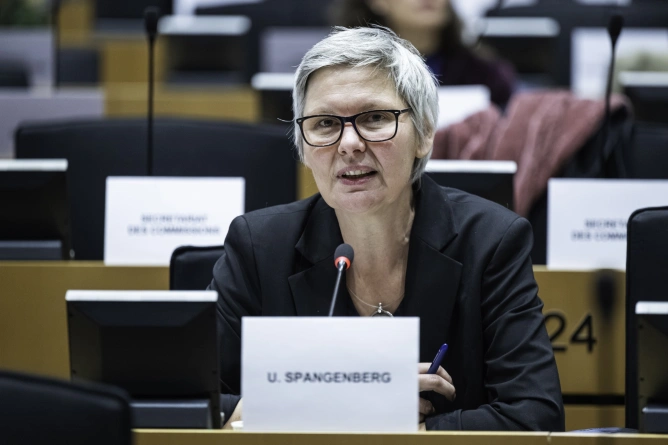
A tax benefit intended to encourage saving for old age may help those who already earn more to a greater extent. This is the warning issued by Ulrike Spangenberg, a specialist in taxation and gender equality, in the written statement for the joint hearing of the ECON and EMPL committees of the European Parliament on 3 November. She calls for an assessment of how tax advantages for pensions are distributed between women and men and among different income groups, before the expansion of supplementary saving is treated as a sufficient solution for reducing inequalities in retirement.
In brief
1.Deductions that reduce taxable income can offer a greater advantage to people with higher incomes. Those who pay little or no income tax may benefit less or not at all from this mechanism.
2.Women may be disadvantaged both by lower incomes and by unequal access to employer-provided pensions and periods devoted to family care.
3.The expert calls for data broken down by women and men, transparency regarding the tax revenue the state forgoes, and an assessment of the effects of the entire system, from contributions to pension payments.
4.Not all benefits have the same effect. Refundable tax credits and support that takes childcare into account can also reach people with low incomes.
5.The hearing did not adopt new tax rules. The recommendations form part of the European debate on supplementary pensions, and any discrimination must be legally assessed for the specific rules.
Spangenberg heads the department for gender equality reports at the Federal Foundation for Gender Equality in Germany. A lawyer specialising in equality and non-discrimination, she presented taxation as an often-neglected component of pension gaps. The hearing in Brussels brought together five experts and was organised by the Committee on Economic and Monetary Affairs and the Committee on Employment and Social Affairs, as part of Gender Equality Week.
Her argument concerns how benefits are structured. When a pension contribution is deducted from taxable income, the tax saving depends on the rate that would have applied to that portion of income. In a progressive system, the same deductible contribution can provide a larger reduction to a person in a higher tax bracket. If the person owes no income tax, merely reducing the tax base does not, in itself, provide an equivalent advantage.
The difference may be amplified by the ability to save. People who can afford larger contributions may also obtain larger benefits, within the limits of national rules. According to the expert, women are more frequently found in low-income groups and may therefore receive a smaller share of tax support. This observation concerns mechanisms linked to income and contributions; it does not mean that every form of support for supplementary pensions inevitably favours the wealthy.
The analysis must continue beyond the time of contribution. In schemes where investment returns are not taxed annually, capital can accumulate more quickly, and larger contributions create the possibility of greater benefits. When the pension is paid, progressive taxation may reduce differences between beneficiaries. Spangenberg nevertheless points out that deferring taxation until retirement may, overall, benefit those with high professional incomes if their income and taxation are lower in old age.
The final effect therefore depends on the entire tax path and on the rules of each scheme. The statement does not provide a single estimate of the benefit for all EU countries, nor an amount that could be attributed to women or men at European level. The expert insists precisely on the lack of research and sufficiently detailed data for such an assessment.
Access to the mechanism matters just as much as tax treatment. In her statement, Spangenberg cites analyses from Germany according to which occupational schemes are more frequently absent in small firms and in sectors where women predominate. An employee who does not have access to such a scheme cannot benefit from the associated facilities in the same way. The German finding is not presented as an identical measurement for all European economies.
Added to this is the distribution of paid work and unpaid care. Lower incomes, reduced working hours and career interruptions limit the contributions that can be saved. Spangenberg warns that many supplementary schemes do not sufficiently recognise periods of care. Even doubling the deductible ceiling for a couple may improve the household’s situation without guaranteeing that both partners build their own pension entitlements.
Taxation of employment income can influence these differences before the money reaches a pension fund. The expert draws attention to elements of joint taxation of couples that increase the tax burden on the partner with the lower income, usually the woman. If additional work becomes less advantageous after tax, both current income and the possibility of accumulating larger contributions for old age are affected.
From the perspective of the public budget, the question is also who benefits from the resources the state uses for pensions. Tax benefits may mean revenue that the budget forgoes compared with the reference rules. They must be distinguished from direct payments to beneficiaries, but assessed alongside them. Spangenberg calls for the analysis to include support for periods of childcare and for non-contributory pensions, without proposing an amount to be reallocated in the statement.
One of her recommendations is to publish data broken down by women and men concerning the tax system and benefits relevant to pensions. Another is to assess public revenue and expenditure from a gender-equality perspective, so that less visible budgetary benefits can be compared with direct funding. Effects must be tracked throughout working life and retirement, not only for an isolated tax year.
The expert also points to solutions that can change the distribution of support. A refundable tax credit can provide a benefit even if the person does not have a sufficiently large tax liability from which to deduct it. Other measures can recognise care activities, limit deductions associated with high incomes in retirement, or protect small pensions from taxation. Spangenberg calls for the exchange of best practices, without presenting these instruments as a single mandatory model for the Member States.
The analysis continues the author’s earlier research. A summary of her contribution published by Deutsche Rentenversicherung in 2020 already shows that benefits during the contribution and accumulation periods must be examined together with the taxation of pensions. This document provides context for the argument, but it is not a new study from November 2026 and does not measure the effects of a recently adopted European reform.
There is also a legal question, which the statement leaves open. Spangenberg calls for research to determine whether certain income-tax rules may violate national or European equality legislation. She also invokes Article 14 of Directive 2006/54/EC, concerning equality in access to employment, training and working conditions. The Directive also separately regulates equality in occupational social security schemes. Its mention does not constitute a finding that all pension deductions are discriminatory or unlawful.
The debate is taking place after the package presented by the European Commission on 20 November 2025 to strengthen supplementary pensions. Communication COM(2025) 839 explains their role in complementing public pensions and proposes expanding participation, improving information and reforming the framework for occupational pensions and the pan-European personal pension product. The document also acknowledges the lower access of women and low-paid workers to these forms of saving.
The recommendations from the hearing do not constitute a new European tax law, nor proof that the reforms discussed have been adopted. They add an important condition to the debate on expanding supplementary pensions. Success cannot be assessed solely by the amounts saved or the number of accounts opened, but also by access to support, individual rights accumulated and the distribution of the cost borne by the budget.
Latest News
14:05
14:03
13:58
13:57
13:52
See more news
NEWS ON THE SAME TOPICS






.webp)