MEPs call for the future UN convention on older persons to protect independent living, access to care and non-discrimination



Always see our news on Google
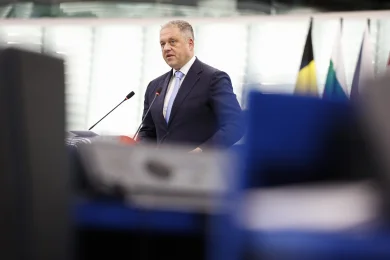
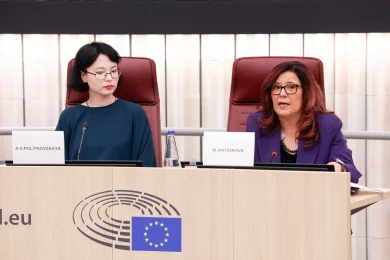
MEPs from several political groups called, during the 8 October debate in Strasbourg, for the future UN legal instrument on the rights of older persons to provide concrete protection for independent living, access to care and health services, combating age discrimination and social participation. The international process is still at the negotiation stage, and the European Parliament debate did not create new directly applicable rights and does not mean that a UN convention has already been adopted.
In brief, the UN has created an intergovernmental group mandated to draft a binding international instrument on the rights of older persons. MEPs focused on independent living, community services, care, health, combating discrimination and the participation of older persons. The Commission says that many relevant rights already exist in EU law and other international instruments, but supports the continuation of the UN’s work and national policies to protect vulnerable people. For 2027, the Commission is preparing a policy exchange on dignified ageing, a report on adequate social protection and an expert report on minimum pensions and preventing poverty in old age. The second session in 2026 of the UN intergovernmental group is scheduled to take place in Geneva from 26 to 30 October.
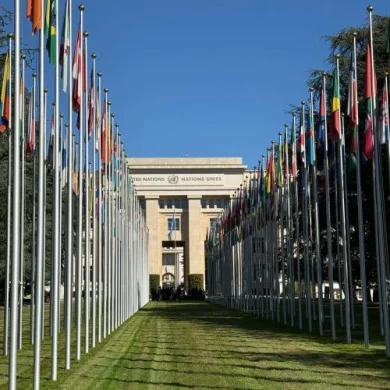
The UN process entered a new stage after the Human Rights Council established, through Resolution 58/13, an intergovernmental working group tasked with drafting and presenting a draft binding international instrument on the rights of older persons. The first drafting session took place in Geneva from 13 to 17 July 2026, and the group meets twice a year for five days at a time. The second session is scheduled for 26 to 30 October.
The Strasbourg debate therefore took place less than three weeks before the next UN round. MEPs’ interventions showed that the discussion is not limited to creating a new legal text. Recurring themes included the possibility for older persons to remain in their own homes for as long as possible, access to services adapted to individual needs, the development of community services and avoiding institutionalisation where suitable alternatives exist.
Care was central to the discussion. MEPs addressed access to health and long-term care services, the situation of people living alone, support for informal carers and differences between women and men in terms of income and pensions in old age. Issues related to social isolation and effective access to services for people unable to rely exclusively on digital tools or electronic payments were also raised.
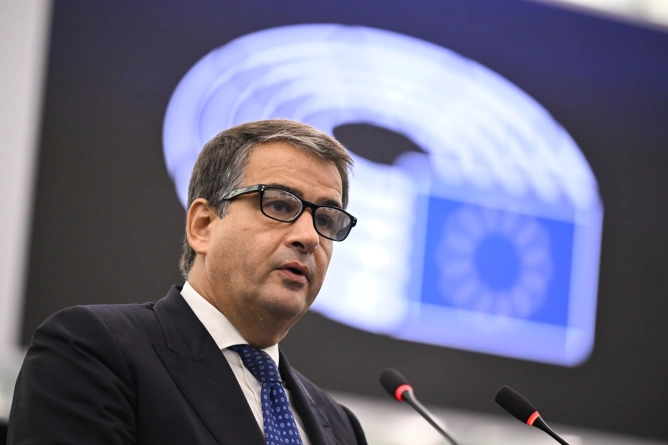
Raffaele Fitto, Executive Vice-President of the European Commission for Cohesion and Reforms, said that the European executive supports the rights of older persons and the work carried out at UN level, while maintaining consistency with existing international instruments, including the UN Convention on the Rights of Persons with Disabilities. At the same time, he stressed that many social and care policies primarily fall within the responsibility of the Member States, while the EU’s role also involves supporting them through existing legislation, data, analysis and European policies.
The Commission highlights an important distinction: the fact that there is no single European law dedicated exclusively to older persons does not mean that they lack legal protection. Relevant rights are already provided for in EU legislation on equality, social protection, employment, health, disability and other areas. The future UN instrument could create a dedicated international framework and set out more explicitly how general rights should be applied to specific situations associated with old age.
The Commission also links this discussion to demographic changes in Europe. Fitto referred to the demographic report published in 2026 and the forthcoming Atlas of Demography as tools for identifying the needs of older persons and underpinning public policies. The Commission’s position is that longer working lives should be supported when this is the individual’s choice and must not be turned into a uniform obligation that ignores differences between professions, health conditions or individual circumstances.
The European agenda for 2027 includes a high-level exchange on integrated policies for dignified ageing. The Commission intends to accompany it with a report on adequate social protection and an expert report on minimum pensions and measures to combat poverty in old age.
The European executive is also preparing a Longevity Roadmap, aimed at mapping the specific issues associated with different stages of life and identifying policies that can support a longer, healthier and more financially secure life. The initiative is linked to the Strategy on Intergenerational Fairness adopted in March 2026 and the forthcoming Demography Forum, which is expected to bring together experts and national public policy-makers.
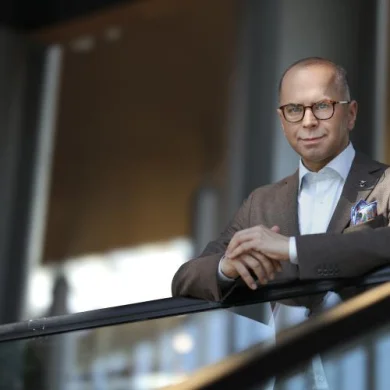
Proposals extending beyond the strict negotiation of the convention have also emerged in Parliament. Łukasz Kohut proposed creating a simplified pathway within Erasmus+ for older persons, with the aim of facilitating learning and participation in exchanges after retirement as well. This is an individual proposal made during the debate, not a new Erasmus+ programme that has been adopted, nor funding that is already available.
Other interventions drew attention to the risks posed by heatwaves, the needs of persons with disabilities, differences between urban and rural areas and older persons’ access to public services in an increasingly digitalised economy. These examples were used to argue that a future UN instrument must treat older persons as rights-holders and active participants in society, not solely as recipients of care services.
The international stage nevertheless remains far from complete. The intergovernmental group must negotiate the content of the future instrument and present a draft to the Human Rights Council. The next round, from 26 to 30 October, represents a stage of drafting and negotiation. Any eventual treaty will subsequently require completion of the UN process and the signing and ratification procedures provided for under international law and the legal systems of the participating states.
้*
Latest News
18:34
18:30
18:30
18:27
18:20
See more news
NEWS ON THE SAME TOPICS










.webp)