NATO is preparing a rapid response to an attack using the lessons of the war in Ukraine



Always see our news on Google
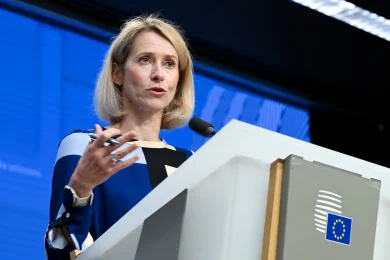
The Deputy Secretary General of NATO told the MEPs from the SEDE Committee that the military chief of the Alliance has the authority to activate already approved defense plans without waiting for a new political decision for each measure. Ukrainian military personnel are meanwhile contributing to the review of NATO's doctrines, exercises, and capabilities based on direct experience from the front.
NATO has adapted its command process so that already approved defense plans can be activated quickly in the event of an attack, and Ukraine's experience is being used to update the Alliance's doctrines and exercises. Explanations were provided in the European Parliament's Security and Defense Committee, SEDE.
In short
The Supreme Commander of NATO forces in Europe can activate previously approved military plans for the defense of allied territory. The mechanism is designed to avoid wasting time with new political negotiations for each necessary operational measure during a crisis.
Military authority does not replace the political control of member states. Governments approve the plans and limits of action, and the NATO commander can implement them when the stipulated conditions are met.
NATO has created a center in Poland where Ukrainian military personnel and experts analyze together with Alliance staff the tactics, technologies, and issues observed on the battlefield.
The lessons are used to review military doctrines, plan new capabilities, and prepare exercises. Ukrainian teams also participate in numerous exercises organized by NATO.
The Alliance states that Ukraine's experience is relevant for air defense, drones, electronic warfare, long-range strikes, and protecting infrastructure. NATO thus describes Ukraine as a provider of experience for the security of allies.
The Deputy Secretary General of NATO was asked in the SEDE Committee whether Russia could exploit the time needed to obtain political consensus among the 32 member states before a limited attack or provocation on the eastern flank.
The question concerned the possibility of a scenario in which Moscow quickly acts in a vulnerable area while representatives of the allies are still discussing the response in the North Atlantic Council, the political body in which NATO makes decisions by consensus.
The Alliance representative said that NATO has modified its plans and activation process in recent years. The Supreme Allied Commander in Europe, responsible for NATO military operations, has the necessary authority to implement the measures outlined in the approved defense plans.
"The Supreme Allied Commander has the authority to activate these plans so that he can protect every inch of allied territory," she told the MEPs. She added that the decision-making process has been adapted to allow a response compatible with the speed of a military threat.
This statement does not mean that military leaders can unilaterally decide NATO's entry into a war or can act without political limits. Member states approve the plans, rules, and levels of authority before a crisis. The military commander can then activate the already agreed measures when the situation requires it.
These plans cover the deployment of forces, air and missile defense, protecting infrastructure, and other operations necessary for the defense of allied territory. The Deputy Secretary General said that NATO has moved to a more active approach to deterrence and defense and has revised its integrated system against air and missile threats.
She recalled that defense plans were activated on the morning of the large-scale Russian invasion of Ukraine in February 2022. NATO claims that it currently has more capabilities and better-prepared procedures than at the beginning of the war.
Part of this adaptation is based directly on the experience of Ukrainian forces. NATO has opened a center in Poland dedicated to analyzing war lessons, where officers, officials, and military experts from Ukraine work together with Alliance specialists.
The center analyzes the tactics used on the front, how technologies change operations, and how NATO doctrines need to be updated. The information is transmitted to the Alliance structures responsible for military transformation and capability development.
Ukraine's experience is particularly relevant for the use of drones, countering unmanned aerial vehicles, air defense, electronic warfare, and protection against attacks on infrastructure. The war has also shown how quickly tactics must be adapted when the adversary changes frequencies, software, or the way weapons are used.
Ukraine also participates in NATO exercises. According to the Deputy Secretary General, Ukrainian teams are invited to numerous training activities conducted throughout the year, so their experience can be tested together with the procedures and structures of the allies.
Lessons are not automatically adopted. NATO specialists analyze them to determine what tactics can be applied in collective defense, what equipment is lacking, and what modifications need to be introduced in the training of military personnel.
The Alliance uses these conclusions when determining what capabilities need to be developed or purchased by member states. The Deputy Secretary General said that information coming from Ukraine is already reflected in planning and in NATO's ongoing transformation process.
In this regard, Ukraine is not only presented as a beneficiary of the weapons and training provided by allies. NATO considers that its operational experience provides information that Western armies could not obtain through exercises conducted in peacetime.
Preparing a rapid response and updating doctrines are part of the same change. Approved plans must be able to be activated before a limited attack can create a military advantage, and their content must be reviewed based on how a high-intensity war is currently unfolding.
Latest News
23:03
22:44
22:40
22:37
22:34
See more news
NEWS ON THE SAME TOPICS